 The Prep Nest
The Family Emergency Plan: What to Actually Write Down
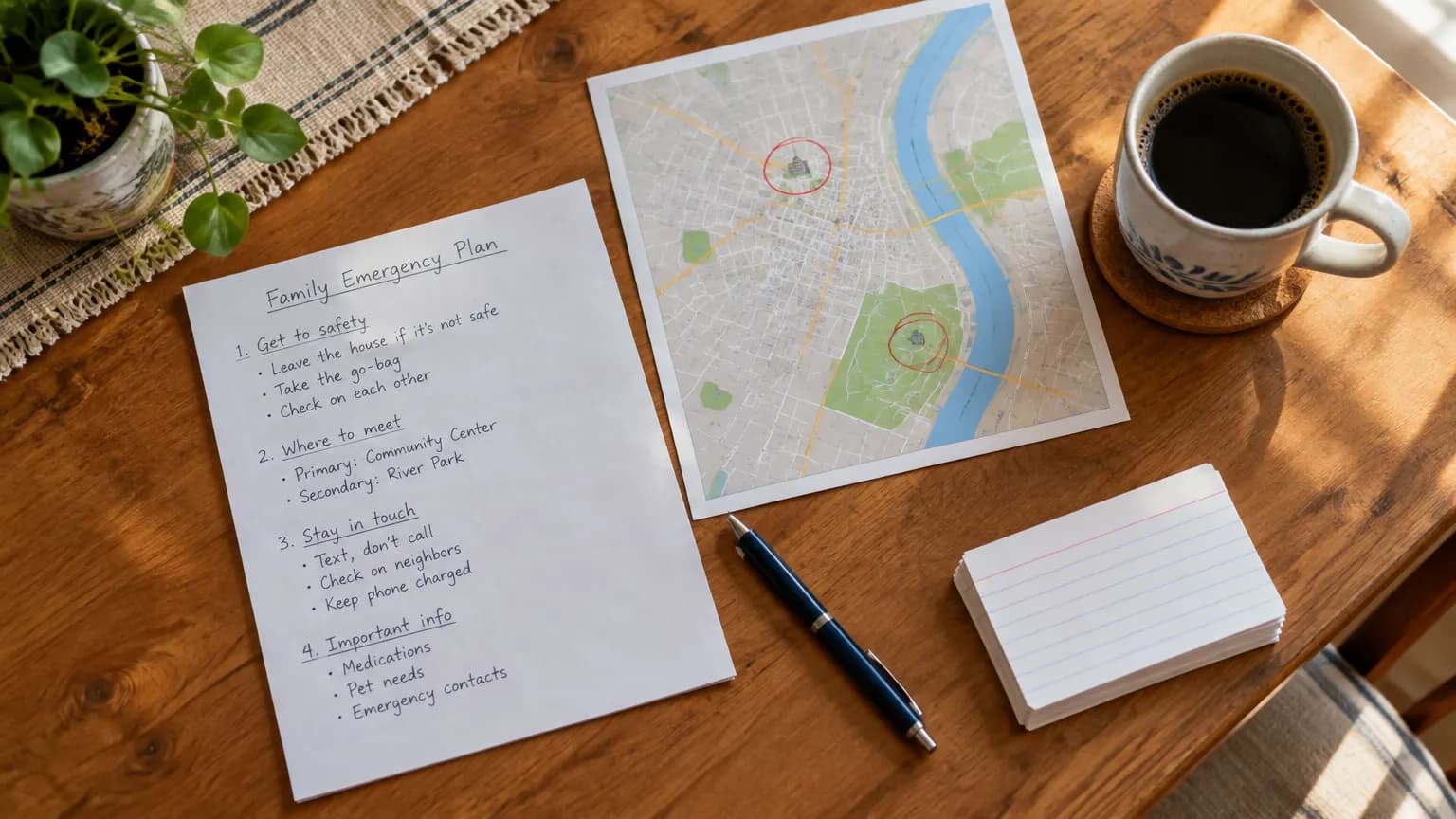
Every household has an emergency plan in the sense that everyone assumes they know what would happen. Almost none have one in the sense that it is written down, agreed on, and carried by the people who would need it. The difference shows up at exactly the wrong moment: when the adults are at work, the kids are at school, and nobody can get a call through.
Start with communication, because it is the thing that fails first and surprises people most. During a large local emergency, local phone circuits jam with everyone calling everyone at once. Two things tend to keep working when voice calls do not: text messages, which need a fraction of the bandwidth and will retry on their own, and long-distance connections, which route around the congested local network. So the cornerstone of a family plan is an out-of-area contact: one person, well outside your region, whom everyone in the household calls or texts to check in. They become the switchboard. Everyone reports to them, and everyone learns where everyone else is from them.
Next, meeting points, and you need two. One immediately outside the house, for the situation where the house itself is the emergency, such as a fire: the end of the driveway, a specific neighbor's mailbox, somewhere unambiguous. The second outside the neighborhood, for the situation where the area is evacuated or unreachable: a library, a relative's house, a shopping center parking lot on the far side of town. Pick real, specific places, and say them out loud together rather than assuming everyone inferred the same spot.
Then the reunification rules for children, which is the part most plans skip. Find out what your school or daycare actually does in an emergency: whether they shelter in place, where they relocate to, who is allowed to collect a child, and what identification that person needs. Add those people to the authorized pickup list in advance, not on the day. If your household includes teenagers with phones, agree that they text the out-of-area contact rather than trying to call you.
All of this has to exist off your phone, because your phone is the thing that dies. Write a card for each person: the out-of-area contact, both meeting points, the two or three numbers they would need, and any critical medical information. Print it small, laminate it or tape it, and put it in a wallet, a backpack, a glovebox. Children who are too young to memorize a number can still carry a card, and that card is worth more than any item in your kit.
Write down the household details that live in one person's head. Where the water shutoff is and which way it turns. Where the electrical panel is. Where the gas meter is, and the important caveat that you should only shut gas off if you smell or hear it leaking, because once it is off it stays off until the utility comes to relight it, and after a disaster that can take a long time. Insurance policy numbers. The vet's phone number. Whichever adult usually knows these things is also the adult who might not be home.
Agree in advance on the decision nobody wants to make on the day: whether you stay or go, and what would change that answer. Our evacuation guide covers the triggers in detail, but the plan needs at least a sentence about it, because in the moment a written threshold beats a tired argument.
Finally, practice enough that it is real. Walk to the near meeting point once. Have everyone text the out-of-area contact so the number is confirmed and they know they are on the hook. Review it when something changes, which is usually when someone moves, changes schools, or gets a new phone number. The plan is not the paper; the paper is just where the plan is stored so the household does not have to invent one under pressure.
Recommended gear for this guide
Picks from our Gear Guide that cover what this article talks about. Affiliate links; see our disclosure.
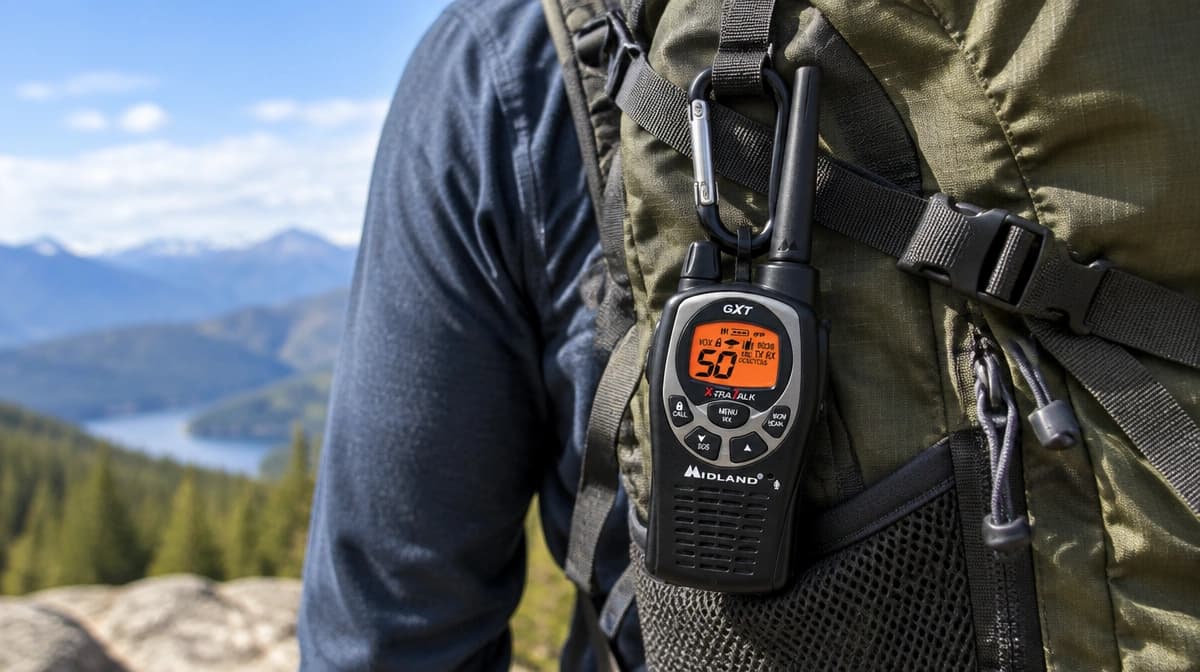
FRS/GMRS two-way radios
$$Midland GXT1000VP4 (pair)
Keep household members in contact without relying on cell service. Includes NOAA weather channels and a charging dock.
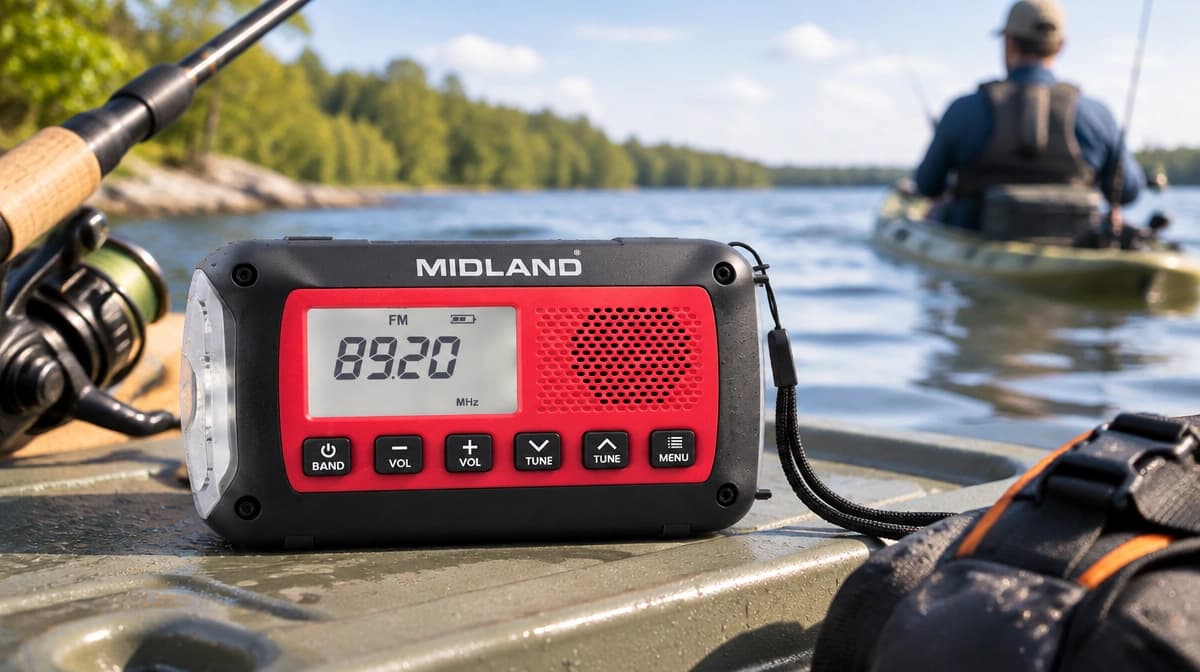
Hand-crank / solar radio
$$Midland ER310
NOAA weather alerts, phone charging, and a flashlight in one unit. Charges by crank, solar, or USB.

Everyday first aid kit
$$My Medic Everyday Carry Kit
Covers the common stuff (cuts, burns, sprains) in a kit small enough to live in a glovebox or daypack.

Medication organizer
$Ezy Dose Weekly (7-Day) Large
Keeps a rotating week of essential prescriptions organized and easy to grab on the way out the door.
Keep reading
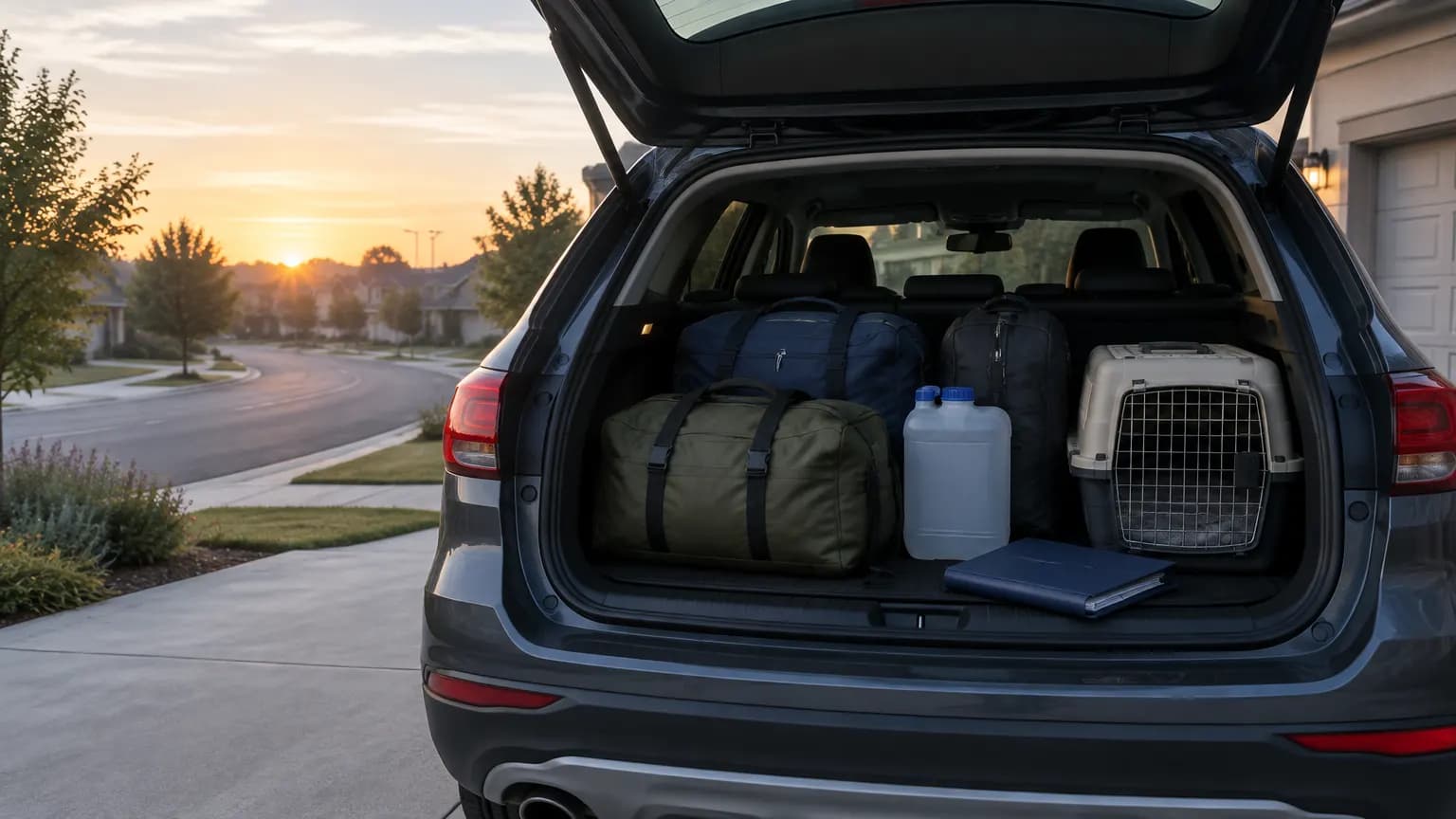
When to Leave: Building an Evacuation Plan Before You Need One
The people who get out cleanly are rarely the fastest packers. They are the ones who decided the threshold in advance and had a list for fifteen minutes, one hour, and six.
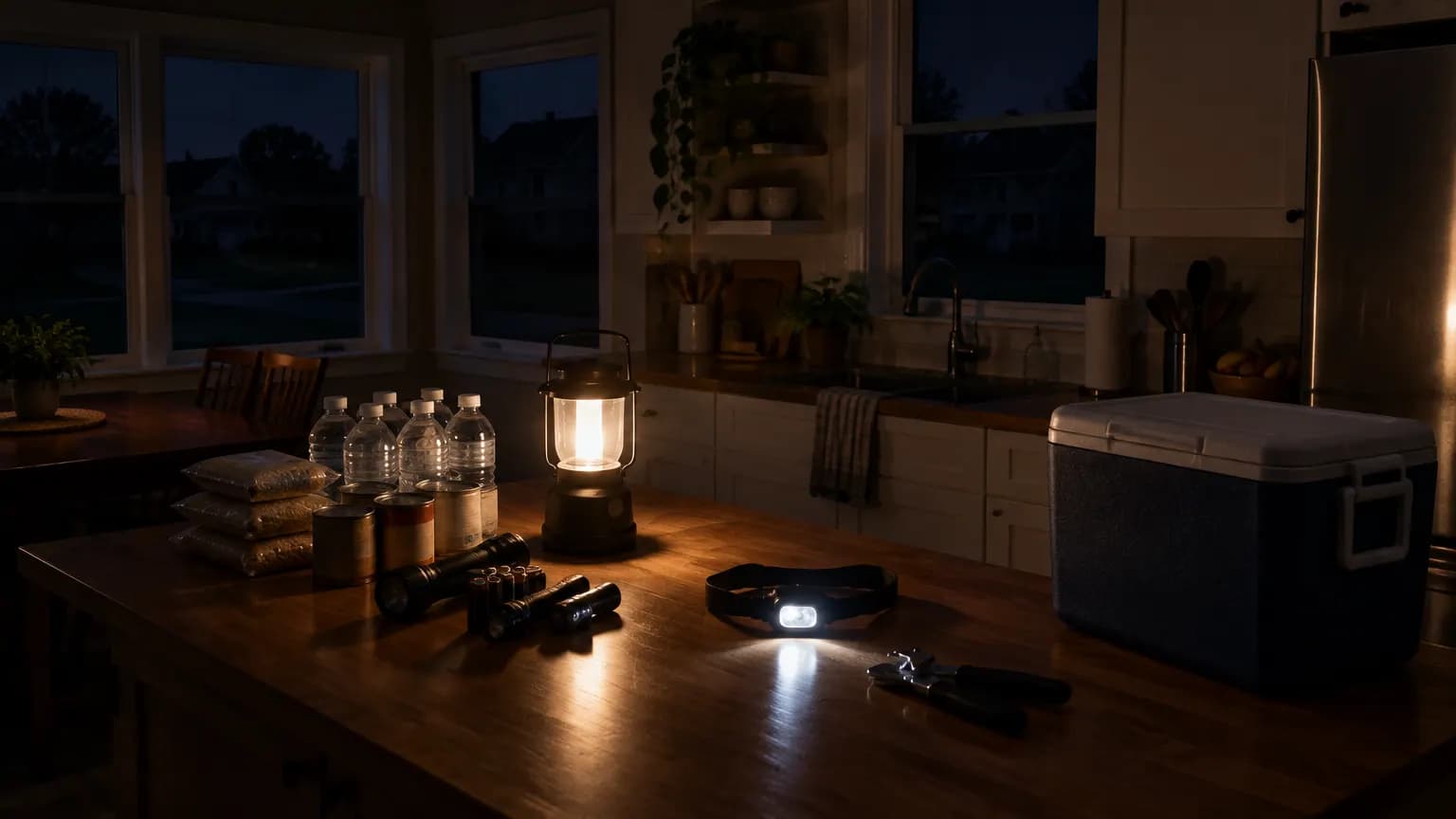
The Power Outage Emergency Kit: What You Actually Need
Most outage kits are built around candles and a flashlight, which covers the first hour and nothing after it. Here is what a kit needs to carry you through a full outage, and what the food in your fridge is doing while you wait.
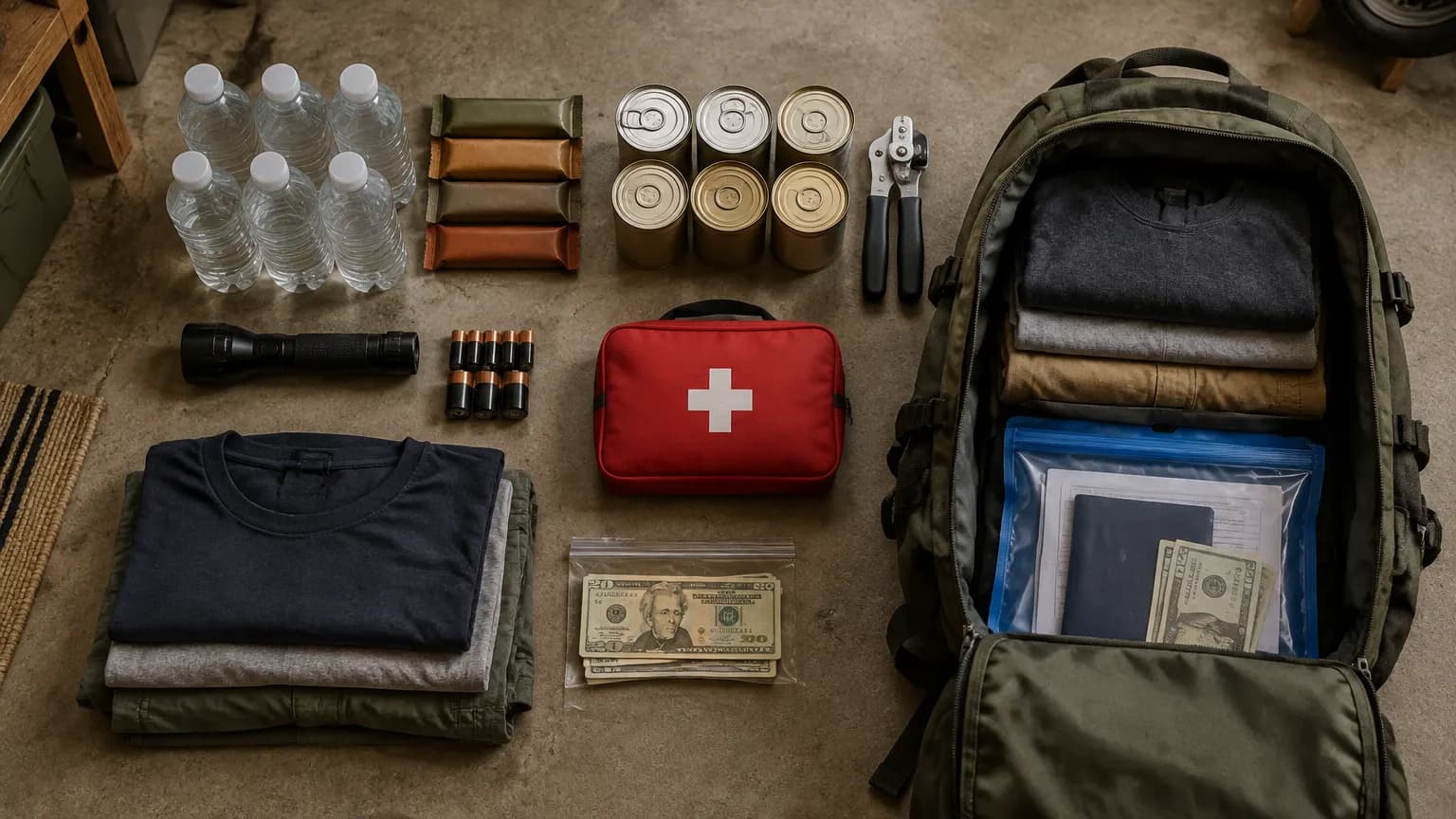
The Complete 72-Hour Emergency Kit Checklist
The first 72 hours after a disaster are the hardest to plan for and the easiest to get wrong. Here's exactly what belongs in your kit, room by room.