 The Prep Nest
How to Size a Portable Power Station for Home Backup
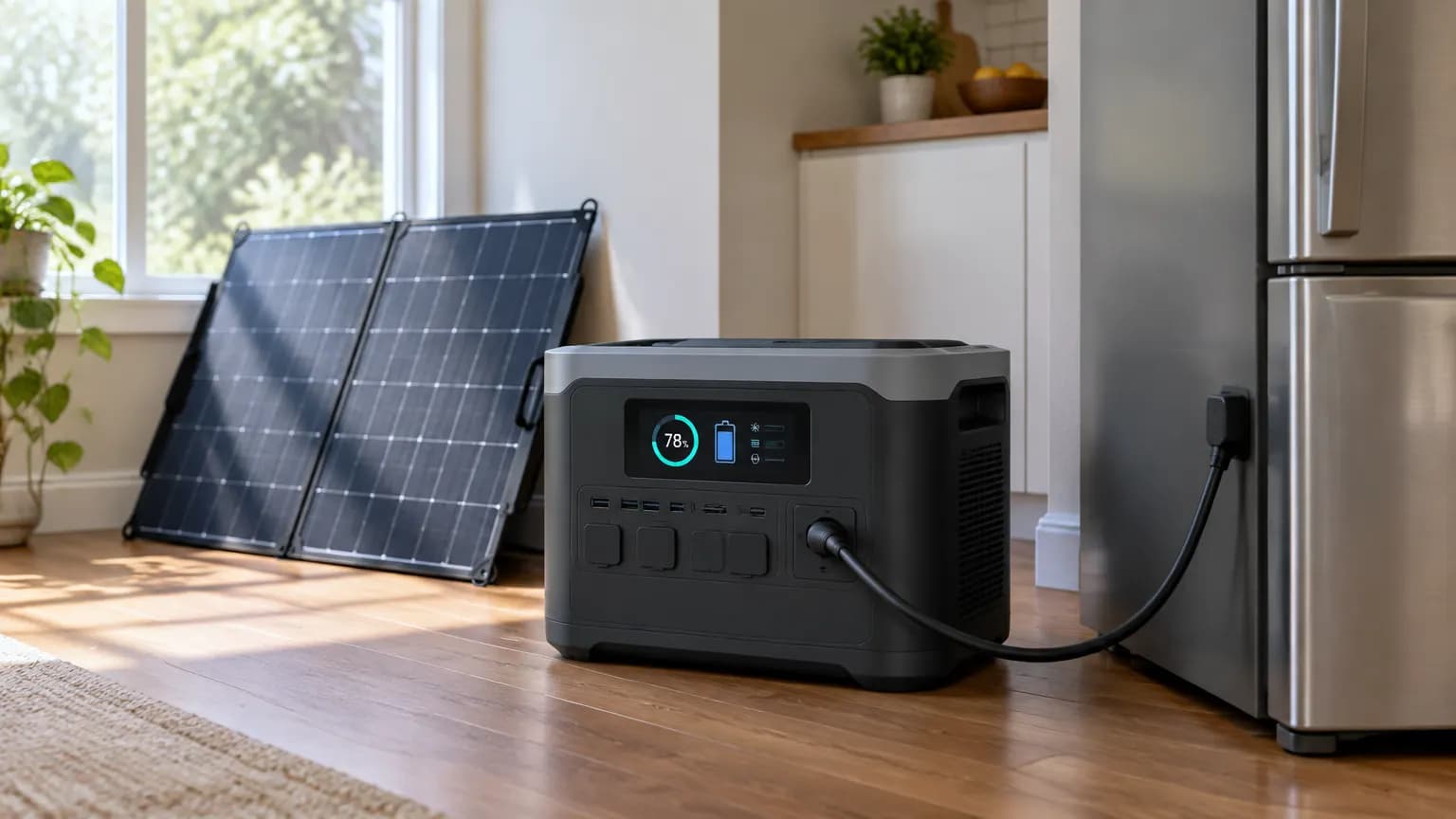
Portable power stations are sold on one big number, the capacity in watt-hours, and that number is close to meaningless until you know what you intend to plug into it. A 1,000 Wh unit is either plenty or useless depending on whether you are keeping phones alive or keeping a refrigerator cold. The arithmetic that connects the two is simple, and doing it before you buy is the difference between a useful purchase and an expensive one.
Two numbers matter and they measure different things. Watts is the rate something draws power: a 150 W fridge, a 10 W LED bulb, a 1,500 W space heater. Watt-hours is the size of the tank. A device drawing 150 W continuously for one hour uses 150 Wh. To work out what you need, list what you genuinely want to run, estimate how many hours a day each one runs, multiply, and add it up.
For a typical household that list is shorter than people expect. A modern refrigerator draws perhaps 100 to 250 W while the compressor runs, but it cycles, so across a full day it uses roughly 1,000 to 2,000 Wh. A CPAP runs about 30 to 60 W without its heated humidifier, so a night is around 300 to 500 Wh; switch the humidifier on and that can nearly double, which is why the manual matters here. Phones are trivial, 10 to 20 Wh each per charge. A laptop is 45 to 65 W while charging. A router and modem together are 10 to 20 W. LED lamps are almost free at 8 to 10 W each.
Now apply the tax nobody prints on the box. The inverter that converts the battery's DC to household AC is roughly 85 to 90 percent efficient, so usable capacity is less than rated capacity. Take about 85 percent as a working figure. A 1,024 Wh unit such as the EcoFlow Delta 3 gives you around 870 Wh in practice. A 3,584 Wh unit like the Jackery HomePower 3600 Plus gives you about 3,050 Wh.
Put those together and the picture gets concrete fast. Running only a fridge at 1,500 Wh a day, the 1,024 Wh unit lasts roughly fourteen hours and the 3,584 Wh unit roughly two days. Add a CPAP, phones, a router, and a few lights, and call it 2,200 Wh a day: the smaller unit now covers most of a night, the larger one a day and a bit. That is the honest answer, and it is why a power station on its own is a bridge across a short outage rather than a solution to a long one.
The second number to check is surge. Anything with a motor, a fridge compressor most of all, draws several times its running wattage for the first instant of startup. A unit rated for 1,800 W continuous handles a 150 W fridge easily in normal running and may still trip if its surge rating is too low. Check both figures against the motorized appliances on your list, and leave headroom.
Heat is the one category to rule out early. A space heater is typically 1,500 W, which would drain even a 3,584 Wh unit in about two hours while doing very little for the temperature of a house. The same applies to electric kettles, hair dryers, and most electric cooking. Backup battery power is for refrigeration, medical equipment, light, and communication. Warmth comes from insulation, layers, and closing off a single room, not from the battery.
If outages where you live last more than a day, solar input is what changes the arithmetic. A power station with panels stops being a tank you drain and becomes a supply you refill, in the same way a filter turns stored water into renewable water. Look at the maximum solar input in watts, and be realistic about conditions: a 200 W panel produces 200 W in bright direct sun at a good angle, and a fraction of that under the overcast sky that often comes with the storm that took your power out in the first place.
Two more practical points. Battery chemistry decides how long the unit lasts in years rather than hours: LiFePO4 cells are typically rated for several thousand charge cycles before dropping to 80 percent capacity, where older lithium-ion chemistries manage a few hundred. That matters for something which may sit unused for years between real outages. And a power station powers what you plug into it, nothing more. Running hardwired circuits such as a furnace or a well pump means an interlock or transfer switch fitted by an electrician. Never backfeed a house through a dryer or generator outlet with a double-ended cord: it energizes the line outside and can kill the utility crew working to restore your power.
The short version: add up what you actually need for one day, take 85 percent of a unit's rated capacity, divide, and be honest about how many days you are planning for. Most households land on one mid-size unit for the common case, plus solar if they live somewhere the lights stay off for days.
Recommended gear for this guide
Picks from our Gear Guide that cover what this article talks about. Affiliate links; see our disclosure.
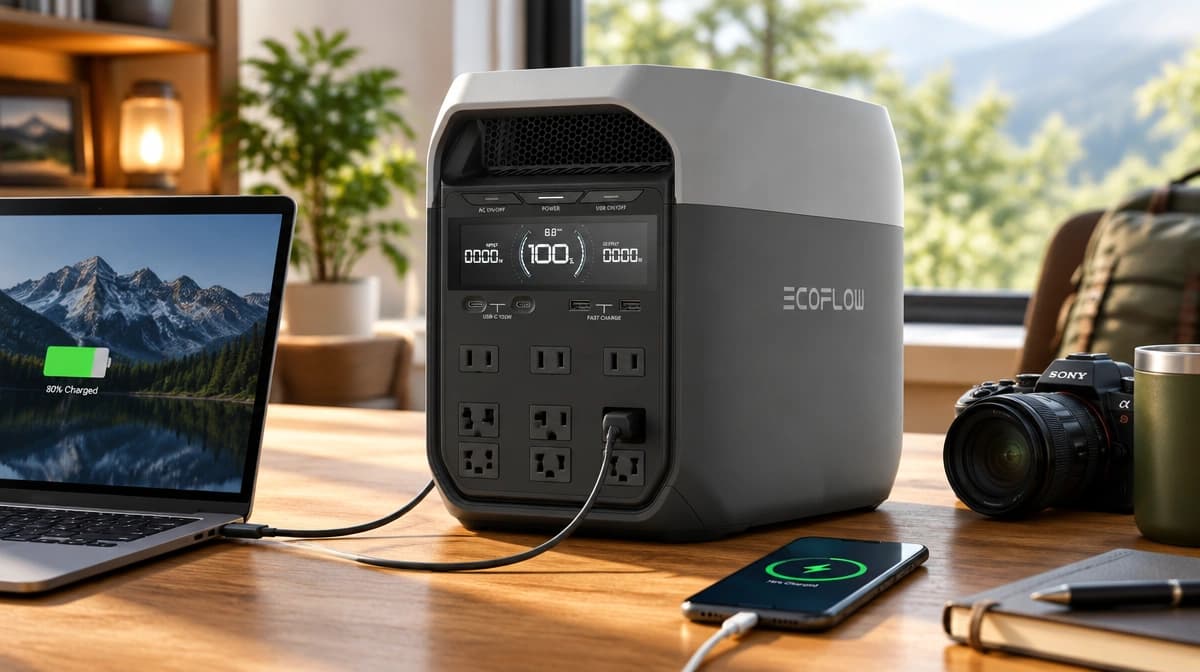
Portable power station (fast charging)
$$$EcoFlow Delta 3 (1024 Wh)
LiFePO4 cells rated for thousands of cycles and a wall recharge in about an hour. The better choice if outages are frequent where you live.
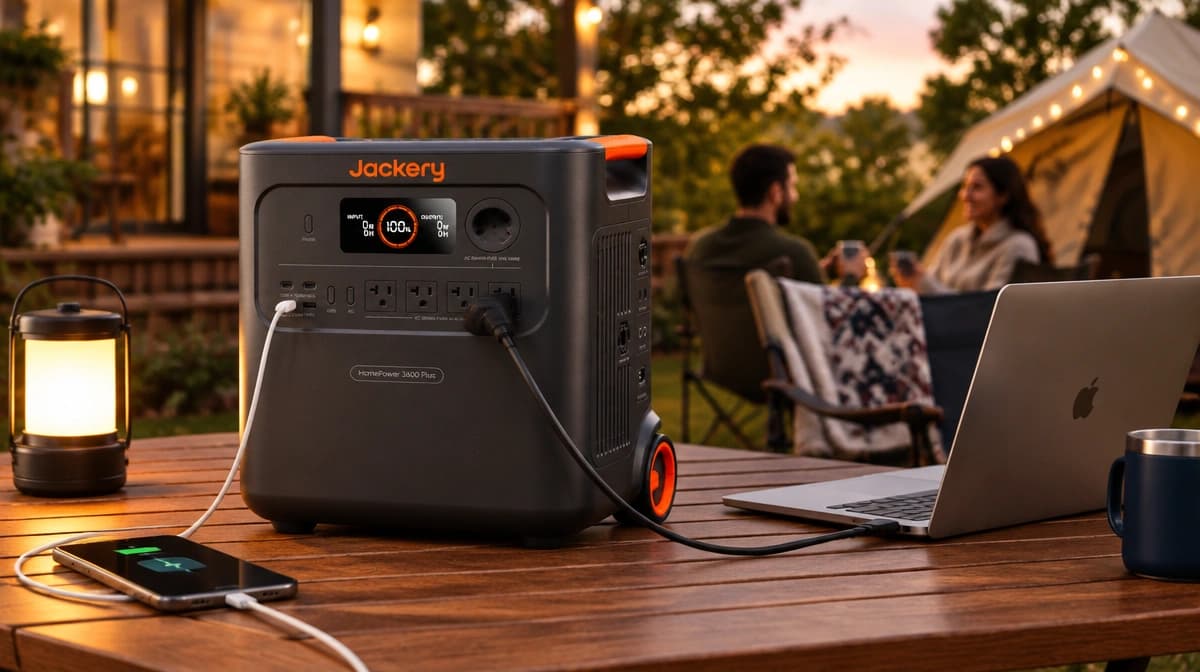
Portable power station
$$$Jackery HomePower 3600 Plus
3584 Wh and 3600 W of AC output: enough to keep a fridge, a CPAP, and phones running through a multi-day outage, and expandable with extra batteries and Jackery's folding solar panels.

Budget emergency radio
$FosPower A1 (7400 mWh)
The affordable pick: NOAA band, solar and crank charging, and an SOS alarm at about half the price of the Midland.
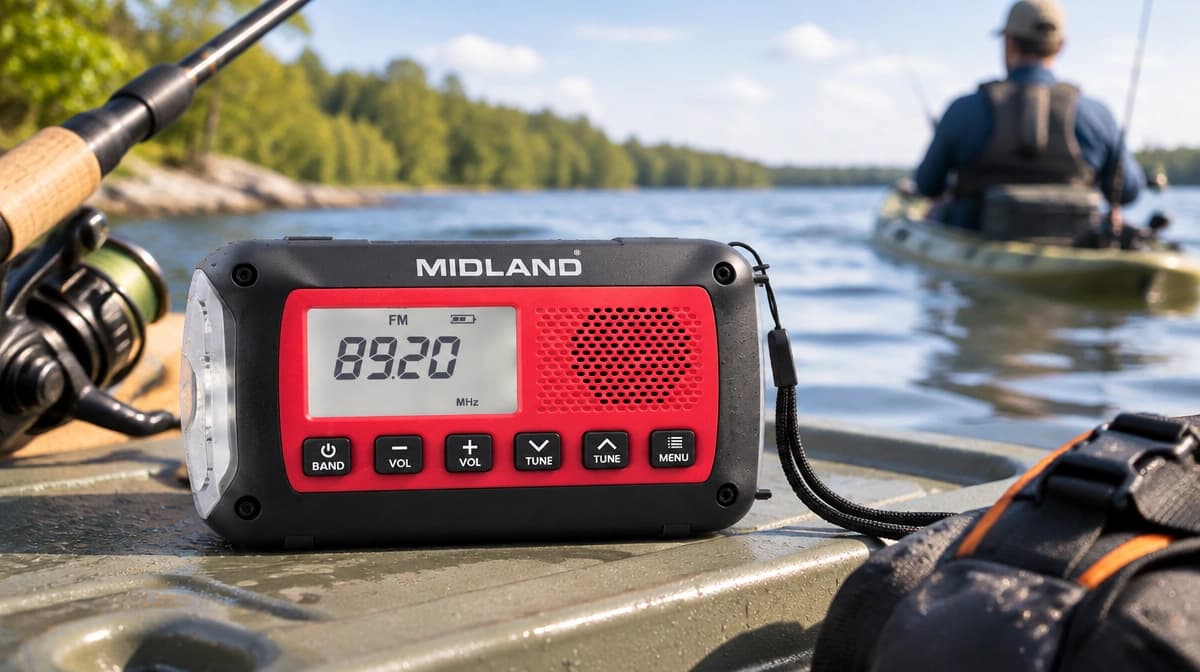
Hand-crank / solar radio
$$Midland ER310
NOAA weather alerts, phone charging, and a flashlight in one unit. Charges by crank, solar, or USB.
Keep reading
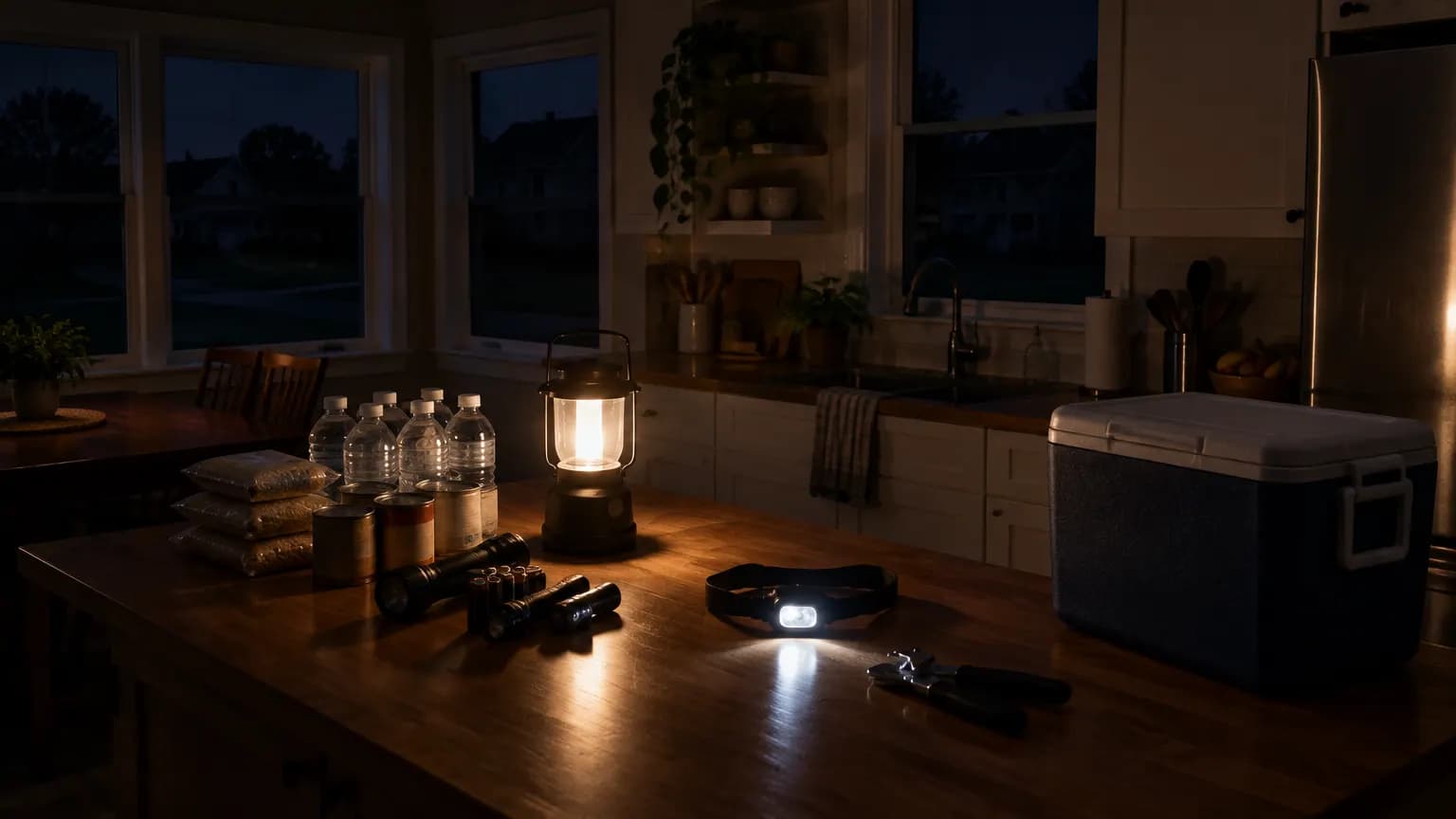
The Power Outage Emergency Kit: What You Actually Need
Most outage kits are built around candles and a flashlight, which covers the first hour and nothing after it. Here is what a kit needs to carry you through a full outage, and what the food in your fridge is doing while you wait.

When the Lights Stay Off: Planning for a Multi-Day Blackout
A four-hour outage is an inconvenience. A four-day one is a different problem: heat, water, food spoilage, and a decision about whether to stay. Here is how to think about each.
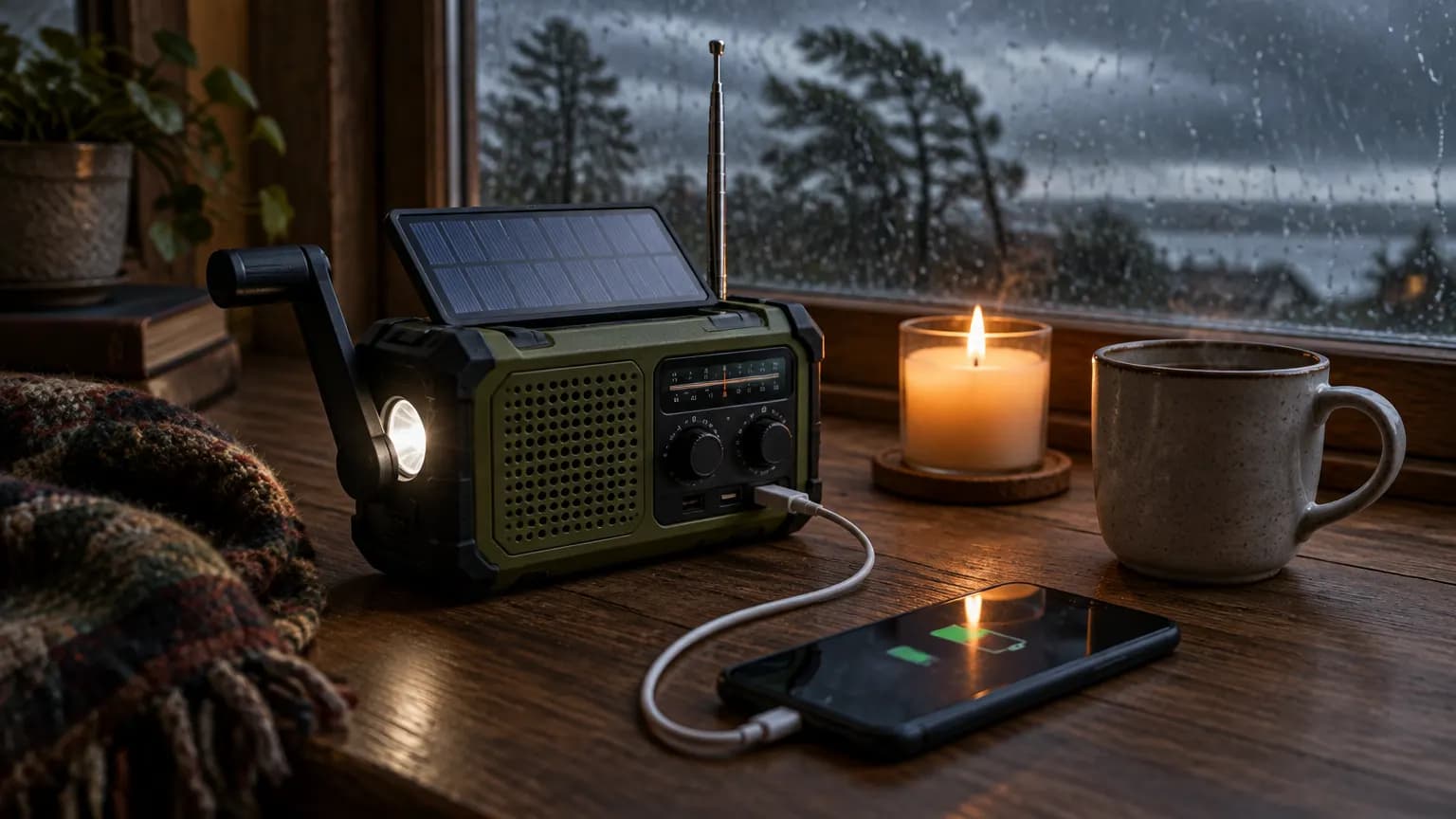
5 Things to Look for in an Emergency Hand-Crank Radio
Not all hand-crank radios are created equal. Here's what separates a genuinely useful unit from a novelty gadget.