 The Prep Nest
Emergency Water Filters Compared: Gravity, Squeeze, Straw, Tablets
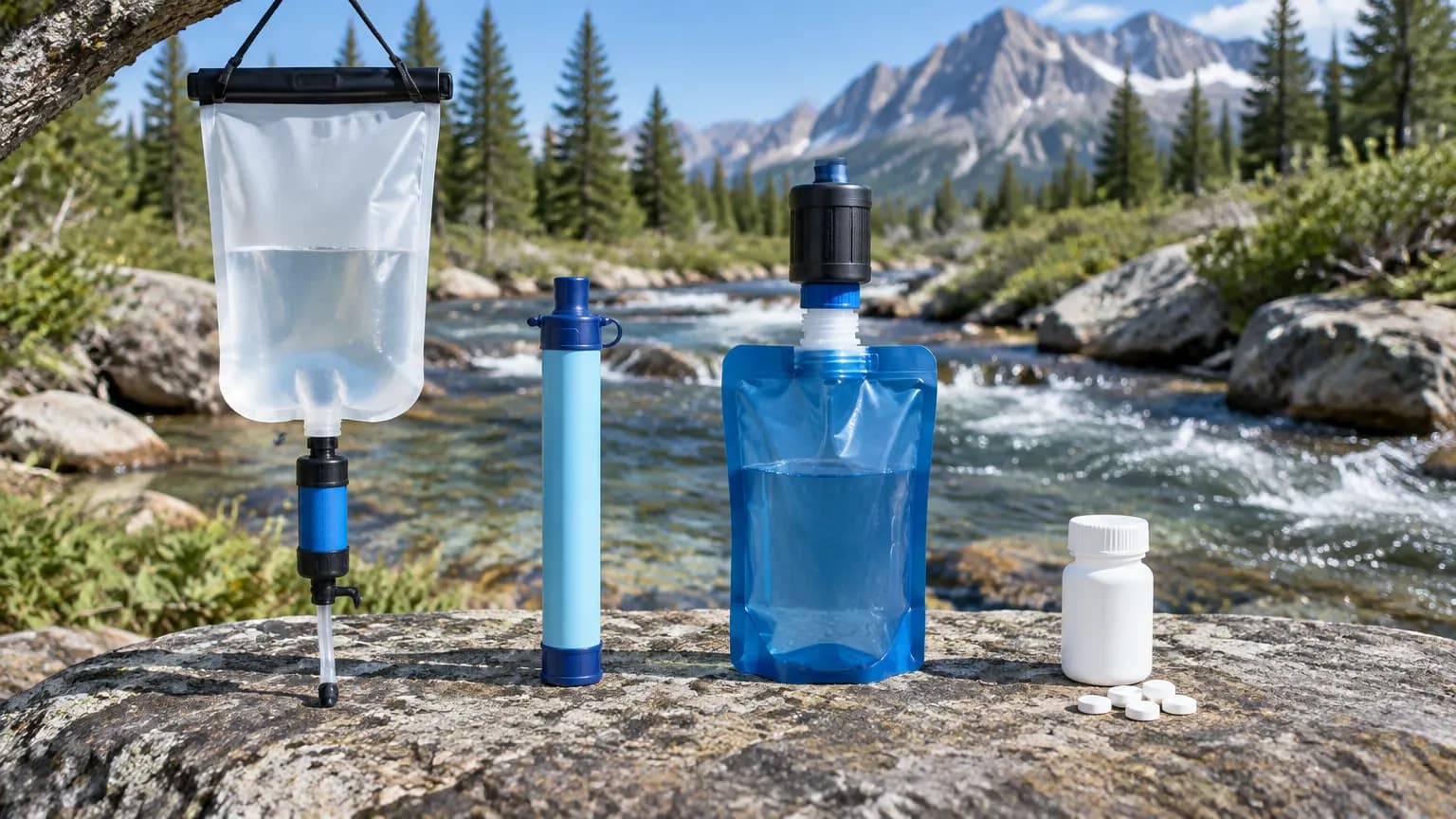
Stored water runs out. A way to treat more of it is what turns a finite supply into a renewable one, which is why filtration sits near the top of almost every preparedness list. The four common approaches solve genuinely different problems, and the right answer is usually two of them rather than the best one.
Before comparing them, the technical detail that matters more than any other: most portable filters are hollow-fiber membranes rated around 0.1 to 0.2 microns. That pore size reliably removes bacteria and protozoa, the things that cause most waterborne illness from streams and lakes. It does not remove viruses, which are far smaller. In North American backcountry that is usually an acceptable risk. In a disaster involving municipal supply, sewage contamination, or flooding, it is not. This is why chemical treatment belongs in the kit alongside a filter rather than instead of one.
Gravity filters are the household answer. You fill a bag, hang it, and walk away while several liters run through under their own weight. The Platypus GravityWorks does four liters at a time with no pumping and no attention, which is exactly what you want when you are treating water for a family rather than for yourself, or when you are doing three other things during an outage. The trade-offs are bulk, price, and the need for somewhere to hang it. For a home kit or a group, it is the one that gets used because using it costs no effort.
Squeeze filters are the flexible middle. The Sawyer Mini works inline on a hydration hose, screwed onto a bottle, as a straw at the source, or squeezed from the pouch into a container, and it is rated for an enormous volume over its life. That versatility plus its weight is why it is the default choice for a bug out bag: it covers drinking now and filling a container for later, which a straw cannot do. The flow rate drops as it clogs, so it needs backflushing, and it must not freeze, because ice ruptures the fibers and a ruptured filter fails silently.
Straw filters are the simplest and the most limited. The LifeStraw has no moving parts, nothing to assemble, and nothing to break, and you drink directly from the source through it. That is its whole design and also its constraint: you cannot carry treated water away with you, and you have to get your face down to the water, which is awkward at a shallow puddle and impossible from a tap. As a backup in a glovebox or a second layer in a kit it is excellent. As the only filter for a household it is the wrong tool.
Purification tablets are the lightest and the one that covers what the others miss. Potable Aqua with the PA Plus neutralizer weighs almost nothing, stores for years, and handles viruses, which is exactly the gap in every hollow-fiber filter above. The costs are time, usually around thirty minutes of contact time, and taste, which is what the second bottle in the pack is for. Tablets do nothing about sediment or chemical contamination, so the practical technique is to filter first and then treat, which gives you clear water and full coverage.
So what should you own? For a household, a gravity filter plus tablets covers volume and viruses between them, which is the combination that matters if the outage involves municipal water. For a pack, a squeeze filter plus tablets does the same job at a weight you will carry. A straw is a good third layer to keep in a car, and it is a poor first choice. If you can only afford one thing today, buy the tablets: they are the cheapest, they cover the risk a filter does not, and they never need maintenance.
Two habits make any of these work better. Pre-filter cloudy water through a bandana or coffee filter before it hits the membrane, which buys you a lot of filter life for no money. And know that boiling still works when everything else fails: a rolling boil for one minute, or three minutes above about 6,500 feet, kills everything biological. It needs fuel, which is the reason it is a backup rather than a plan, but it is the method that never clogs, never expires, and never needs replacing.
Recommended gear for this guide
Picks from our Gear Guide that cover what this article talks about. Affiliate links; see our disclosure.
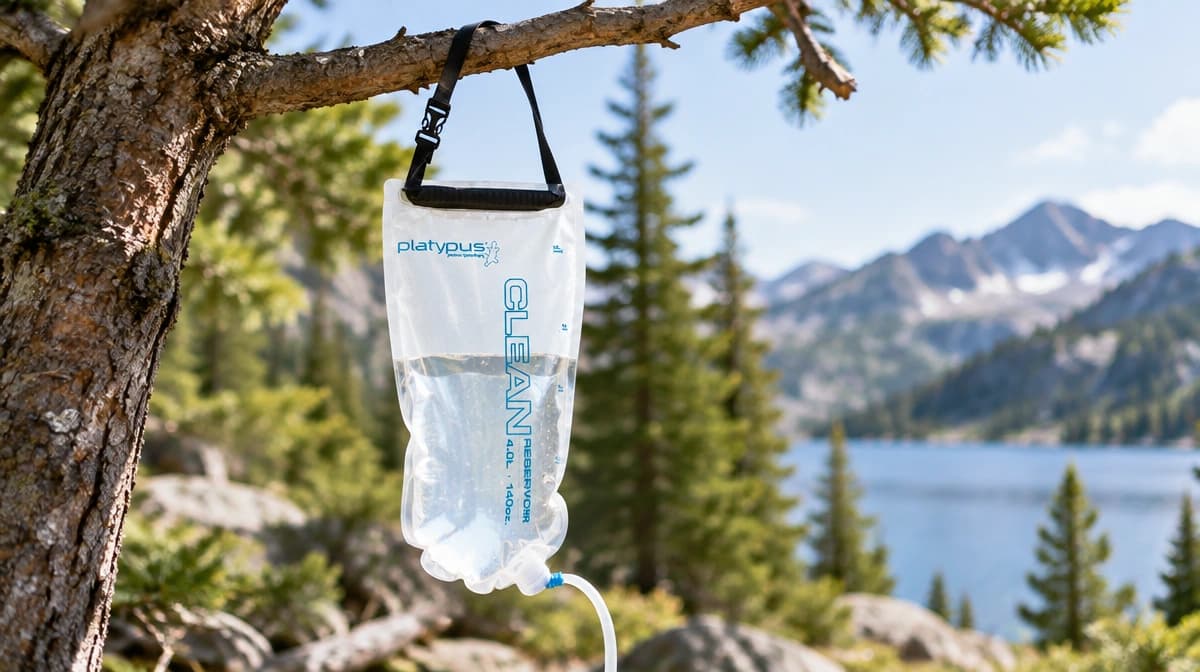
Gravity-fed water filter
$$$Platypus GravityWorks 4L
Filters four liters at a time with no pumping required, ideal for a household kit or group camp.

Inline squeeze filter
$Sawyer Mini SP128
Works as a straw, inline on a hydration bladder, or with the included squeeze pouch. Rated for 100,000 gallons.
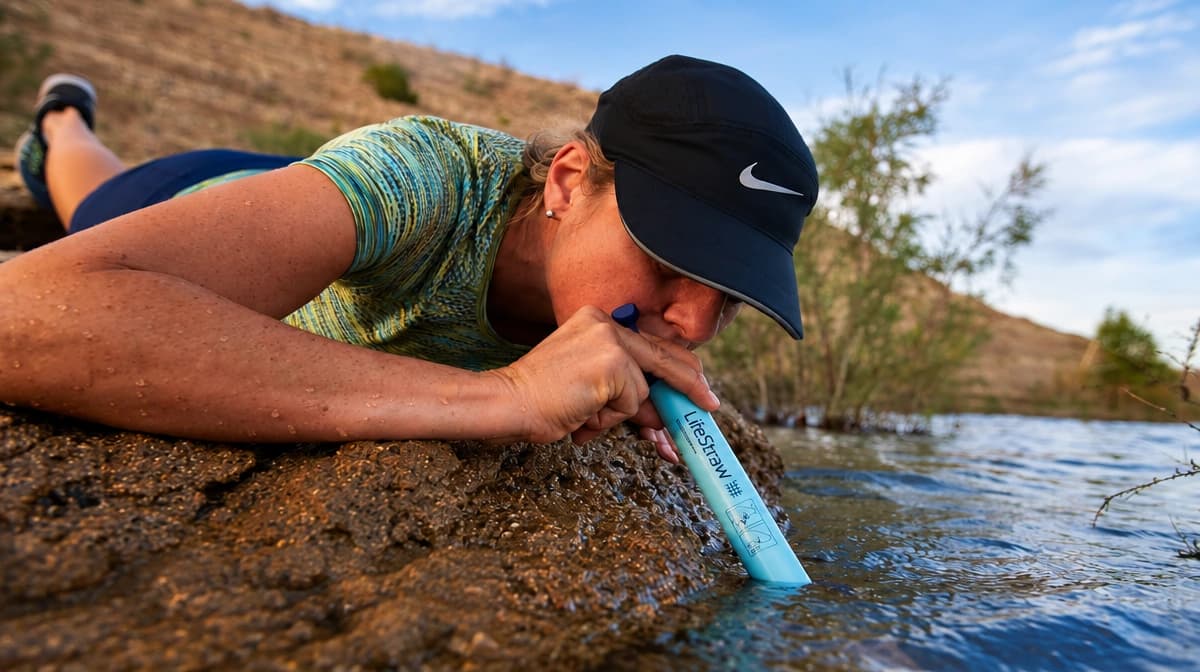
Personal straw filter
$LifeStraw Personal
Compact, single-user filtration for bug-out bags and day hikes. No moving parts, nothing to break.
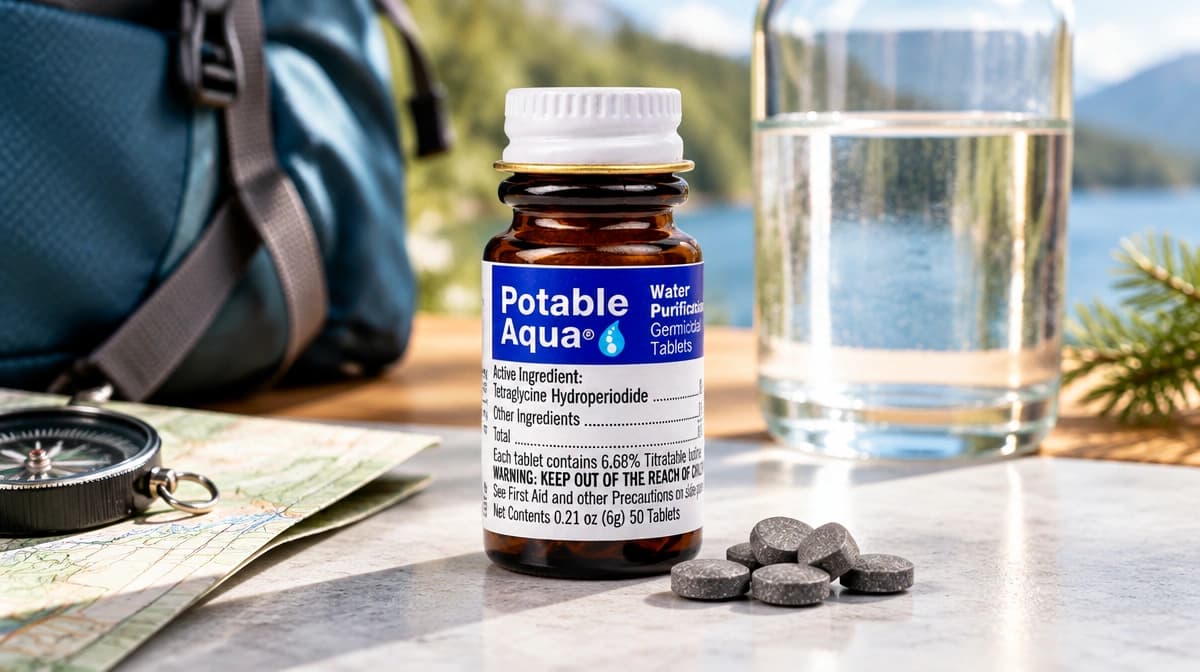
Water purification tablets
$Potable Aqua with PA Plus (2 x 50)
Lightweight backup for when filtration alone isn't enough against viruses. The PA Plus bottle removes the iodine taste.
Keep reading
Rainwater Harvesting: How Much You Can Collect, and What It Is Safe For
A single inch of rain on an average roof is hundreds of gallons. Here is the arithmetic, the hardware that makes it usable, and the honest answer on whether you can drink it.
How Much Water Should You Really Store? A Complete Guide
Water is the single most important resource in any emergency plan, and the one people most consistently under-budget for. Here's how to size your storage correctly.
The Bug Out Bag You Would Actually Carry
Most bug out bags fail the same way: they are packed for every scenario and too heavy to walk anywhere with. Here is how to build one around a weight budget instead of a wish list.