 The Prep Nest
Rainwater Harvesting: How Much You Can Collect, and What It Is Safe For
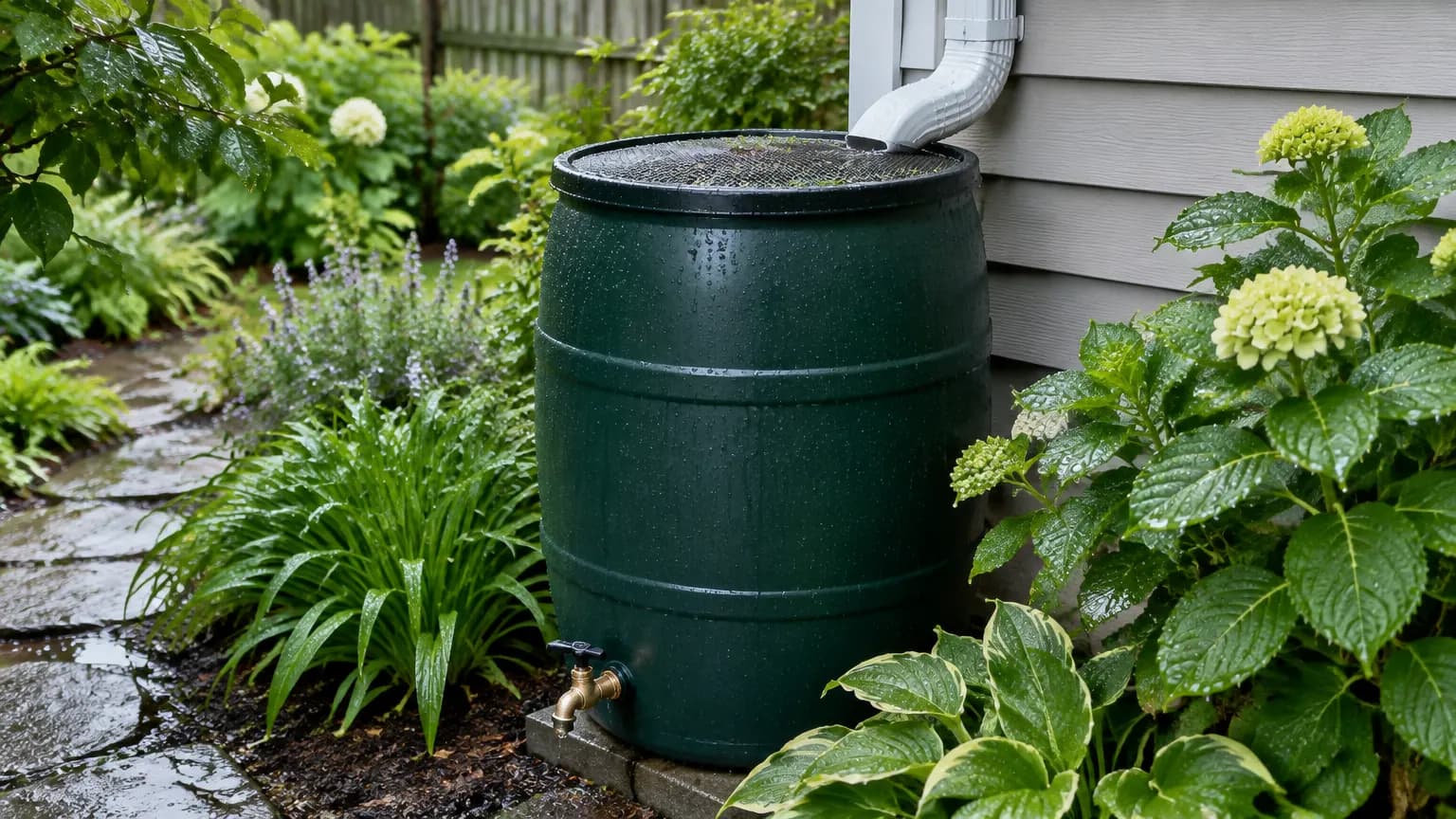
Stored water is finite, which is the limitation behind every water plan. Rainwater harvesting is one of the few ways a household turns that finite supply into a replenishing one without depending on a utility, and the volumes involved surprise people the first time they run the numbers.
The arithmetic is simple. Multiply your roof's footprint in square feet by the rainfall in inches, then by 0.623, and the answer is gallons. A modest 1,000 square foot roof catching one inch of rain yields about 620 gallons. In a region getting 30 inches a year, that same roof sheds something close to 18,000 gallons annually, almost all of which currently goes down a storm drain. You will never capture all of it, since storage is the binding constraint rather than supply, but the scale explains why even a couple of barrels fill faster than people expect.
A basic system has four parts. The catchment is your roof. The conveyance is the gutters and downspouts you already have. The storage is a barrel or tank, and this is the part that determines how much of that rainfall you actually keep. The treatment is what makes the water usable for whatever you intend, and it is the part most often skipped.
Between conveyance and storage belongs one piece of hardware worth knowing about: a first flush diverter. The first few gallons off a roof carry everything that has accumulated up there since the last rain, which is dust, pollen, grit, bird droppings, and whatever the wind delivered. A diverter routes that initial volume away before the rest reaches your tank. It is a simple device, it costs little, and it improves the water quality in storage more than anything else you can bolt on.
Two nuisances have easy answers. Mosquitoes breed in standing water, so every opening needs fine screen and the tank needs to seal. Algae grows with light, so opaque tanks beat translucent ones, and a barrel in shade stays cleaner than one in full sun. Both problems are trivial when designed for and persistent when not.
Now the question that matters most: can you drink it? Not straight from the barrel. Roof runoff picks up bacteria from bird and animal droppings, particulates, and depending on the roofing material, chemical contamination. Asphalt shingles shed granules and compounds that make the water less suitable for drinking; metal roofing is considerably better, and older roofs may involve materials worse than either. Treat harvested rainwater as raw surface water: fine for the garden as it is, but for drinking it needs filtering and disinfecting.
The treatment chain is the same one covered in our water filter comparison, and the order matters. Let sediment settle or pre-filter it through cloth, run it through a gravity filter to remove particulates, bacteria, and protozoa, then disinfect with purification tablets or a rolling boil to handle the viruses that hollow-fiber membranes do not catch. That last step is not optional when the source is a roof that birds use.
Plan storage around what you want it for. For a garden through a dry spell, a couple of 55-gallon barrels on the downspouts that get the most flow will do far more than their size suggests, because they refill with every rain. For genuine preparedness, where the point is having water when the utility or the well pump is down, think in terms of a larger tank and the arithmetic in our water storage guide: roughly one gallon per person per day as a floor. A filled barrel weighs over 400 pounds, so it needs level, solid, load-bearing ground under it, not a wooden deck.
One last thing to check before you buy anything: the rules where you live. Rainwater harvesting is legal and often actively encouraged across most of the United States, with some states offering rebates for it, but a handful regulate it because of how water rights work in arid regions. Colorado is the most cited example, having historically prohibited residential collection before permitting a limited allowance. Check your state and your municipality, since local rules on tank size and placement can differ from state law, and a homeowners association may have opinions of its own.
Recommended gear for this guide
Picks from our Gear Guide that cover what this article talks about. Affiliate links; see our disclosure.
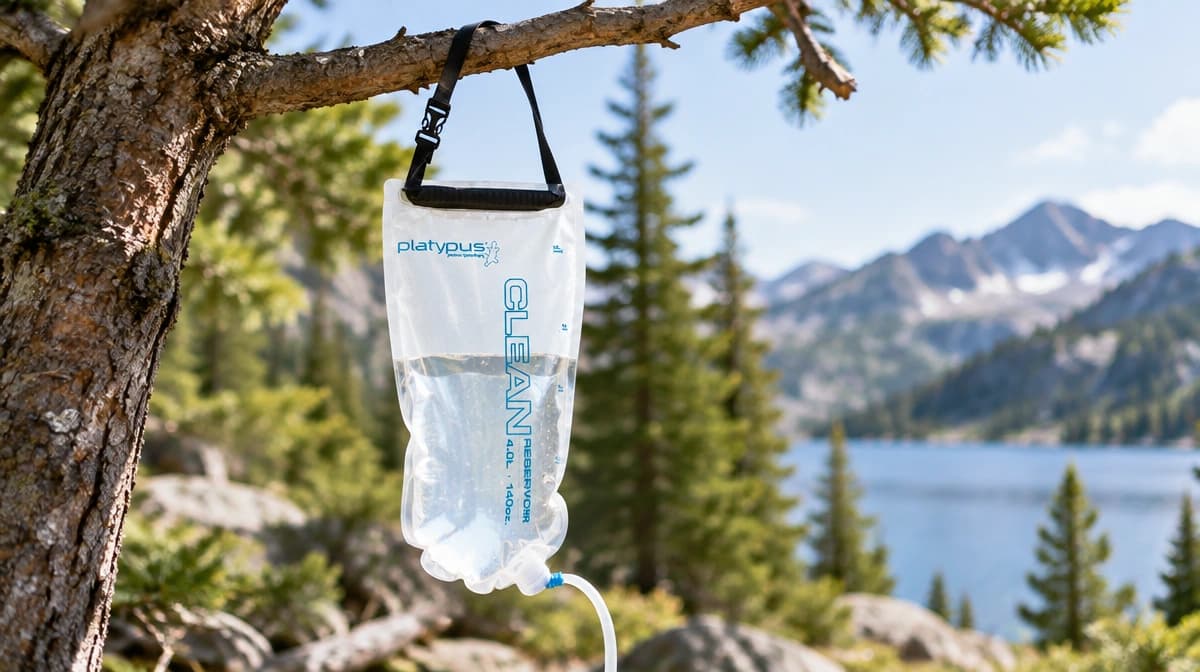
Gravity-fed water filter
$$$Platypus GravityWorks 4L
Filters four liters at a time with no pumping required, ideal for a household kit or group camp.
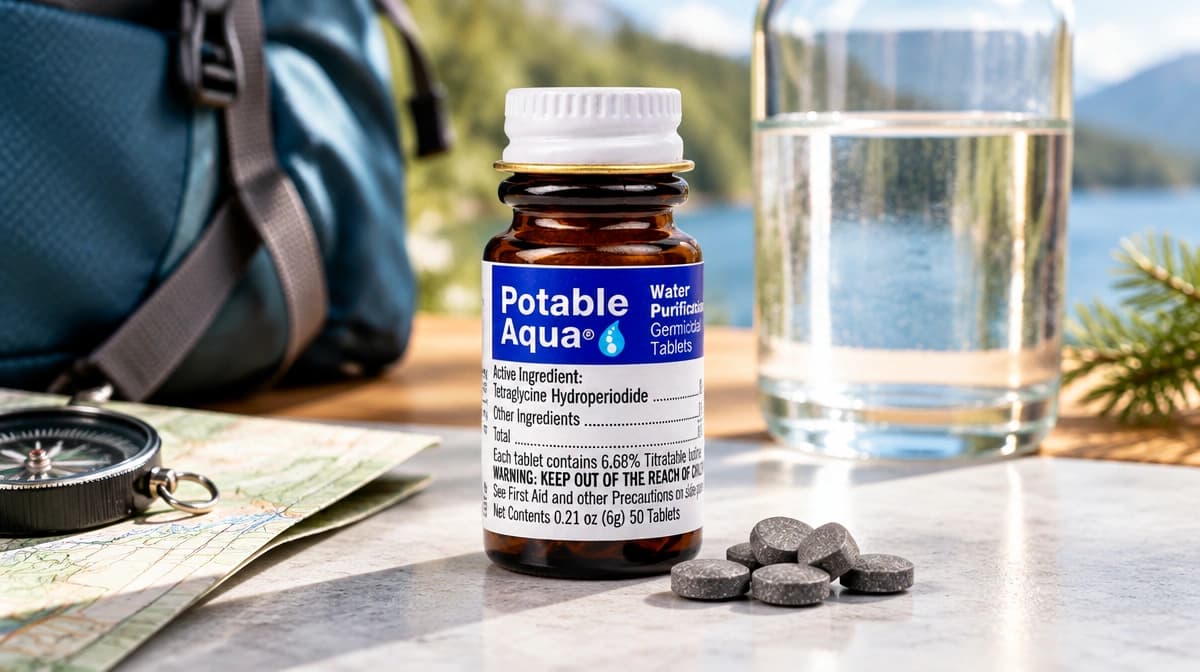
Water purification tablets
$Potable Aqua with PA Plus (2 x 50)
Lightweight backup for when filtration alone isn't enough against viruses. The PA Plus bottle removes the iodine taste.

Inline squeeze filter
$Sawyer Mini SP128
Works as a straw, inline on a hydration bladder, or with the included squeeze pouch. Rated for 100,000 gallons.
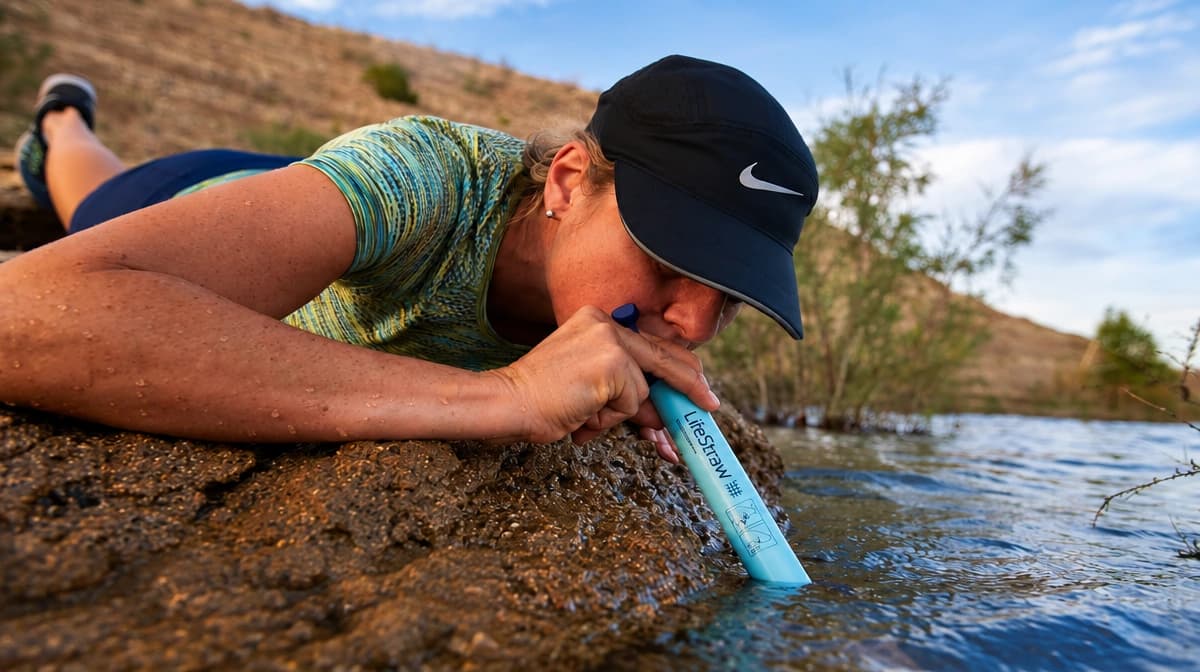
Personal straw filter
$LifeStraw Personal
Compact, single-user filtration for bug-out bags and day hikes. No moving parts, nothing to break.
Keep reading
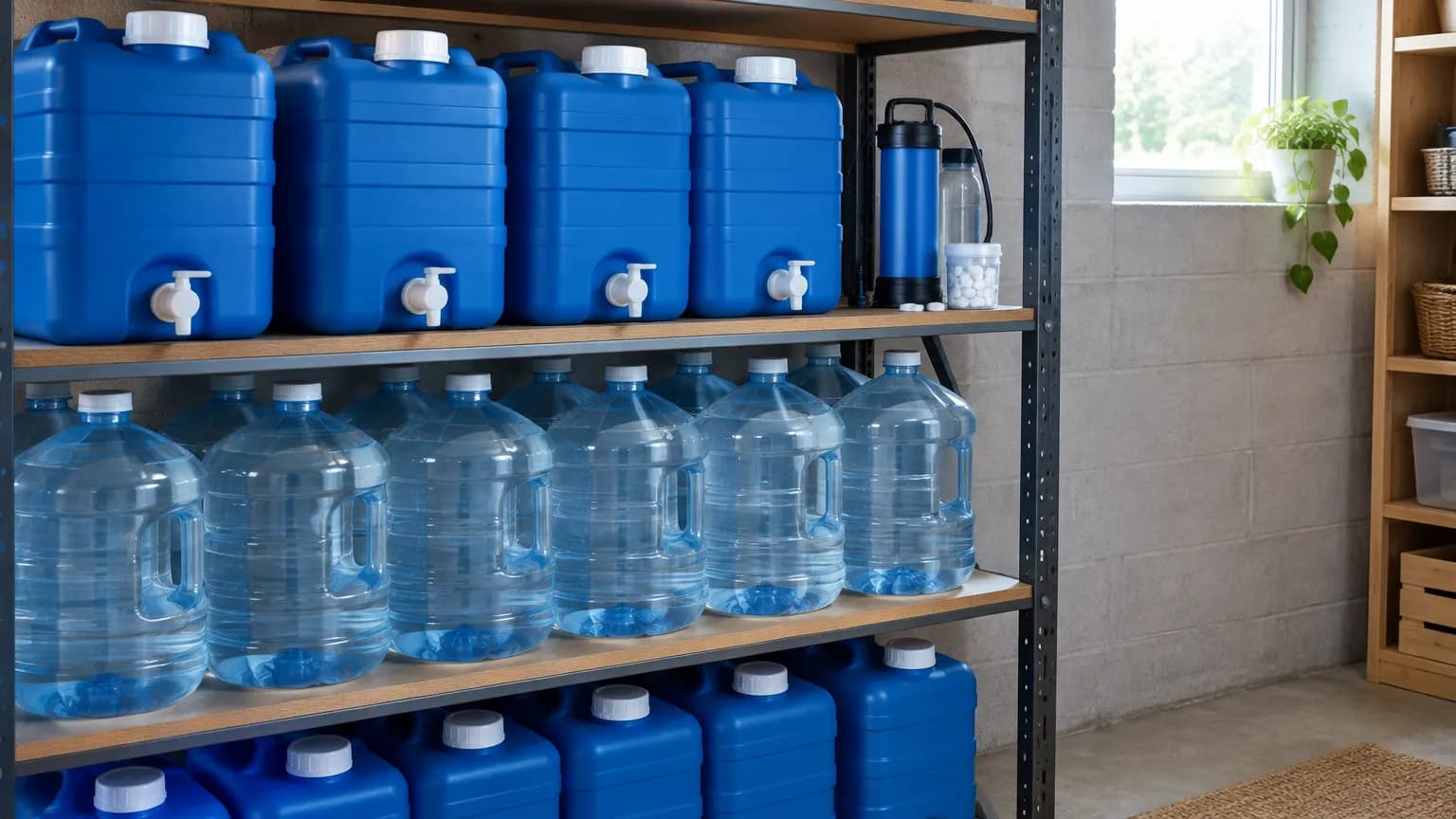
How Much Water Should You Really Store? A Complete Guide
Water is the single most important resource in any emergency plan, and the one people most consistently under-budget for. Here's how to size your storage correctly.
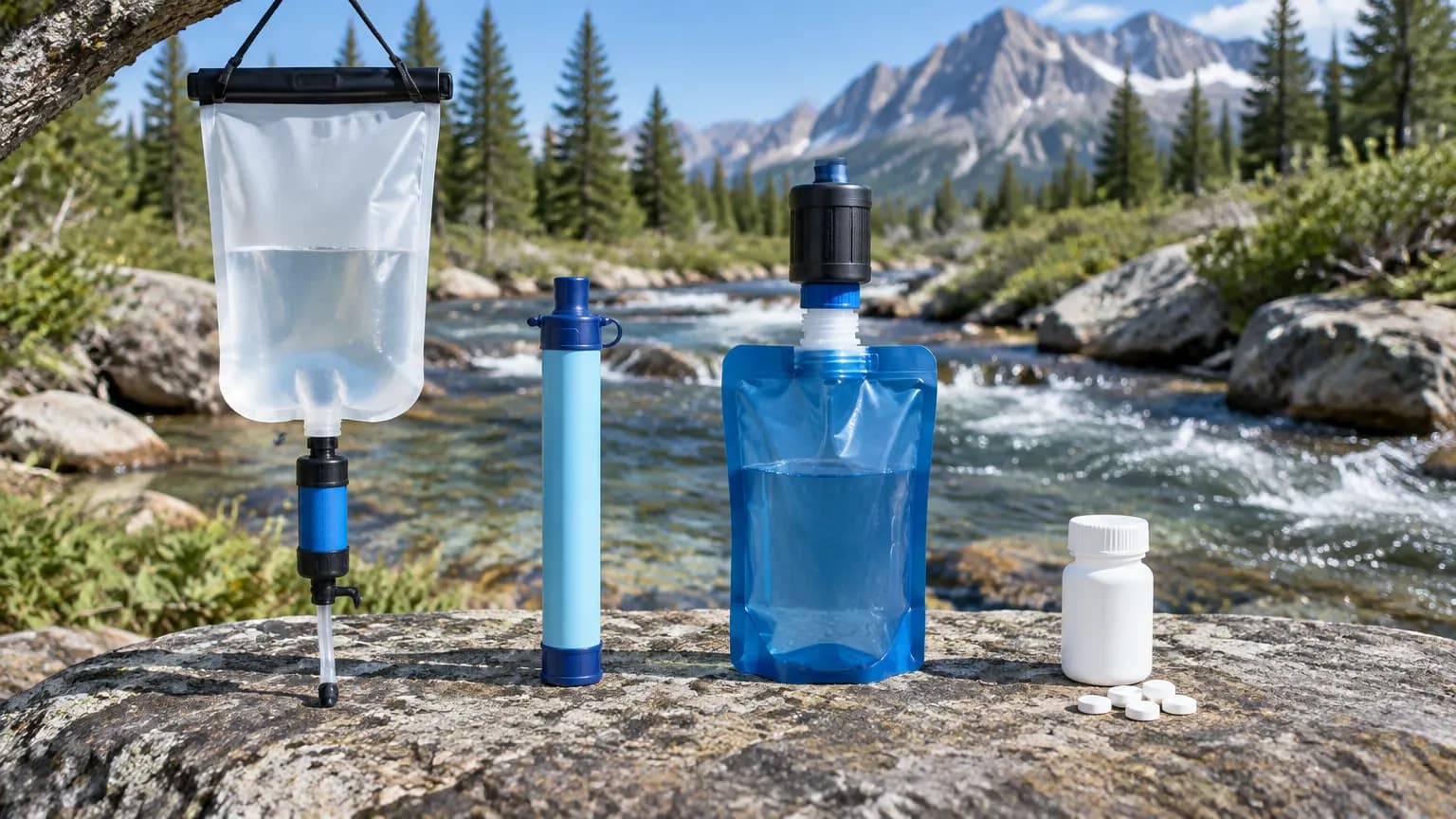
Emergency Water Filters Compared: Gravity, Squeeze, Straw, Tablets
Four ways to make water drinkable, each good at something different, and one technical detail that decides whether your filter is enough on its own.
When the Lights Stay Off: Planning for a Multi-Day Blackout
A four-hour outage is an inconvenience. A four-day one is a different problem: heat, water, food spoilage, and a decision about whether to stay. Here is how to think about each.