 The Prep Nest
How Much Water Should You Really Store? A Complete Guide
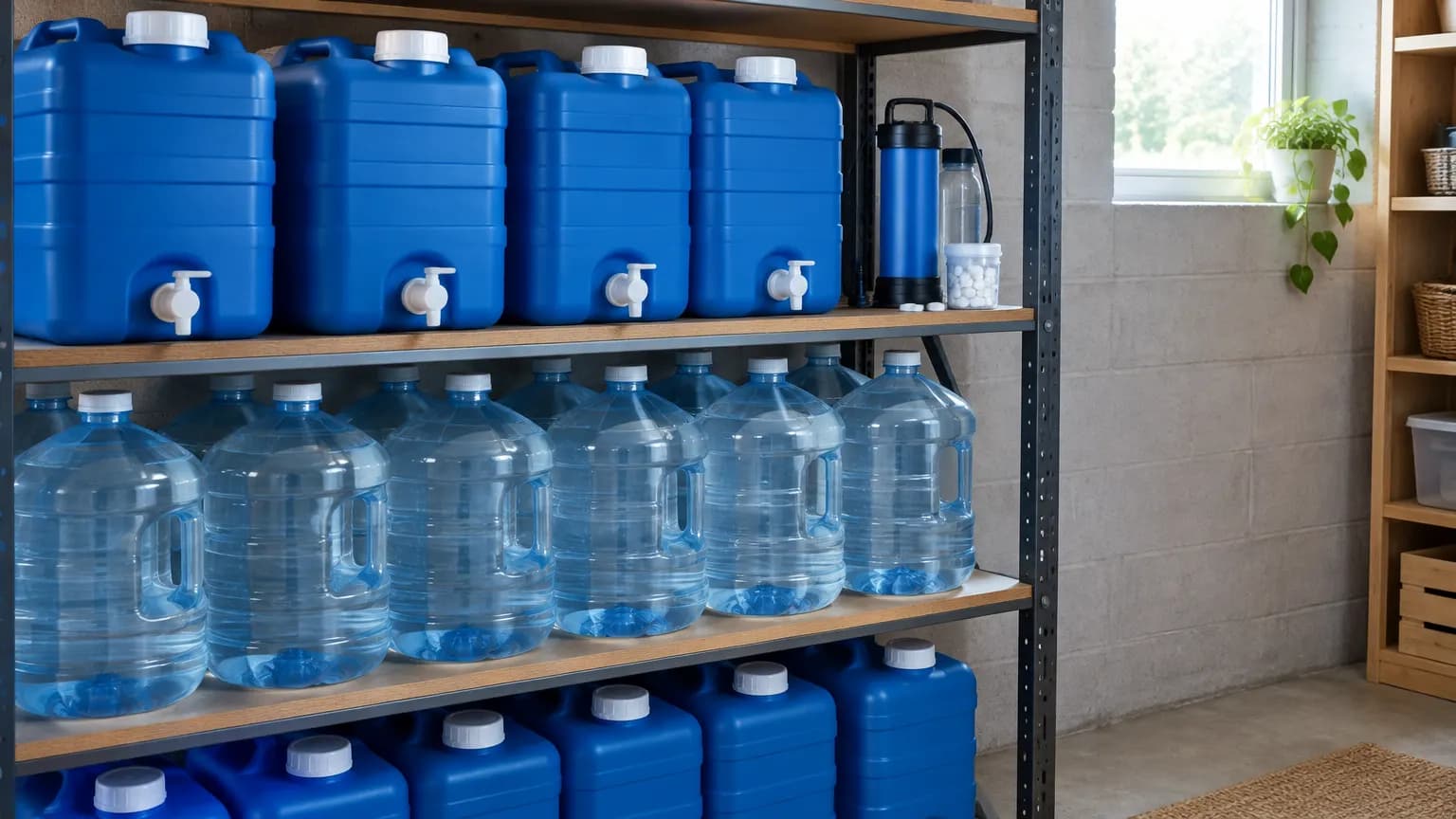
Water is the supply with no substitute and the shortest clock, and it is the one people most consistently under-budget for. The guidance everybody quotes, one gallon per person per day, is correct and almost useless on its own, because nobody buys water in person-days. They buy it in containers that have to fit somewhere.
What the agencies actually say
Ready.gov and the CDC both set one gallon per person per day, covering drinking and sanitation together. The CDC adds the targets that matter: at least a three-day supply, and a two-week supply at home if you have the space. Store more if anyone in the household is pregnant or ill, if you have pets, or if you live somewhere hot.
The CDC also notes that a normally active person needs about three quarters of a gallon of fluid a day. That is the drinking half. The remaining quarter is everything else: brushing teeth, washing hands, cooking. It is why one gallon is a minimum rather than a comfortable figure.
The arithmetic, in containers and floor space
| Household | 3 days | 2 weeks | 1 month | 2 weeks, as weight |
|---|---|---|---|---|
| 1 person | 3 gal | 14 gal | 30 gal | about 117 lb |
| 2 people | 6 gal | 28 gal | 60 gal | about 233 lb |
| 4 people | 12 gal | 56 gal | 120 gal | about 467 lb |
| 6 people | 18 gal | 84 gal | 180 gal | about 700 lb |
Our water storage calculator will do this for your household, including the containers. Water weighs roughly 8.3 pounds per gallon, and that weight column is the reason a two-week store is a decision about your building, not just your budget. Fifty-six gallons for a family of four is around 467 pounds. On a concrete garage floor that is nothing. Spread across a shelf unit or an upper floor it is worth thinking about, and in a flat it usually means splitting the store across several small locations rather than one.
Containers, and what not to reuse
Food-grade polyethylene is the standard for a reason: it does not leach into the water and it stacks. Beyond that the choice is between a few large containers and many small ones, and the trade-off is real.
| Container | Pros | Cons |
|---|---|---|
| 5 to 7 gallon jerry can | Stackable, one person can move it | 40 to 58 lb full |
| 15 to 55 gallon drum | Best use of floor space | Immovable once filled, needs a pump |
| Commercial bottled, by the case | No preparation, easy to rotate | Most expensive per gallon |
| Small bottles | Fit odd gaps, grab-able | Poor volume per cubic foot |
Never reuse a container that held anything other than food or drink, even if it has been rinsed, and that includes containers that held cleaning products. Milk and juice jugs are a common mistake too: the residual sugars and proteins are difficult to remove completely and support bacterial growth.
If you are filling your own containers, Ready.gov's procedure is to clean them with dishwashing soap and then sanitise with a solution of one teaspoon of unscented liquid household chlorine bleach per quart of water before filling.
The bathtub, and the bladder that makes it usable
A bathtub holds something on the order of forty to a hundred gallons, which is more water than most households store on purpose. The problem is that a bathtub is not a clean vessel: it has soap residue, it has a drain that leaks slowly, and it is open to the air and to whatever is in the bathroom.
That is the gap a bathtub bladder fills. It is a food-grade plastic liner that sits in the tub and fills from the tap through a hose, holding roughly a hundred gallons sealed, with a siphon pump to get it out again. The whole thing packs down to the size of a book and costs very little.
| Bare bathtub | Bathtub bladder | |
|---|---|---|
| Cleanliness | Soap residue, open to the air | Sealed food-grade liner |
| Holds water | Leaks away over days | Holds for weeks |
| Fit for drinking | No, treat as flushing water | Yes, from a clean tap |
| Cost | Free | About the price of a few cases of bottled water |
The important thing about both is when they work: they are filled when an outage or a storm is forecast, not kept full. That makes this a different category from the containers above. Stored water is what you have when something happens without warning; a filled bathtub is what you add in the hours after a hurricane warning, when the supply is still running and may not be for long. If you live anywhere with a hurricane season or a history of boil-water notices, it is the cheapest hundred gallons available to you.
Either way, the first thing to do when a serious storm is forecast is to fill every container you own, because water pressure depends on electric pumps and goes early.
Rotation, and the two different clocks
| Water | Replace |
|---|---|
| Commercially bottled, sealed | By its printed expiration date |
| Filled by you, in food-grade containers | Every six months |
Mark every container with the date it was filled, because rotation you have to remember is rotation that does not happen. The practical trick is to tie it to something you already do twice a year, such as the clocks changing, and to pour the old water on the garden rather than down the drain so there is some small satisfaction in it.
Which water has the longest shelf life?
Water does not expire; the container does. Plastic transfers flavour, seals fail, and anything you sealed in is still in there, which is why the table above says six months for water you bottled yourself and nothing at all for a sealed commercial bottle.
The short ranking is a ranking of packaging. Sealed cans and foil pouches sold as emergency water carry the longest stated lives, commercially bottled water keeps to its printed date and generally beyond it, and your own containers need replacing twice a year. Cool and dark beats every format, and the CDC puts a number on that: between 50°F and 70°F, out of direct sunlight.
The fuller answer, including what happens once a bottle is opened and which widely quoted figures turn out to have no source behind them, is in our guide to how long stored water lasts.
Storage is only half a plan
Stored water is finite by definition, and a multi-day outage is where that becomes obvious. Two things extend it. A filter or purification method turns uncertain water into drinking water, which matters because there is usually more water around than people realise, including inside your own building. And a rainwater system makes the supply renewable rather than finite.
If you are starting from nothing, build the three-day store first, as part of the 72-hour kit, and extend it toward two weeks as space allows.
What we could not verify
We do not physically test the products linked on this page. The quantity guidance, container sanitising procedure and six-month rotation figure are from Ready.gov and the CDC, checked on 3 October 2026. The weight figures are arithmetic from the density of water and are approximate; container capacities and dimensions are manufacturers' published specifications rather than measurements we made.
On the two sections added in October 2026: the six-month replacement figure is Ready.gov's, quoted above and checked on 4 October 2026, as is the instruction to buy food-grade containers. The bathtub capacity range and the hundred-gallon figure for a bladder are nominal product and fixture sizes rather than measurements, and a bladder's stated capacity is its manufacturer's. The shelf lives for canned and pouched emergency water are manufacturers' claims which we have not tested and which vary widely between brands, so compare the stated date rather than the marketing. We found no agency guidance on bathtub storage at all, so the comparison table there is our own reasoning about cleanliness and sealing, not a published recommendation.
Recommended gear for this guide
Picks from our Gear Guide that cover what this article talks about. Affiliate links; see our disclosure.
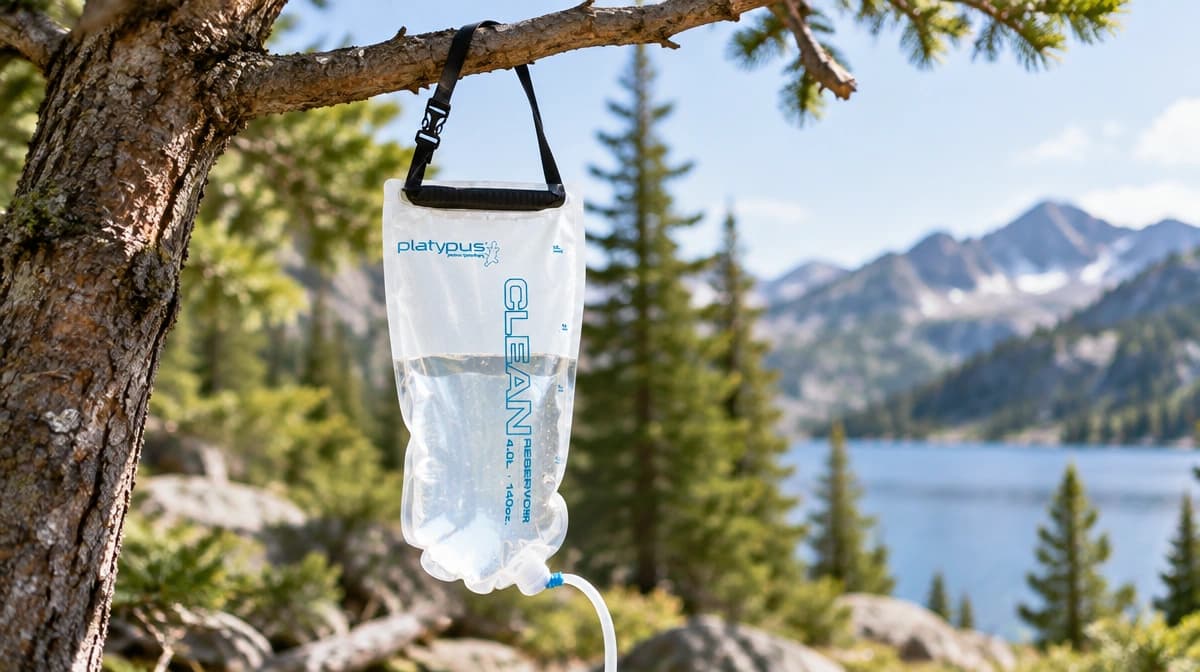
Gravity-fed water filter
$$$Platypus GravityWorks 4L
Filters four liters at a time with no pumping required, ideal for a household kit or group camp.
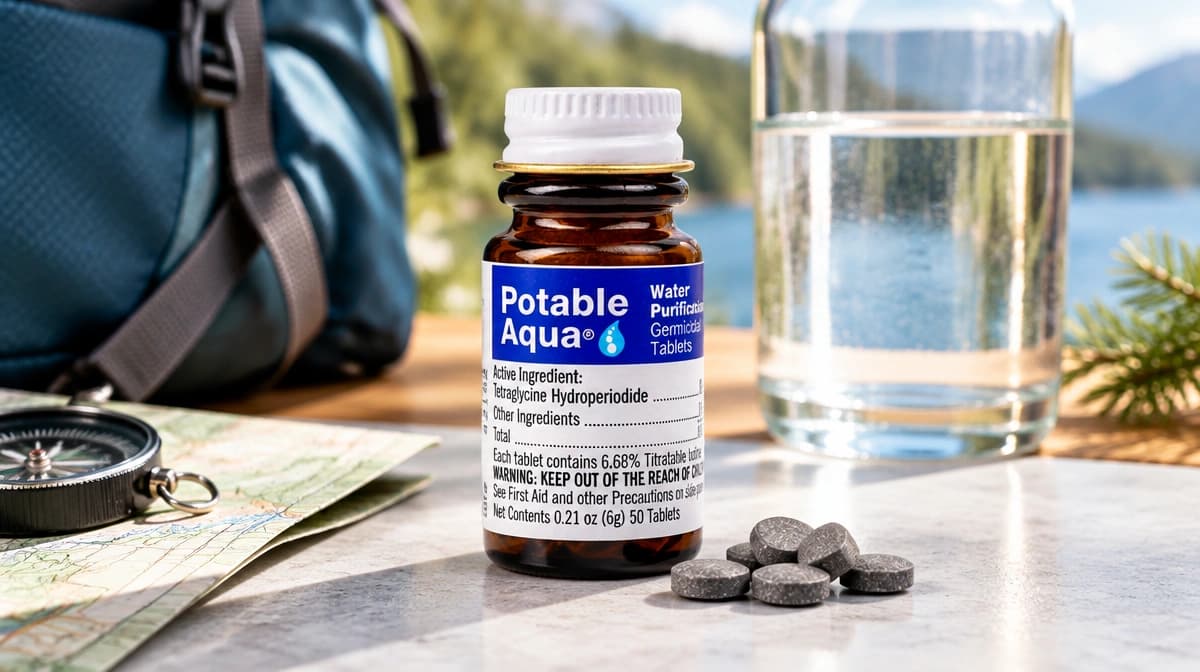
Water purification tablets
$Potable Aqua with PA Plus (2 x 50)
Lightweight backup for when filtration alone isn't enough against viruses. The PA Plus bottle removes the iodine taste.
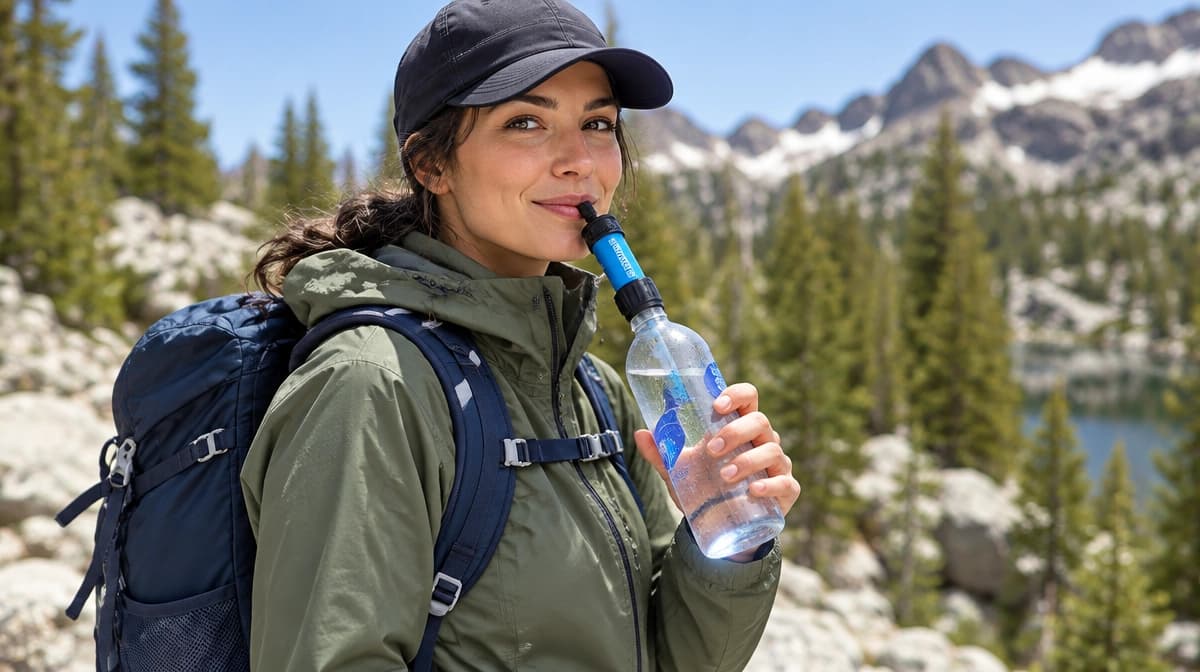
Inline squeeze filter
$Sawyer Mini SP128
Works as a straw, inline on a hydration bladder, or with the included squeeze pouch. Rated for 100,000 gallons.
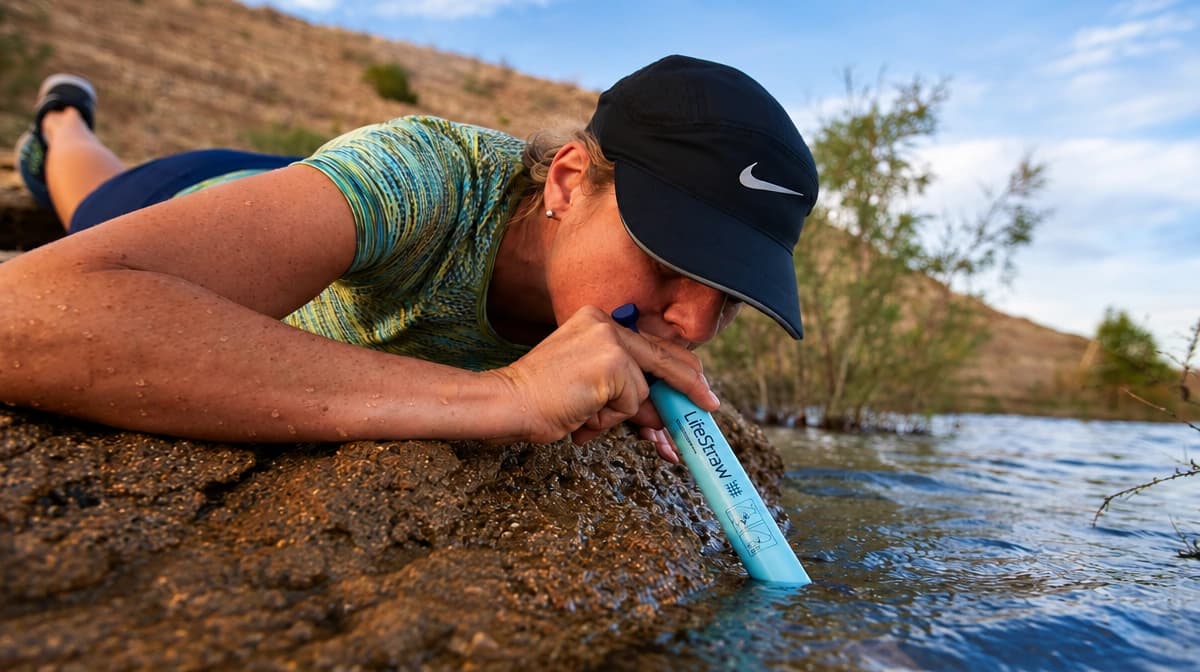
Personal straw filter
$LifeStraw Personal
Compact, single-user filtration for bug-out bags and day hikes. No moving parts, nothing to break.
Keep reading
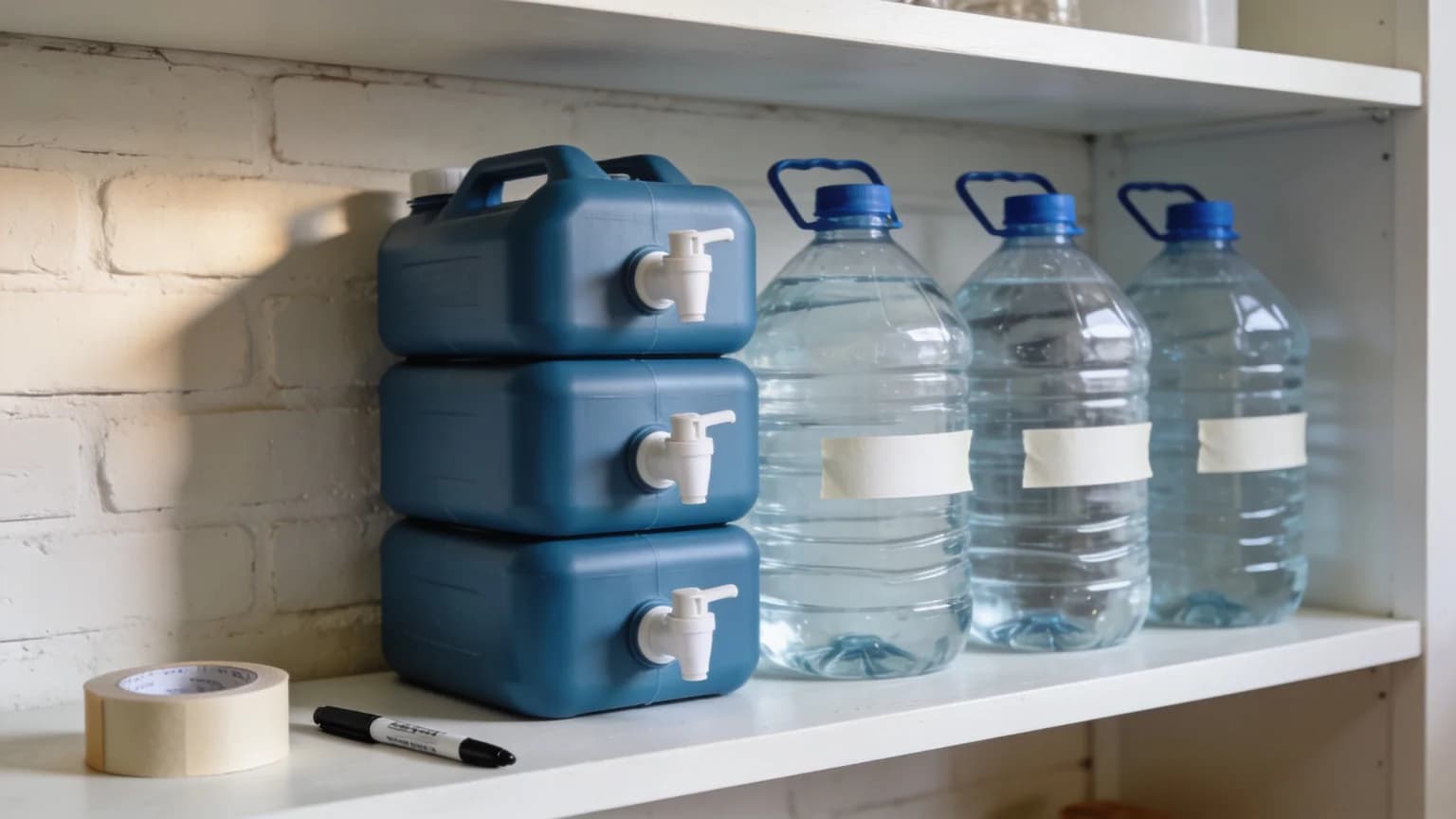
How Long Does Stored Water Last? What the Agencies Actually Say
Water does not go off. Containers do. Here is what the CDC and Ready.gov actually say about how long water bottles can be stored, what the date on a bottle means, and which widely repeated figures have no source behind them at all.
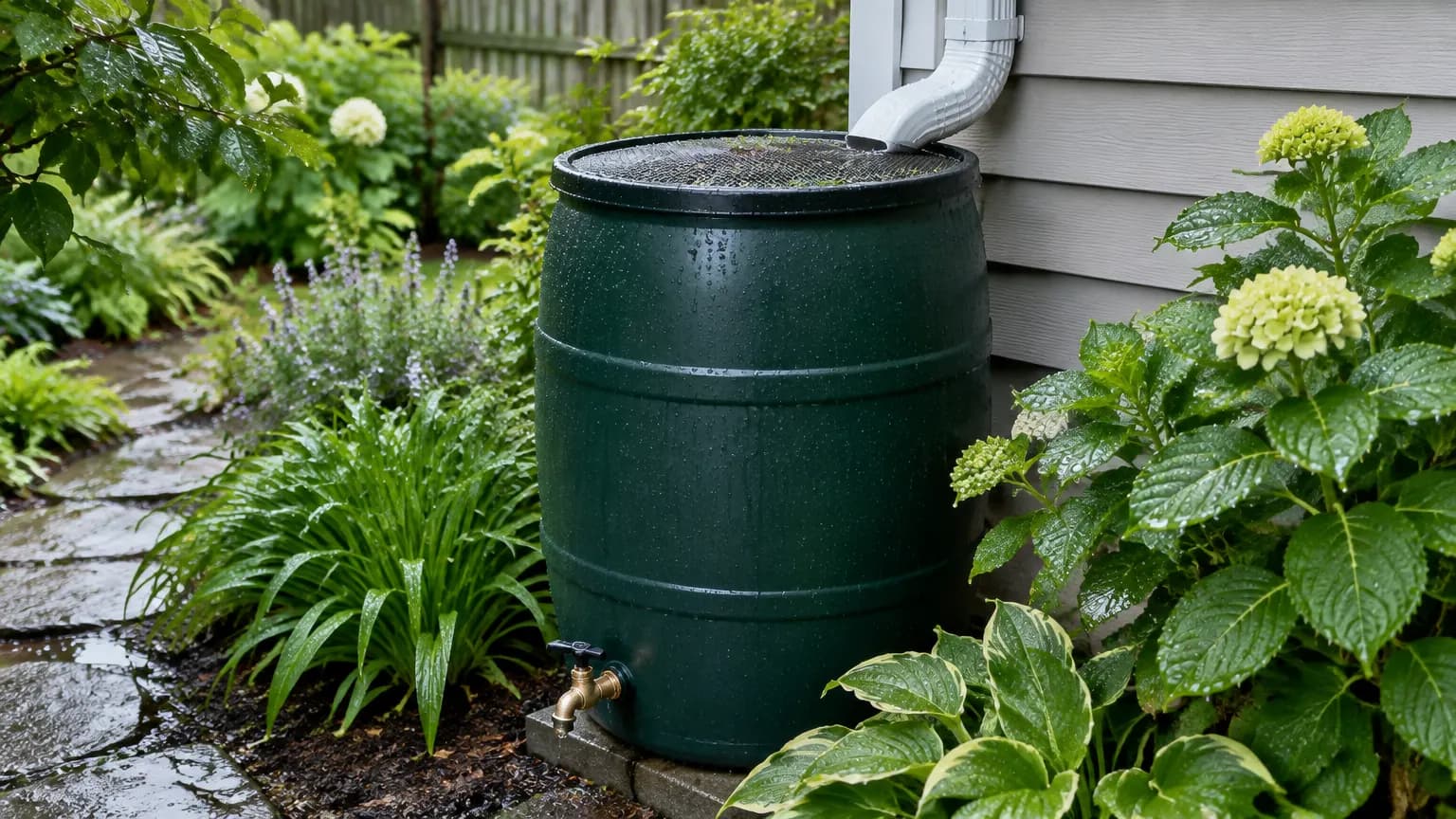
Rainwater Harvesting: How Much You Can Collect, and What It Is Safe For
A single inch of rain on an average roof is hundreds of gallons. Here is the arithmetic, the hardware that makes it usable, and the honest answer on whether you can drink it.
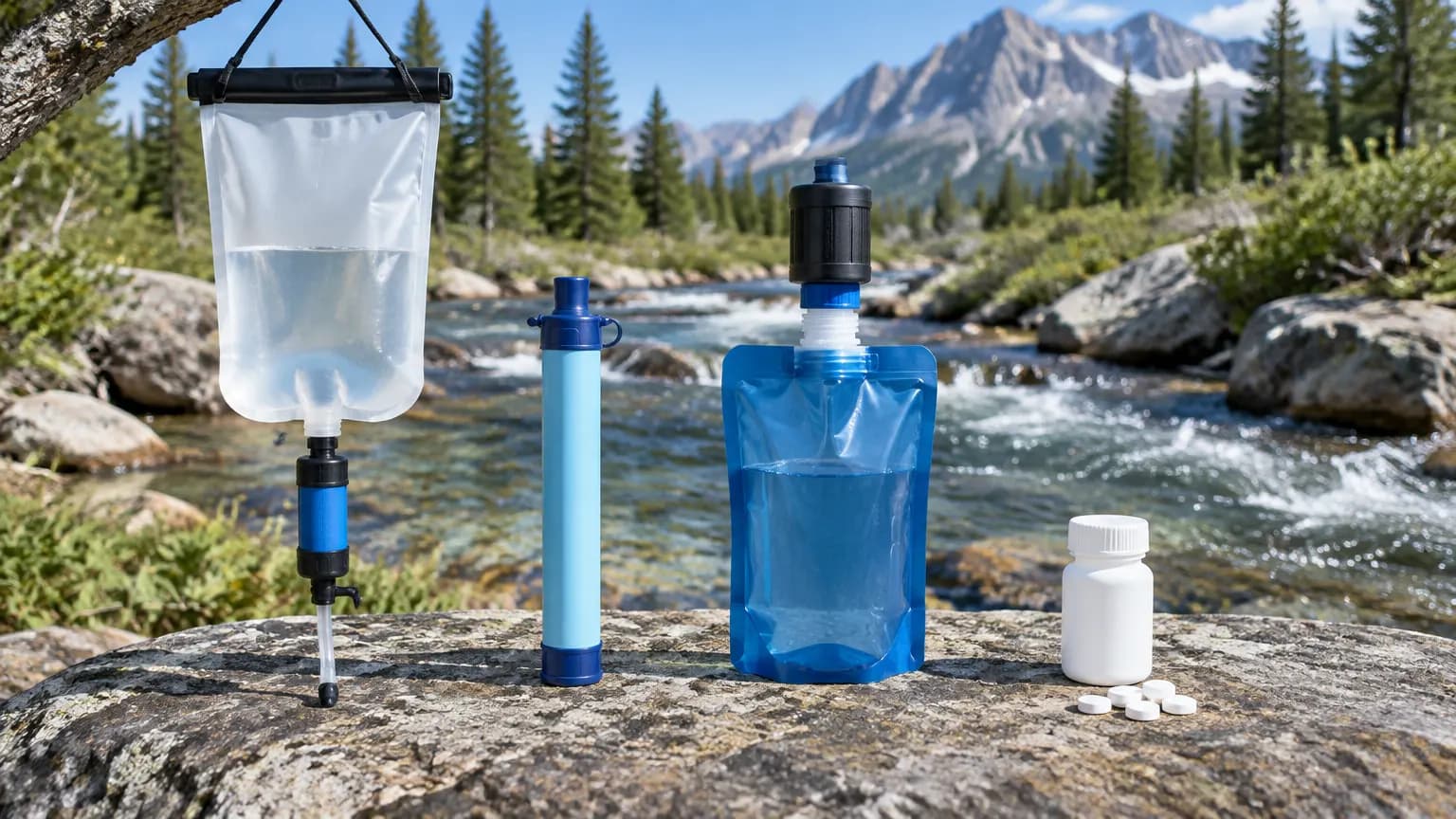
Emergency Water Filters Compared: Gravity, Squeeze, Straw, Tablets
Four ways to make water drinkable, each good at something different, and the difference between a filter and a purifier that decides whether yours is enough on its own.