 The Prep Nest
How to Start a Fire Without a Lighter or Matches
Almost every guide to fire without matches starts with the bow drill, which is backwards. Friction fire is a genuine skill that takes most people many hours of practice and the right pair of woods to produce a single ember, and the day you are cold and wet is not the day you will learn it. The methods worth knowing are the ones that work when you are tired, and the preparation that matters most happens before the spark, not after.
Understand what you are actually trying to do. Fire needs heat, fuel, and oxygen, and the hard part is never the heat. A spark lasts a fraction of a second, so it has to land on something that catches instantly and burns long enough to light something slightly bigger. Almost every failed fire is a tinder failure dressed up as an ignition failure, which is why experienced people spend far longer gathering than lighting.
So gather first, and gather more than you think. Three grades of material, sorted into three separate piles before you strike anything: tinder that catches from a spark, kindling from matchstick to pencil thickness, and fuel wood from thumb to wrist thickness. The most common way a fire dies is that it caught beautifully and then the person scrambled around for the next size up while it went out. Prepare all three, then light.
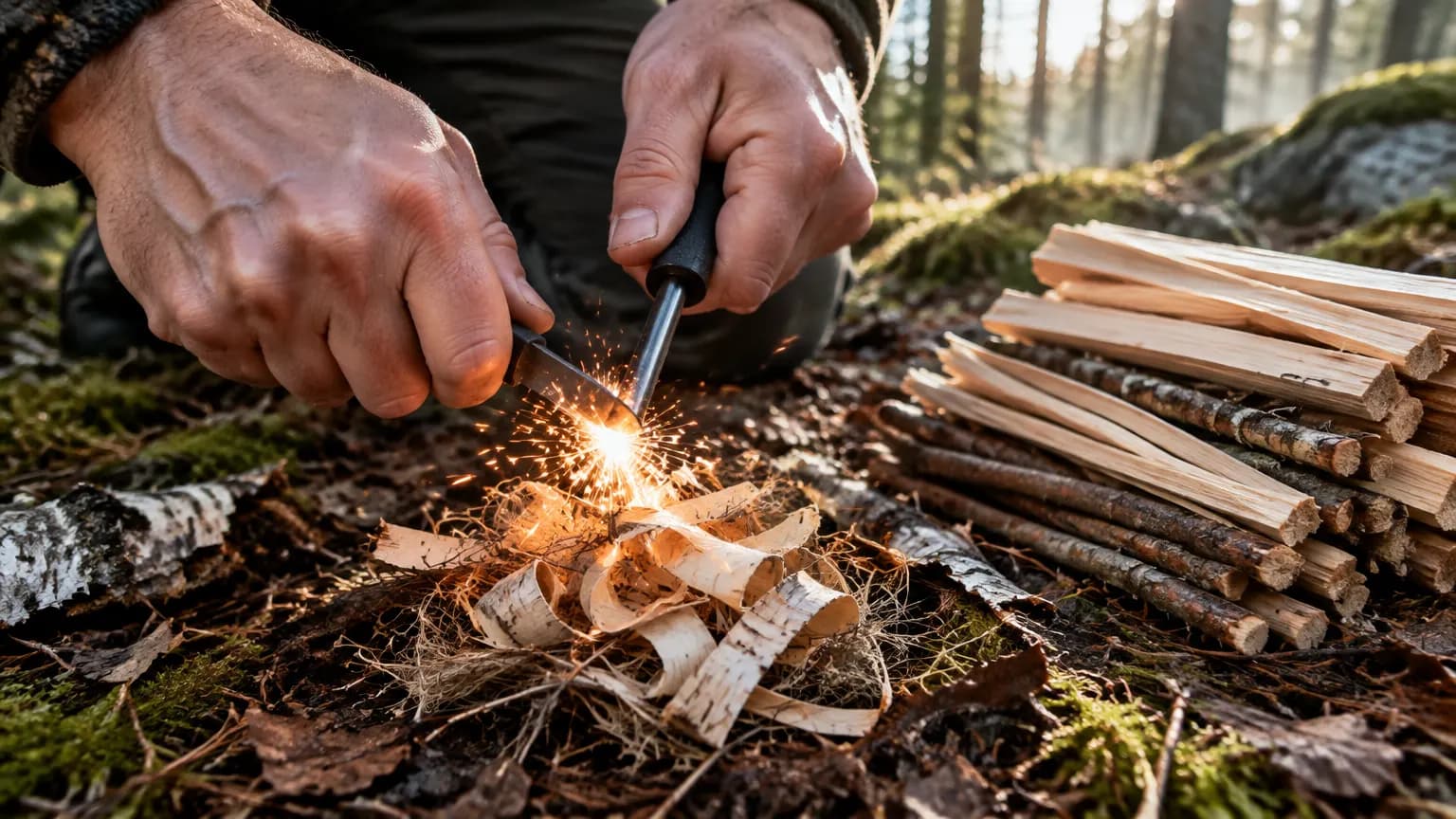
For tinder, the reliable natural options are worth learning by sight. Birch bark is the best of them, because the papery outer layer contains oils that light even when damp. Fatwood, the resin-soaked heartwood at the base of dead pine branches, shaves into curls that catch readily and burn hot. Dry grass, cattail fluff, and the fine dead twigs at the bottom of a conifer all work when genuinely dry. Standing dead material is nearly always drier than anything on the ground.
Carry tinder too, because it weighs nothing and removes the variable. Cotton balls worked through with petroleum jelly light from a single spark, burn for minutes rather than seconds, and cost almost nothing. Char cloth does the same job and takes a spark more readily. A few of either in a small tin is the difference between a fire in two minutes and an hour of frustration in the rain.
The ignition method that belongs in a pack is a ferrocerium rod. It throws a shower of burning metal particles hot enough to light prepared tinder, it works soaking wet, it works cold, it works with gloves on, and one rod lasts for thousands of strikes. The technique is to hold the rod still against the tinder and pull the striker back along it rather than stabbing forward, which otherwise scatters the nest you spent ten minutes building. It is the single most useful item in this article and it costs less than lunch.
The alternatives are worth knowing as backups. A magnifying lens, a camera lens, or even a clear water bottle can focus direct sunlight onto tinder, which is effortless when the sun cooperates and useless at dusk or under cloud. Steel wool bridged across a 9V battery ignites immediately, and fine grade works better than coarse. A car battery and jumper cables do the same thing with more drama. And friction methods, the bow drill and hand drill, remain genuinely possible but belong in the category of skills to practise on a sunny afternoon at home rather than techniques to attempt for the first time while hypothermic.
Build it small and feed it. A loose handful of tinder, a tepee or lean-to of kindling that lets air in, and patience while it establishes before adding anything substantial. Wet ground steals heat, so start it on a platform of dry bark or sticks. Wind can be a help or a killer depending on whether you shelter the fire while it is fragile.
Two things to keep in mind that have nothing to do with technique. Check whether fires are permitted where you are, because in much of the western United States there are seasons when any open flame is both illegal and genuinely dangerous. And remember that fire is one of four priorities rather than the goal itself: the rule of threes puts shelter alongside it, and in wet cold weather getting out of the wind often does more for you, faster, than a fire you are struggling to light.
Recommended gear for this guide
Picks from our Gear Guide that cover what this article talks about. Affiliate links; see our disclosure.
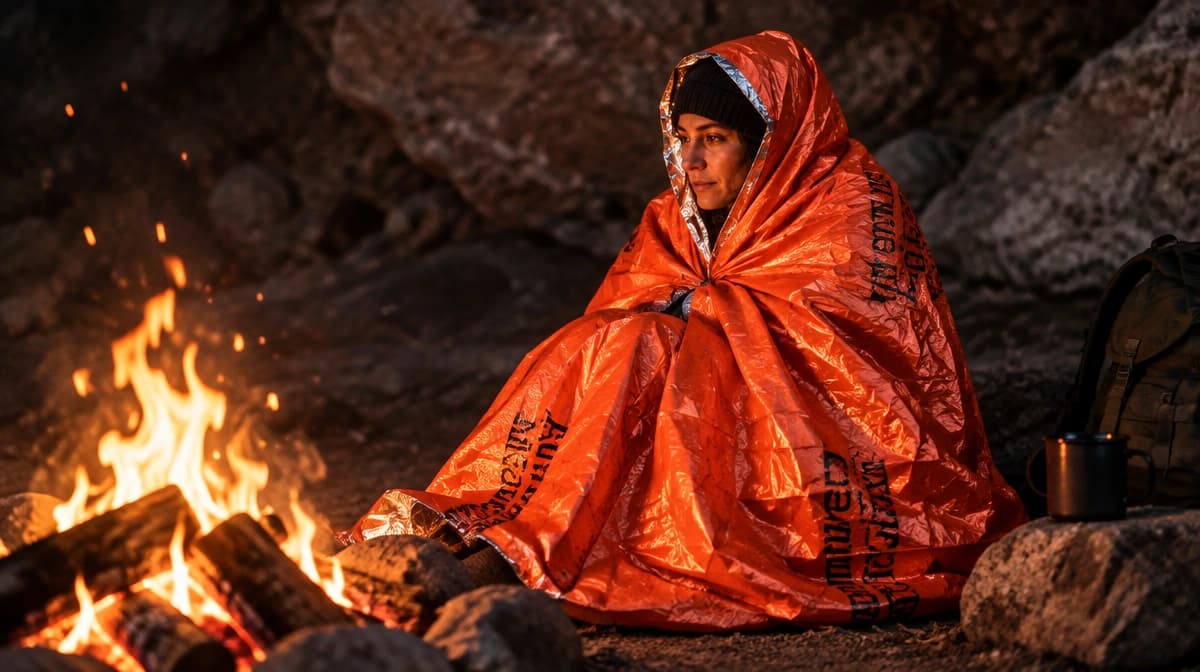
Emergency bivvy
$S.O.L. Emergency Bivvy
Packs down to the size of a fist and reflects 90 percent of body heat. Far more effective than a flat space blanket.
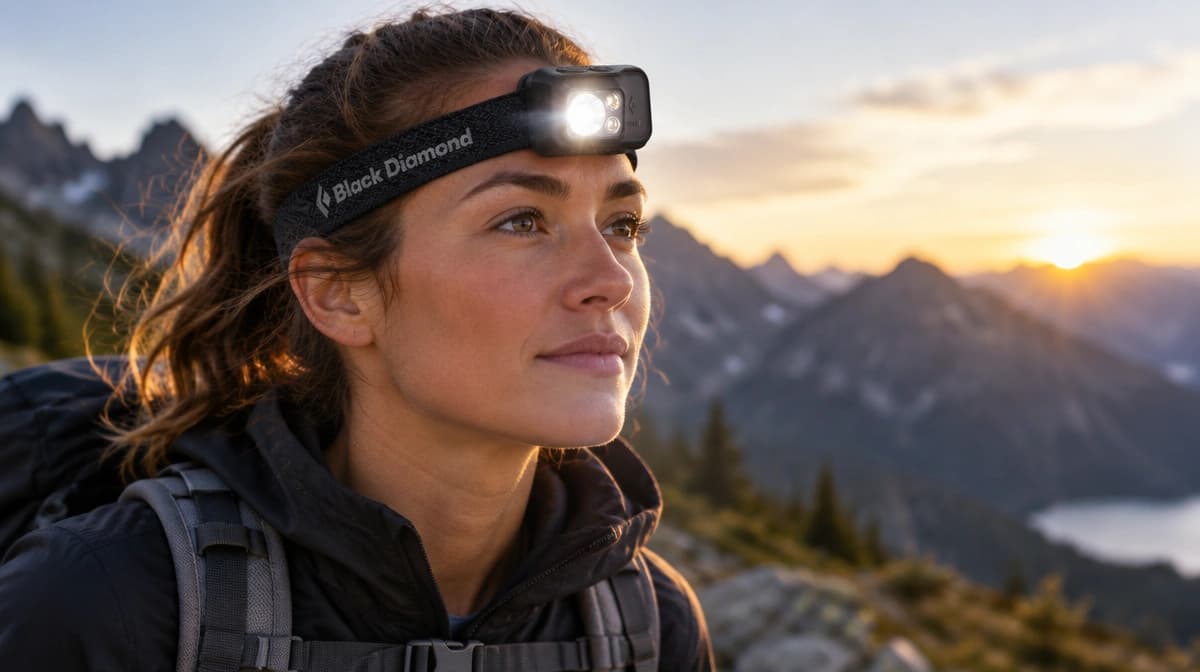
Rechargeable headlamp (alternative)
$$Black Diamond Spot 400-R
Waterproof to IPX8, 400 lumens, and it charges over USB-C. A solid pick if you prefer a sealed battery.
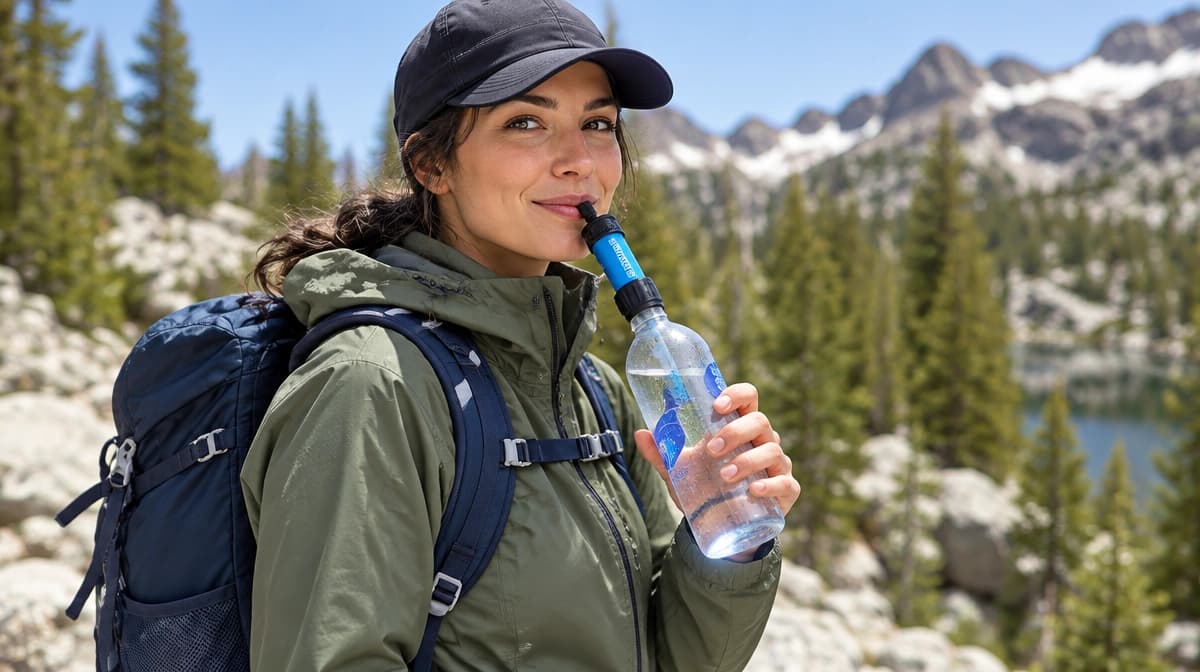
Inline squeeze filter
$Sawyer Mini SP128
Works as a straw, inline on a hydration bladder, or with the included squeeze pouch. Rated for 100,000 gallons.
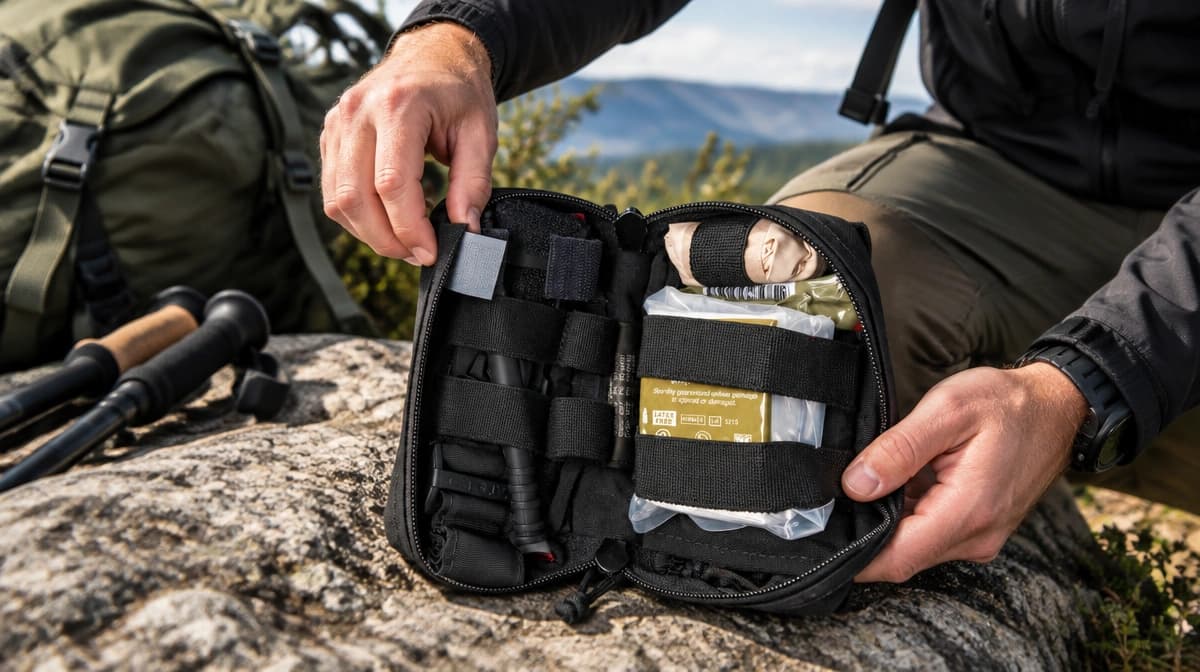
Trauma-level first aid kit
$$$North American Rescue M-FAK Mini
The same bleeding-control gear first responders carry: CAT tourniquet, emergency trauma dressing, and compressed gauze in a compact pouch.
Keep reading
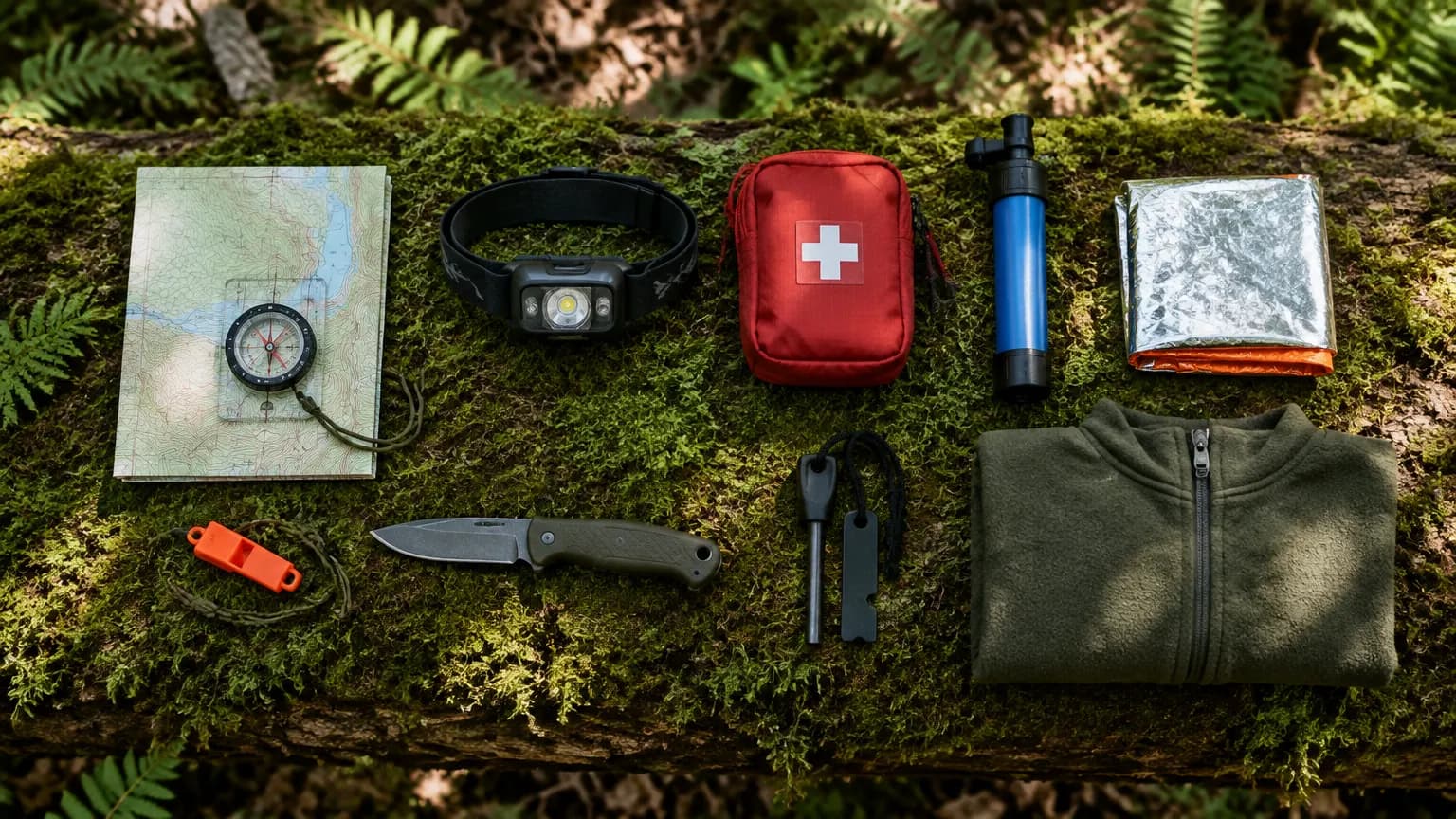
The Wilderness Survival Kit: What Belongs in a Day Pack
Most people who need a survival kit are on a day hike, not an expedition. Here is the small, light set of items that turns an unplanned night outside from an emergency into an inconvenience.
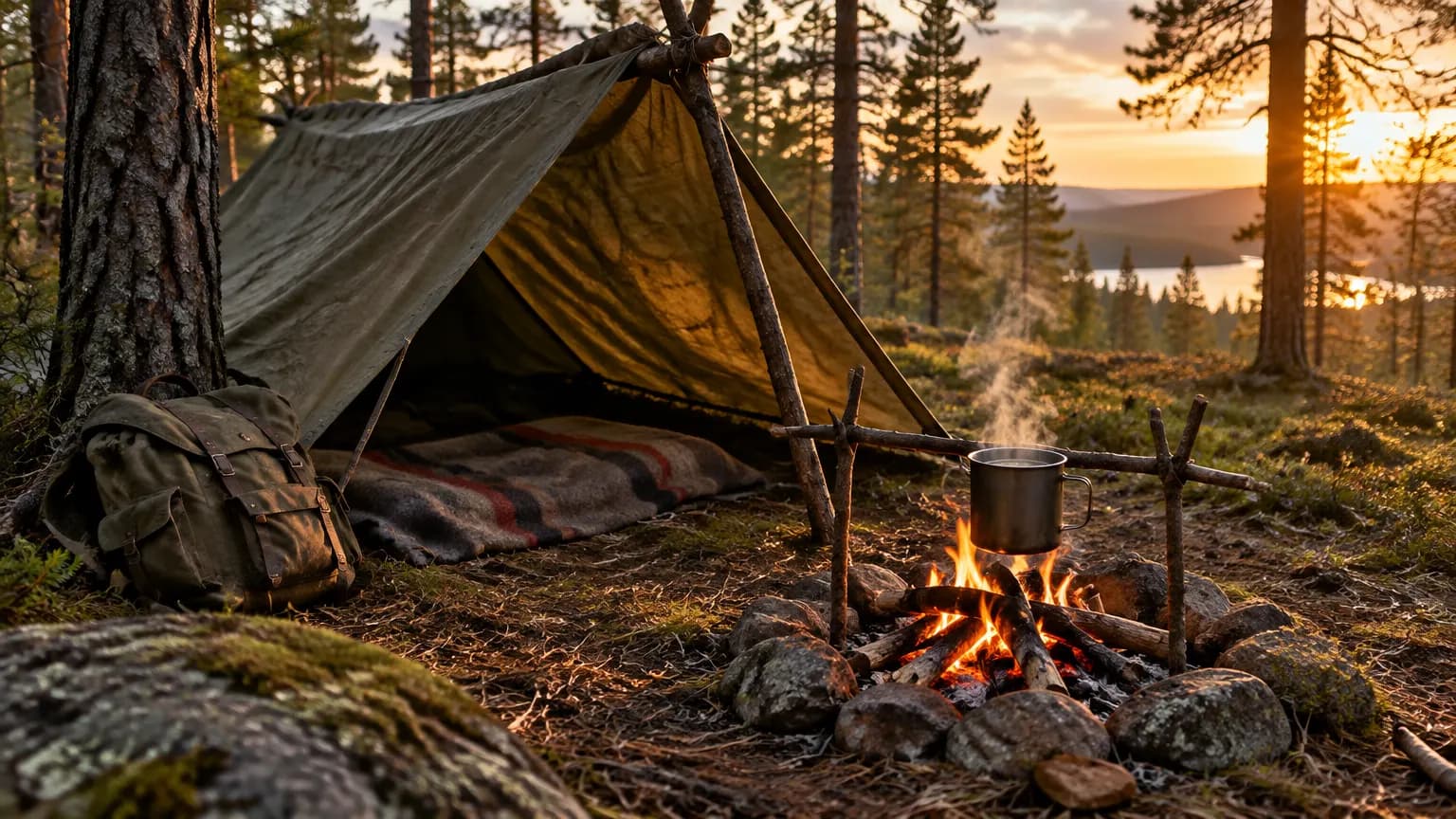
The Survival Rule of Threes: What to Prioritize When Things Go Wrong
When everything feels urgent, the Rule of Threes tells you what to actually deal with first, and it isn't food.

If You Get Lost in the Woods: STOP, and What Comes Next
The instinct when you realize you are lost is to keep moving and find the trail. That instinct is usually what turns a short search into a long one.