 The Prep Nest
The Wilderness Survival Kit: What Belongs in a Day Pack
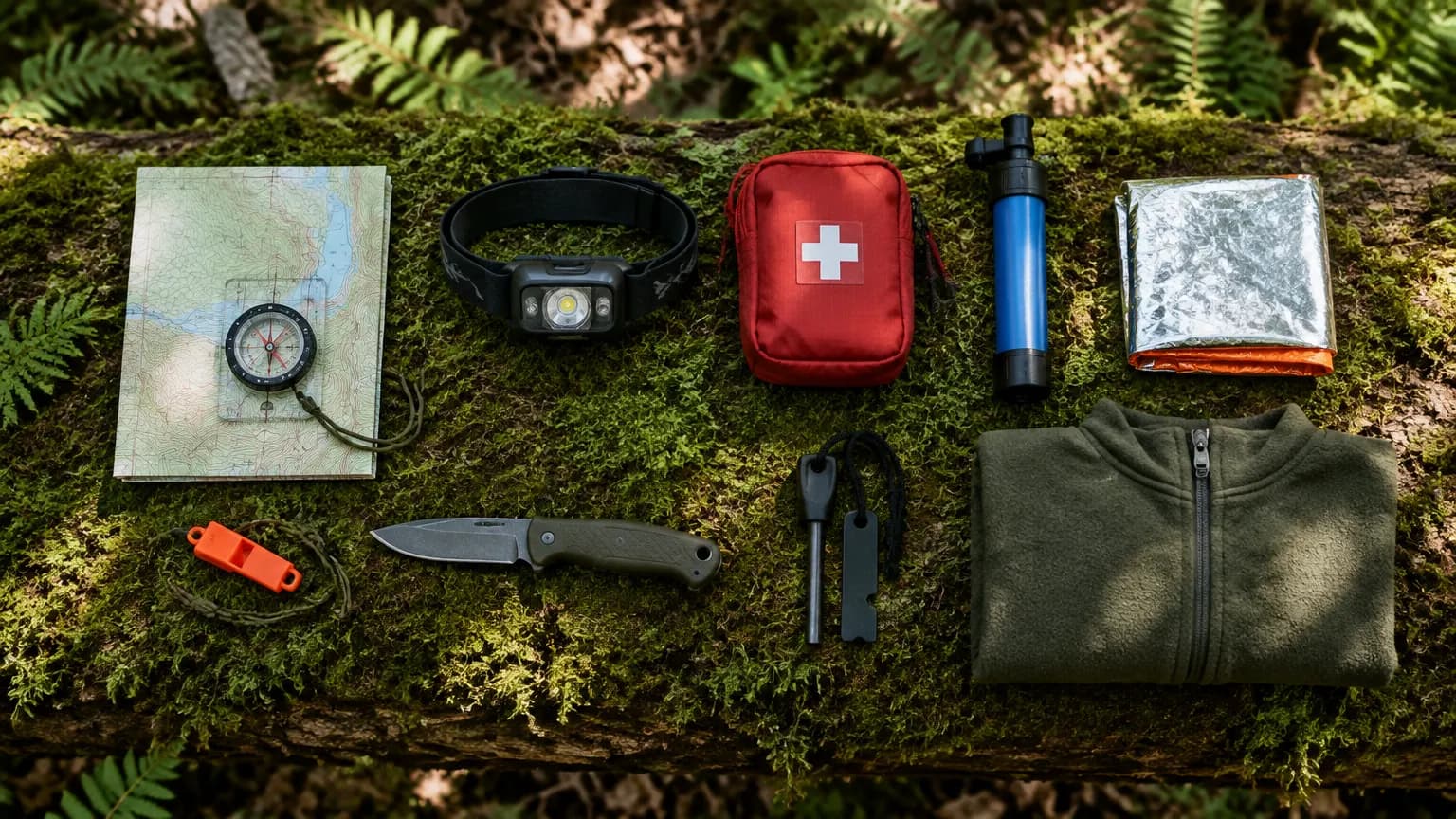
The people who end up spending an unexpected night in the woods are almost never on an expedition. They are on a three-hour loop they have walked before, carrying a water bottle and a phone, and something ordinary went wrong: a wrong turn, a rolled ankle, a trail that was longer than the sign claimed, or daylight that ran out faster than expected. A wilderness survival kit is built for exactly that situation, which means it needs to be small and light enough that you carry it on the short walks too.
The most useful framework for what goes in is the ten essentials, which outdoor clubs have refined for the better part of a century. Rather than a fixed list of objects it is a list of systems: navigation, light, sun protection, first aid, a knife and repair items, fire, emergency shelter, extra food, extra water, and extra clothing. Ten categories sounds like a lot until you lay it out and find it fits in a stuff sack the size of a loaf of bread.
Navigation means a paper map of the area and a compass you know how to use, not only a phone. Phones run out of battery, lose signal in canyons, and break when dropped on rock. Carry the phone, with offline maps downloaded in advance, and back it up with paper. A compass weighs an ounce.
Light is the item people most often regret not having, because the single most common way a day hike becomes a night hike is simply running late. A headlamp keeps your hands free for scrambling and for holding a map, and unlike a phone torch it does not consume the battery you may need to call for help. Check it before each season and keep a spare set of cells with it.
First aid should be sized to the injuries that actually happen out there. Blisters, cuts, sprains, and stings are the routine ones, so moleskin, adhesive bandages, tape, antiseptic, and any personal medication cover the majority. For anything involving serious bleeding, a small trauma-capable kit is worth its weight if you go somewhere remote enough that help is hours away.
Fire and shelter are what keep you alive through an unplanned night, and both are lighter than people assume. A ferro rod and a small tin of prepared tinder handle ignition. An emergency bivvy packs down to the size of a fist, reflects most of your body heat back at you, and turns a genuinely dangerous night into a miserable but survivable one. Add a rain shell and a warm hat, since wind and wet do far more damage than cold air alone.
Water deserves the same reasoning as a bug out bag: carry what you need for the walk, then carry the means to make more. A squeeze or straw filter weighs a couple of ounces and turns every stream you cross into a resupply, which matters far more than an extra litre on your back. Remember that hollow-fiber filters handle bacteria and protozoa but not viruses, which in most backcountry is a risk people accept.
Food should be simple and permanent. A few bars that live in the kit and get rotated once a year, rather than the snacks you meant to bring and ate in the car. You are not planning a meal, you are planning to have calories at two in the morning when you are cold and making decisions.
Two small items punch far above their weight. A whistle carries much further than a shout and works when your voice has gone, and three blasts is the recognized distress signal. A few feet of cordage fixes a strap, rigs a shelter, or splints a pole. Neither weighs anything worth counting.
Finally, the free item that matters more than the rest combined: tell someone where you are going and when you expect to be back. Search and rescue starts from a last known point, and the difference between a search that begins tonight in the right drainage and one that begins tomorrow across an entire range is a two-minute text message before you set off.
Recommended gear for this guide
Picks from our Gear Guide that cover what this article talks about. Affiliate links; see our disclosure.
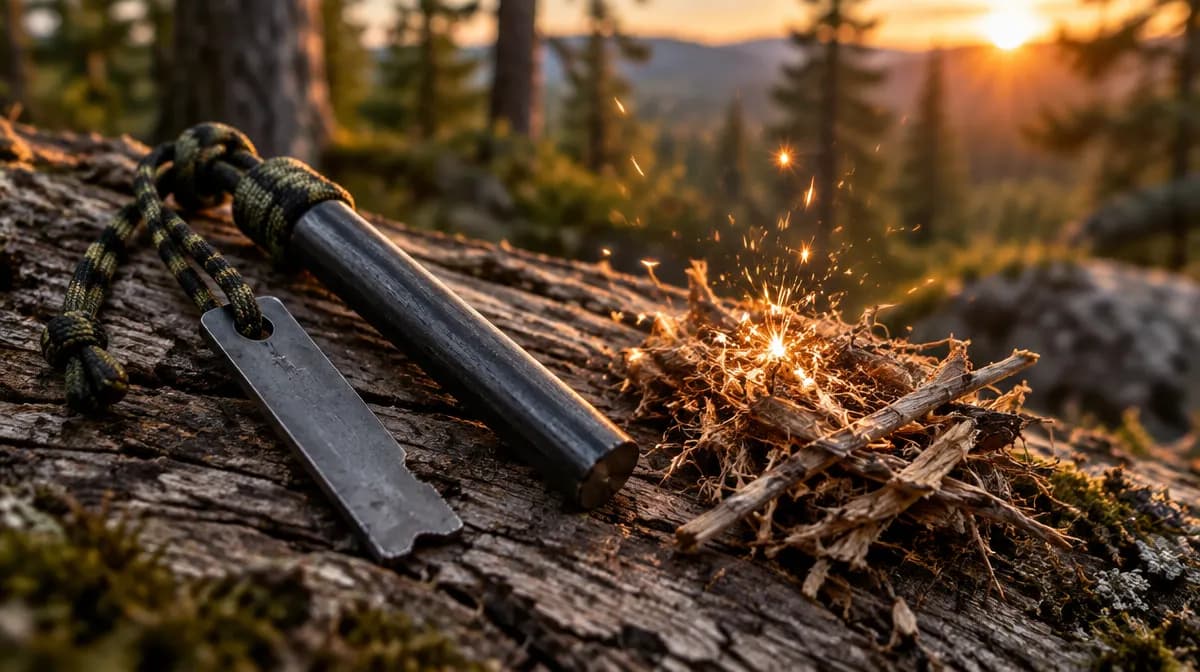
Ferrocerium rod
$$Uberleben Hexa Ferro Rod
Throws sparks hot enough to light prepared tinder when soaking wet, and one rod lasts for thousands of strikes. The single most useful fire item to carry.
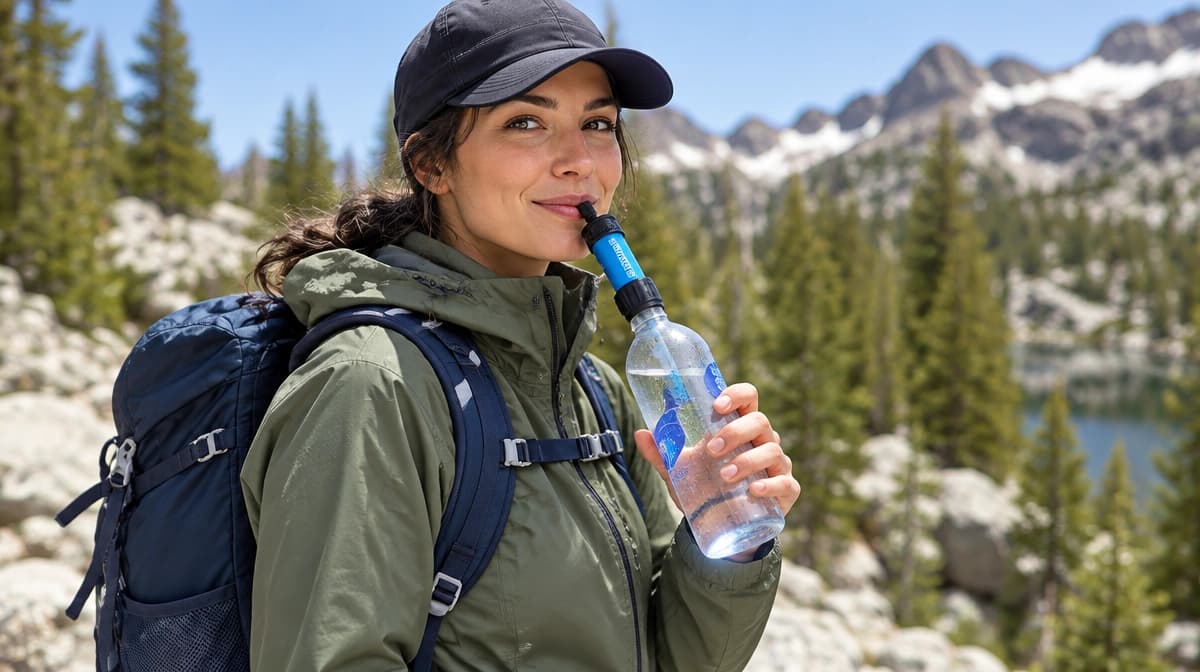
Inline squeeze filter
$Sawyer Mini SP128
Works as a straw, inline on a hydration bladder, or with the included squeeze pouch. Rated for 100,000 gallons.
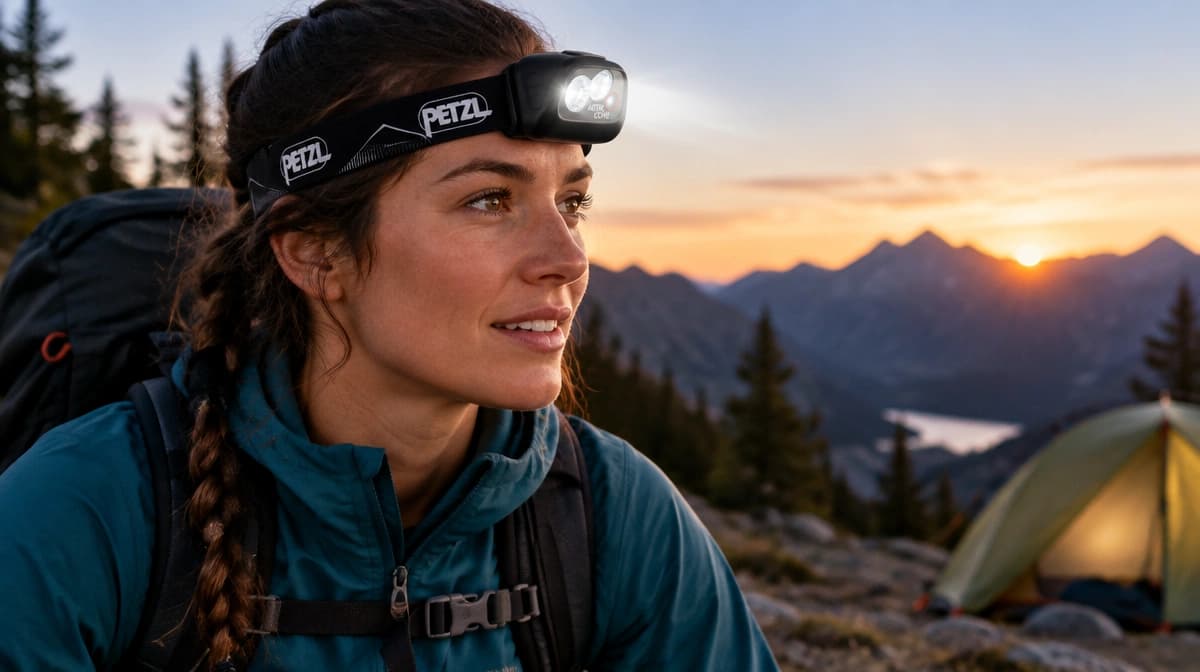
Rechargeable headlamp
$$Petzl Actik Core
Frees up your hands, which matters more than people expect during an actual outage. Runs on the rechargeable Core or three AAAs.
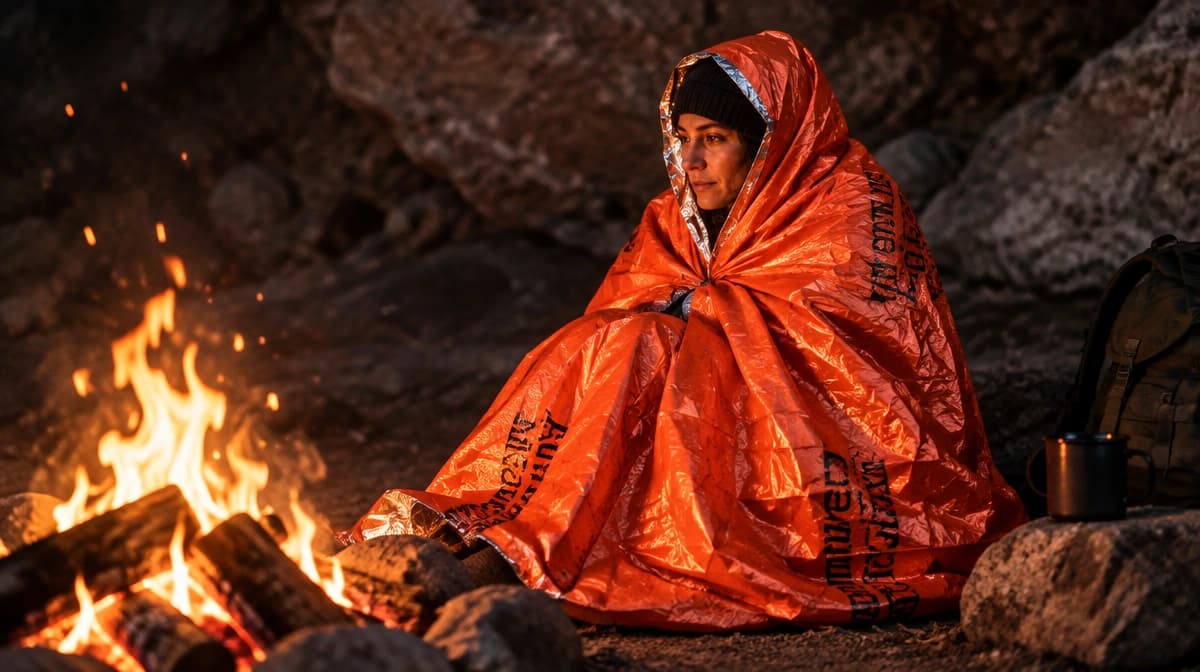
Emergency bivvy
$S.O.L. Emergency Bivvy
Packs down to the size of a fist and reflects 90 percent of body heat. Far more effective than a flat space blanket.
Keep reading
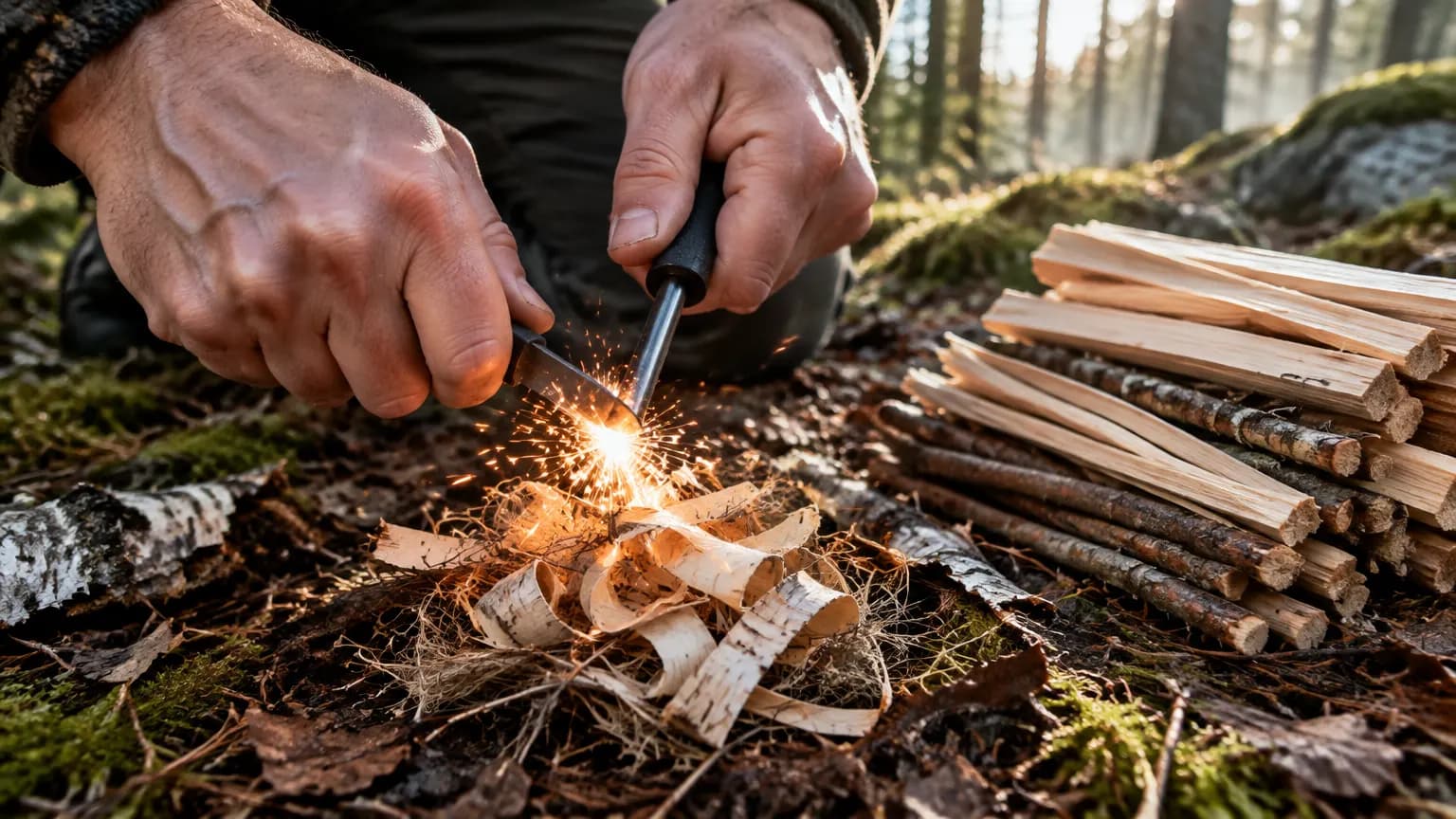
How to Start a Fire Without a Lighter or Matches
Friction fire makes good television and is a poor plan. Here is what actually works when the lighter is gone, and why the tinder matters more than the spark.
If You Get Lost in the Woods: STOP, and What Comes Next
The instinct when you realize you are lost is to keep moving and find the trail. That instinct is usually what turns a short search into a long one.
The Survival Rule of Threes: What to Prioritize When Things Go Wrong
When everything feels urgent, the Rule of Threes tells you what to actually deal with first, and it isn't food.