 The Prep Nest
How Long Does Stored Water Last? What the Agencies Actually Say
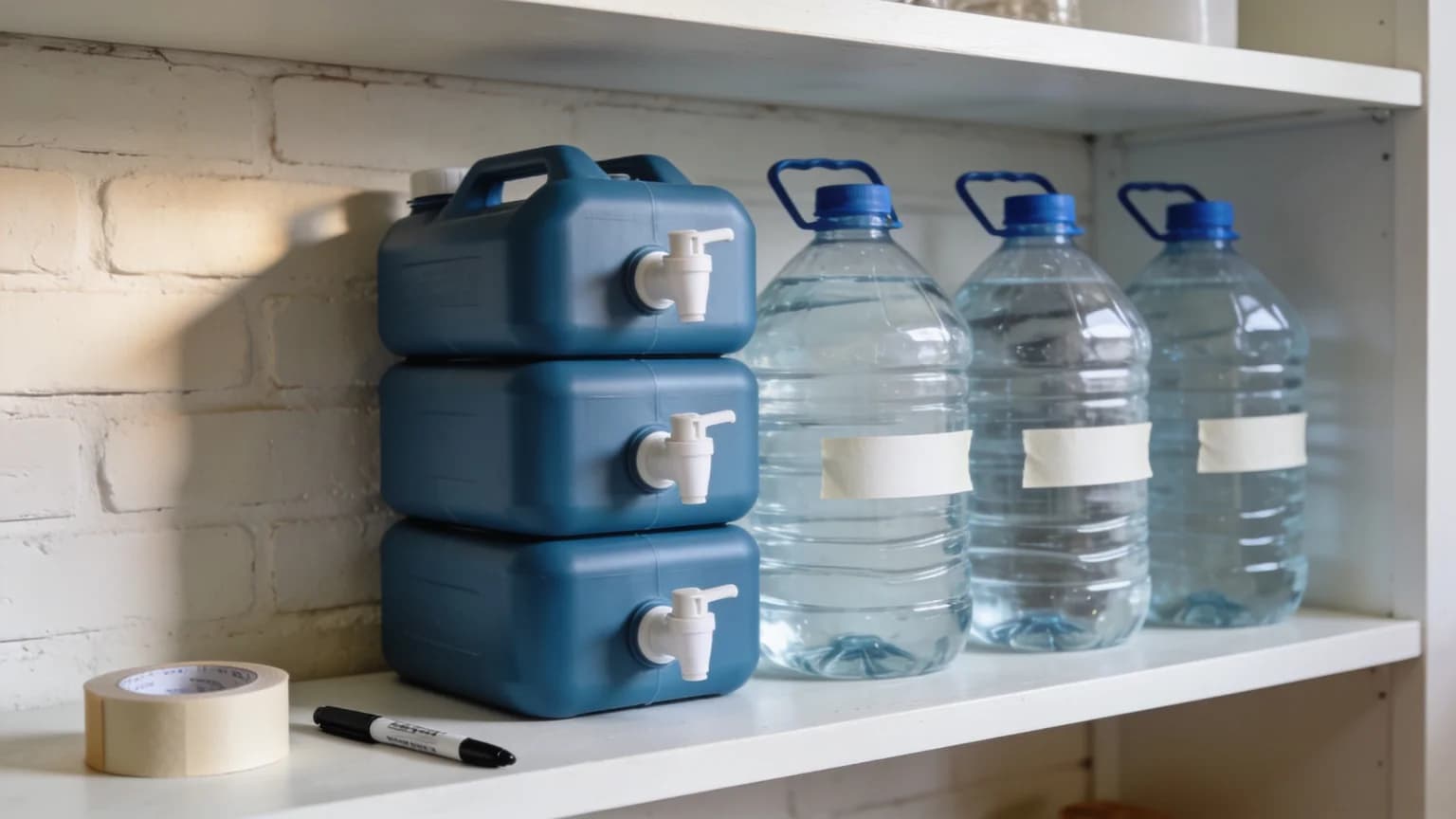
Short answer: water itself does not expire. Hydrogen and oxygen do not degrade on a shelf. What has a shelf life is the container, the seal, and anything that got into the water when it was put away.
That is why the answer differs so much depending on which water you mean. Here is where the public health agencies actually stand, followed by an honest note about the figures everybody quotes and nobody sources.
| Which water | The guidance | Who says so |
|---|---|---|
| Unopened, commercially bottled | The safest and most reliable emergency source | CDC |
| Filled by you into food-grade containers | Replace every 6 months | CDC and Ready.gov |
| Any container that held something else | Do not store drinking water in it | Both |
| Opened bottle | Days, not months | No agency figure found |
Water does not expire. Containers do
It is worth being precise about what is actually happening to a bottle on a shelf, because it explains every recommendation below.
Three things change over time, and none of them is the water. Plastic transfers flavour, slowly at room temperature and much faster when warm, which is why old bottled water tastes of the bottle. Seals fail, and once air can move in and out, so can everything carried in air. And anything already in the water carries on living, which is the real risk with water you bottled yourself from a tap, because what you sealed in is what you will pour out.
Light drives the last one. A translucent container in daylight grows algae; the same container in a dark cupboard does not.
Unopened bottled water: what the date means
Commercially bottled water is the one case the agencies are unambiguous about. The CDC's guidance on creating an emergency water supply states that unopened, commercially bottled water is the safest and most reliable source of water in an emergency, and it attaches no replacement interval to it.
The printed date on the bottle is a different thing from a safety deadline. It is the bottler's own quality date, and the quality it refers to is taste rather than hazard. A sealed bottle kept cool and dark does not become dangerous the morning after its date.
But do not read that as a licence to ignore it entirely. A bottle stored in a garage that reaches 40°C every summer is a genuinely worse bottle than one stored in a basement, regardless of what the date says, because heat accelerates exactly the flavour transfer described above. Store by the conditions, rotate by the date, and judge by the taste.
Once you open the bottle
An opened bottle is no longer sealed water. It is water with your mouth, your hands and the room in it, and that is a different storage problem measured in days rather than years.
Treat an opened bottle like any other opened drink: refrigerate it, keep the cap on, and finish it within a few days. If it has been sitting warm and open, do not store it for the emergency; drink it now or water a plant with it.
The specific numbers you will find for this (three days, five days, two days) are repeated between retail sites without a source. We have not found an agency figure for opened bottled water, so the honest answer is the one above: days, judged by smell and taste, and not something to build a plan around.
Water you bottled yourself: six months
This is the case with a clear, consistent answer from two agencies, and it is stricter than people expect.
Ready.gov states plainly that "water that has not been commercially bottled should be replaced every six months." The CDC's figure is the same: if you are filling containers with water to store, replace the water every six months.
Six months, not a year, and not "when it looks cloudy". The reason is the one in the first section: tap water is clean, not sterile, and a sealed container at room temperature is a reasonable environment for whatever came in with it. The rotation is the price of the cheapest storage there is.
Both agencies also say to use food-grade containers, and the CDC specifies FDA-approved ones. Our water storage guide covers which containers those are and which ones to keep well away from drinking water.
Storage conditions matter more than the format
This is where most advice stops at "cool and dark" without saying what that means. The CDC gives a number: keep containers at a cool temperature between 50°F and 70°F (10°C to 21°C), and away from direct sunlight.
| Place | Verdict |
|---|---|
| Interior cupboard or basement | Best. Stable temperature, no light |
| Under a bed, inside the house | Good, and it uses dead space |
| Attached garage | Poor. Summer heat is the problem, not the cold |
| Car boot | Worst of all. Both extremes, repeatedly |
| Anywhere in direct sun | No. Light is what lets things grow |
The garage row is the one that catches households out, because the garage is where the space is. If that is where your water has to live, accept a shorter practical life, rotate on schedule rather than on inspection, and keep at least the first few days' worth indoors where it will also be reachable in the dark.
Which format lasts longest
If the question behind "how long does stored water last" is really "what do I buy so I can forget about it", the ranking is a ranking of packaging rather than of water.
| Format | Practical horizon | Why |
|---|---|---|
| Sealed cans or foil pouches sold as emergency water | The longest stated lives, years rather than months | No light, no oxygen, no flavour transfer from plastic |
| Commercially bottled, unopened, stored cool | Its printed date, and generally beyond it | The date is about taste |
| Filled by you, food-grade container | Six months, per CDC and Ready.gov | What you sealed in is still in there |
| Anything in a reused non-food container | Do not | The container is the contaminant |
The sealed-can and pouch products exist precisely to answer this question, and the trade is cost and bulk against never thinking about it. The cheapest storage remains tap water in food-grade containers, where the rotation is the whole cost and the only real work.
Water you are unsure about is not wasted water
The last point is the practical one, and it saves people from pouring away a useful supply. Doubtful stored water is not rubbish, it is untreated water, which is a problem with a cheap and well-understood solution.
Let any sediment settle, run it through a filter and then disinfect it with tablets or a rolling boil. Purification tablets weigh nothing, store for years themselves, and turn a container you are unsure about back into drinking water. That is a far better answer than discarding thirty gallons because the date on the lid has passed.
If the container itself is the problem (it held something that was not food, it smells of plastic, it has gone brittle) then the water goes on the garden and the container goes in the recycling. Treatment fixes what is in the water, not what the container is doing to it.
The figures nobody sources
A word about the rest of the internet on this question, because it is unusually bad.
Search for how long bottled water keeps and the first page is almost entirely water-filter retailers and bottling companies, repeating the same handful of numbers (two years unopened, three to five days opened, an FDA position on expiration dating) without any of them citing where the numbers came from. We could not trace them to a primary source either, and we checked the FDA's own consumer page on bottled water, which says nothing about shelf life at all.
So they are not in the tables above. What is in them comes from the CDC and Ready.gov, linked at the point it is used, and where we have no source we have said so rather than repeating a number that sounds authoritative.
What we could not verify
We do not physically test the products linked on this page; the picks come from manufacturer specifications and retailer data.
The six-month replacement figure, the 50 to 70°F storage range, the food-grade container requirement and the position that unopened commercial bottled water is the most reliable emergency source are from the CDC and Ready.gov, both checked on 4 October 2026.
What we could not establish: any agency figure for how long an opened bottle keeps, and any primary source for the widely quoted two-year shelf life of unopened bottled water or for the commonly cited FDA position on expiration dating. We checked the FDA's consumer page on bottled water and it does not address shelf life. The shelf lives claimed for canned and pouched emergency water are manufacturers' claims which we have not tested and which differ widely between brands, so compare the stated dates rather than the marketing. The storage-location table is our own judgement applied to the CDC's temperature range, not a published ranking.
Recommended gear for this guide
Picks from our Gear Guide that cover what this article talks about. Affiliate links; see our disclosure.
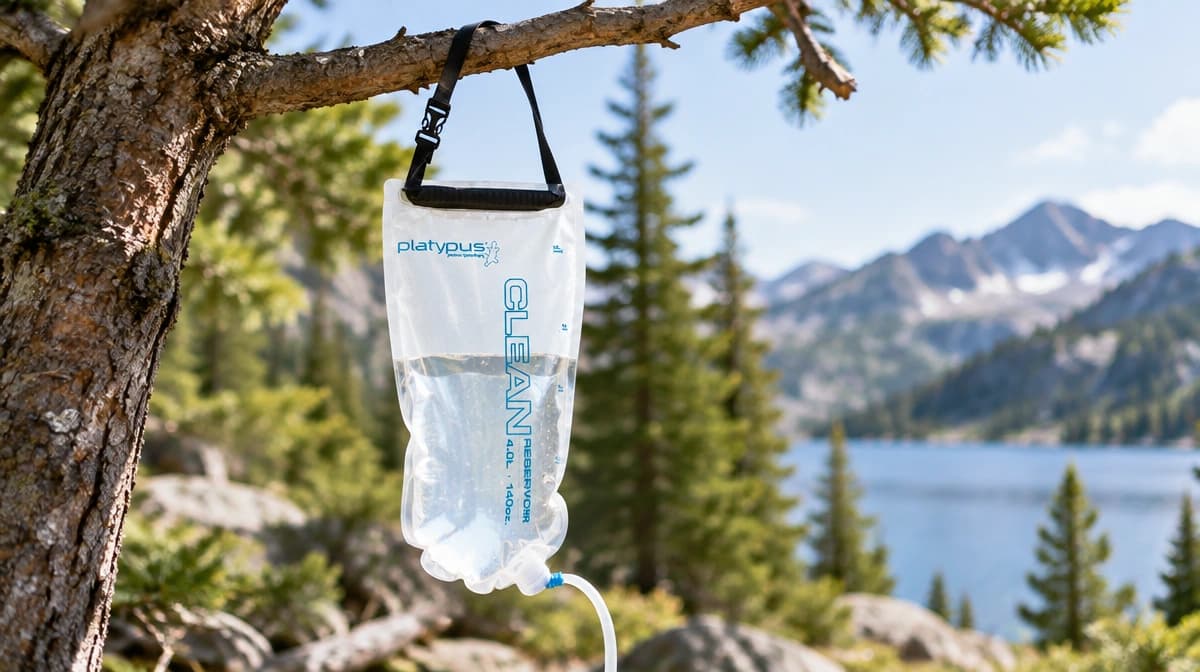
Gravity-fed water filter
$$$Platypus GravityWorks 4L
Filters four liters at a time with no pumping required, ideal for a household kit or group camp.
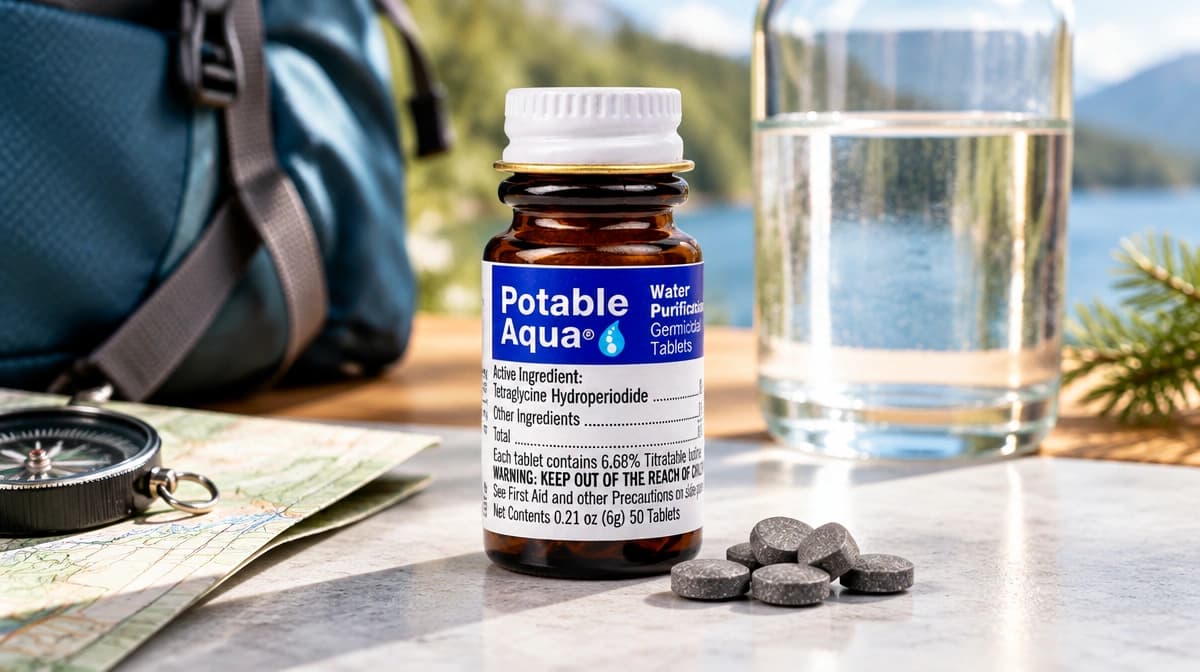
Water purification tablets
$Potable Aqua with PA Plus (2 x 50)
Lightweight backup for when filtration alone isn't enough against viruses. The PA Plus bottle removes the iodine taste.
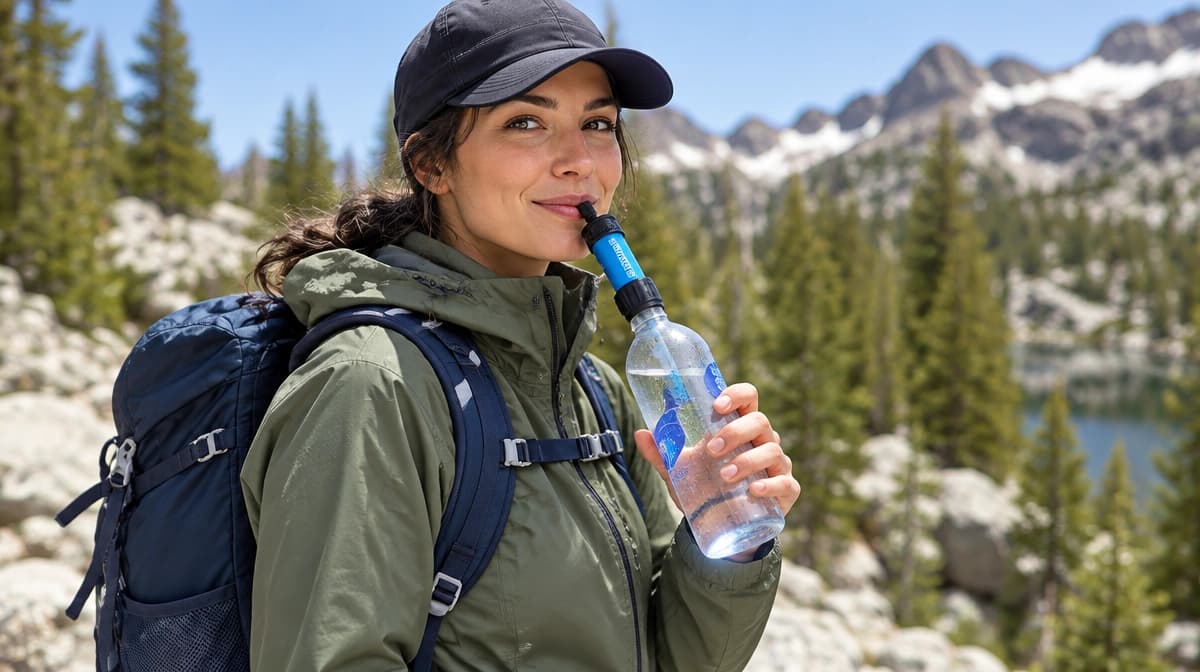
Inline squeeze filter
$Sawyer Mini SP128
Works as a straw, inline on a hydration bladder, or with the included squeeze pouch. Rated for 100,000 gallons.
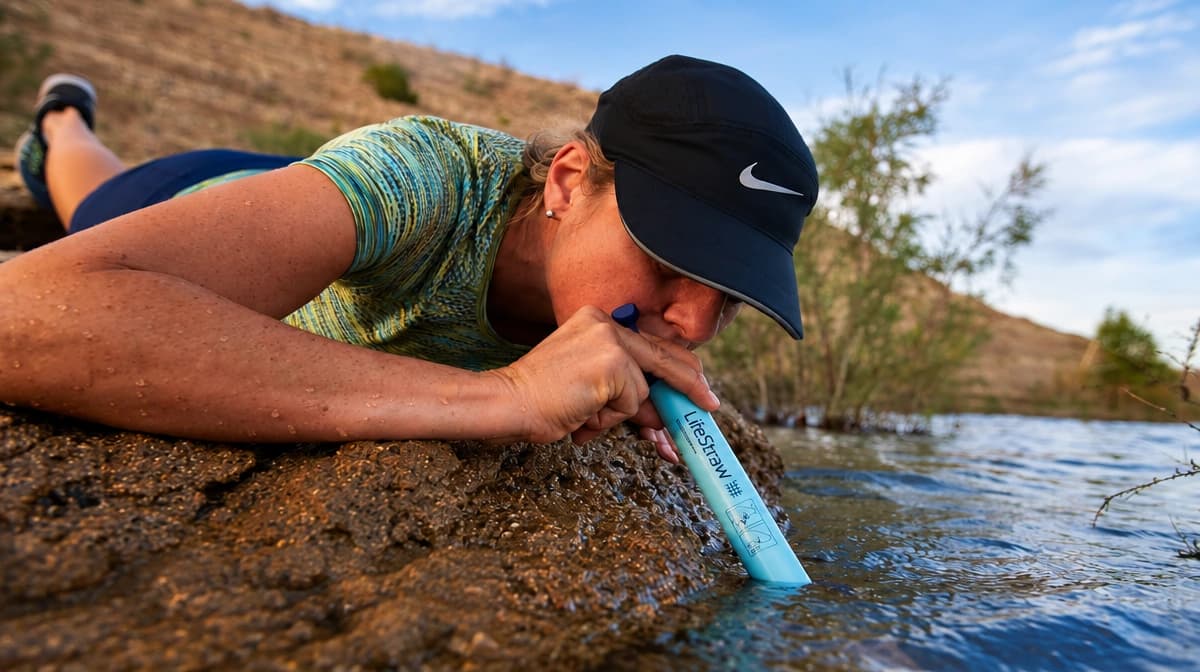
Personal straw filter
$LifeStraw Personal
Compact, single-user filtration for bug-out bags and day hikes. No moving parts, nothing to break.
Keep reading
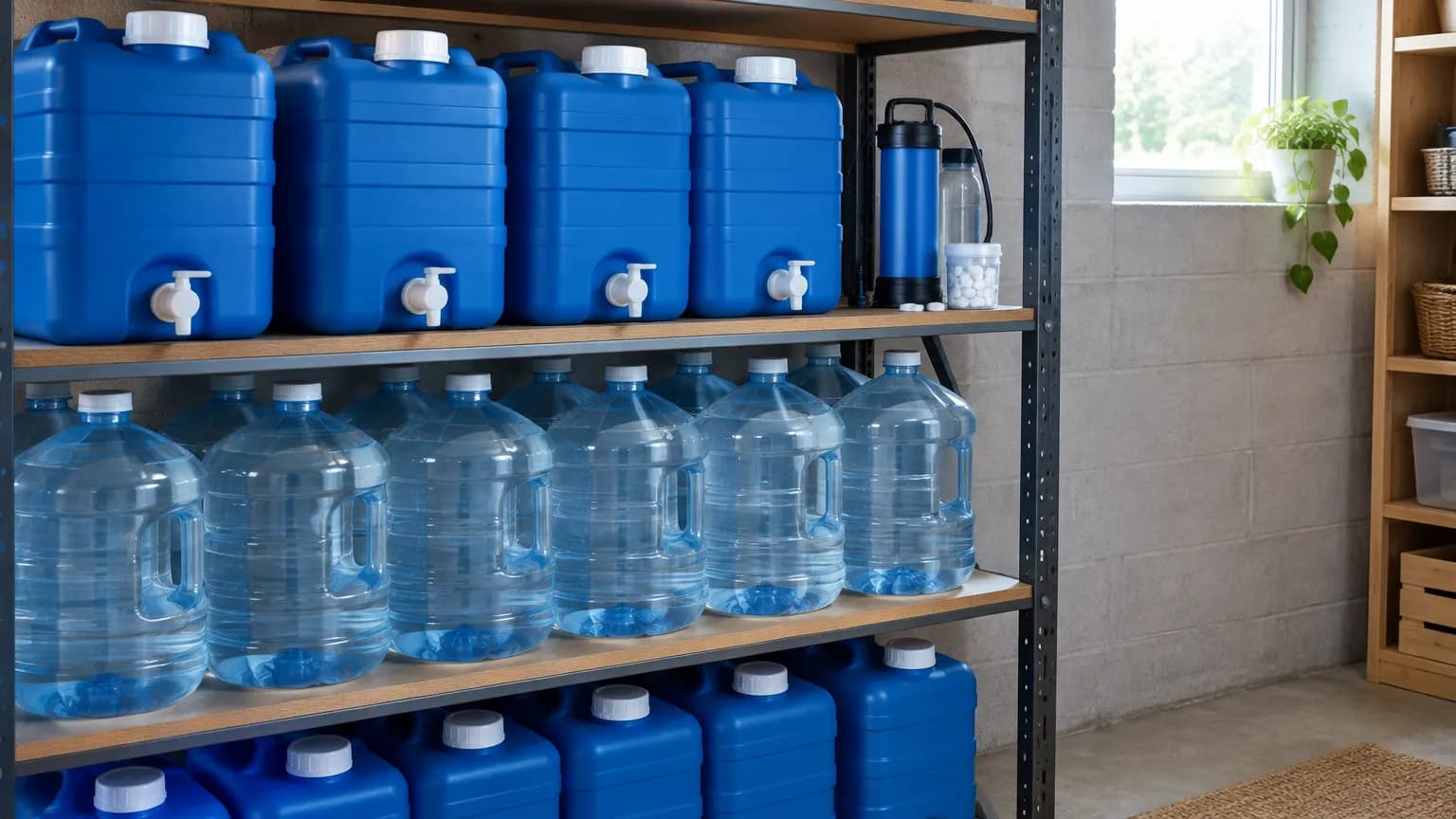
How Much Water Should You Really Store? A Complete Guide
One gallon per person per day is where the advice stops and the arithmetic begins. Here is what three days, two weeks and a month actually look like in containers, floor space and weight.
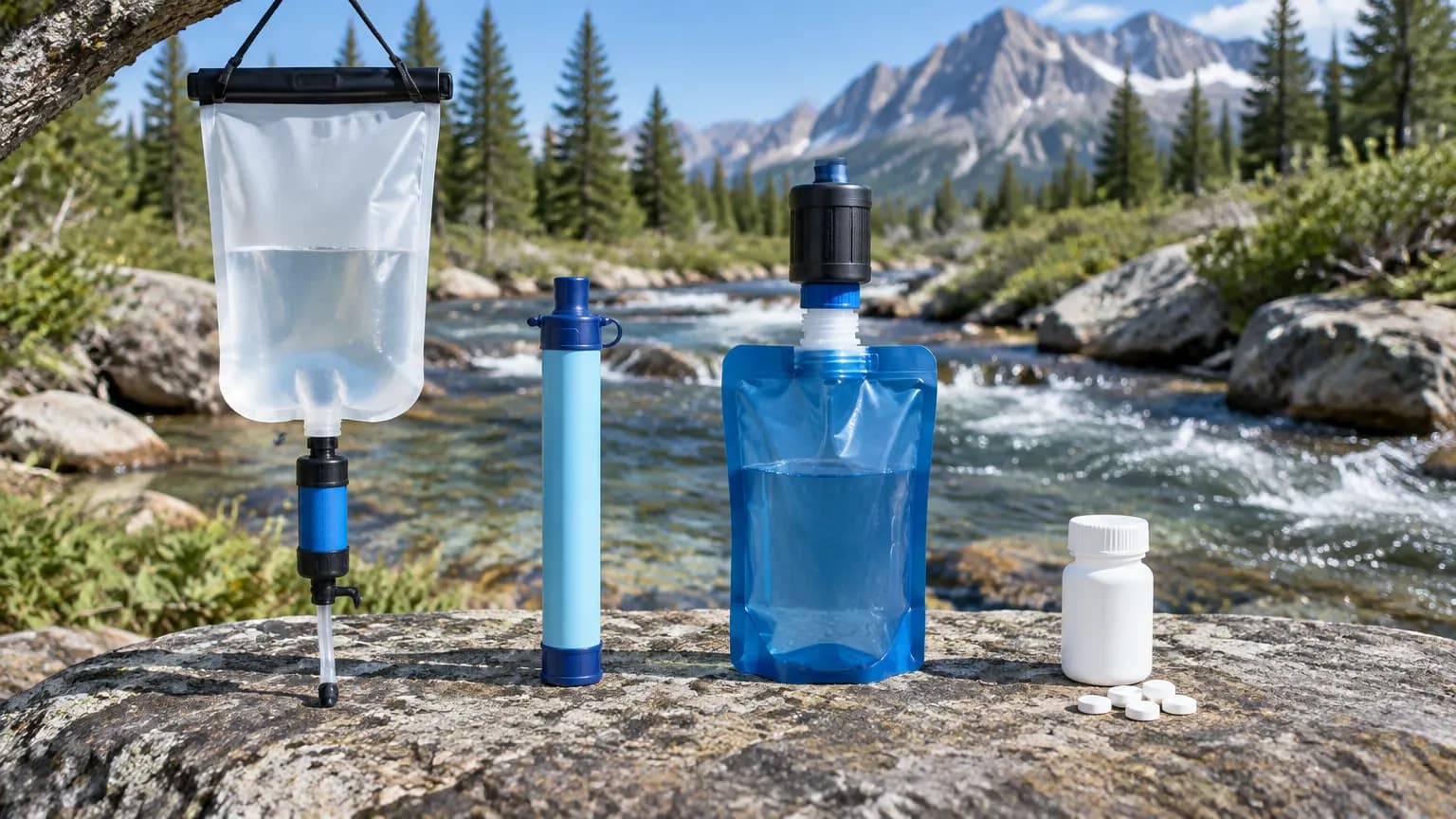
Emergency Water Filters Compared: Gravity, Squeeze, Straw, Tablets
Four ways to make water drinkable, each good at something different, and the difference between a filter and a purifier that decides whether yours is enough on its own.
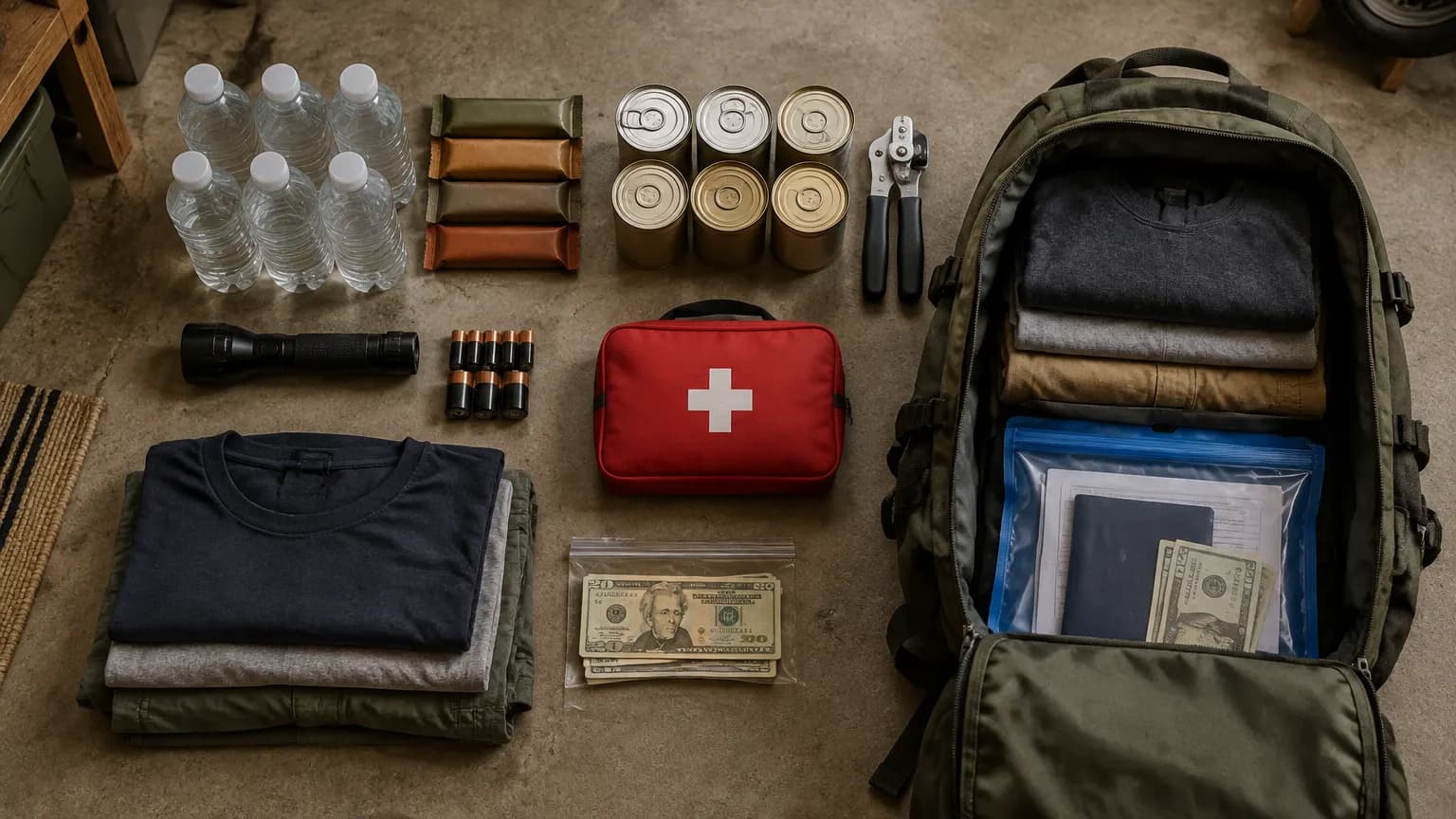
The Complete 72-Hour Emergency Kit Checklist
Every agency publishes the same list, and none of them do the arithmetic. Here is what a 72-hour kit holds for your household size, how much it weighs, and what you can skip.