 The Prep Nest
Water & Filtration
A way to purify water is one of the highest-value additions to any kit: it turns a finite supply into a renewable one.
Water is the one supply with no substitute and the shortest clock. A filter turns a finite store into a renewable one, which is why it earns space in a kit far smaller than the amount of water it replaces. But the four common methods are not interchangeable, and the marketing rarely makes the difference clear.
What each method actually removes
This table is built from the manufacturers' own published claims, which is the only honest basis for it, since we do not test these products. The pattern matters more than the decimal places.
| Method | Bacteria | Protozoa (Giardia, Crypto) | Viruses | Rated life |
|---|---|---|---|---|
| Gravity filter (Platypus GravityWorks 4.0L) | 99.9999% | 99.9% | No | 1,500 gallons |
| Straw filter (LifeStraw Personal) | 99.999999% | 99.999% | No | 1,000 gallons (4,000 L) |
| Squeeze filter (Sawyer Mini SP128) | 99.99999% | 99.9999% | No | 100,000 gallons |
| Iodine tablets (Potable Aqua PA Plus) | Yes | Giardia only | Generally yes | 50 tablets per bottle |
The column that decides your kit is the virus column. Hollow-fibre filters do not remove viruses. All three filters above work by physical pore size, and viruses are smaller than the pores. In North American backcountry that is usually an acceptable risk, because the realistic threats are bacteria and protozoa. After a flood, a sewage overflow or an infrastructure failure in a populated area, it is not, and that is precisely the scenario an emergency kit exists for.
That is the argument for carrying both: a filter for volume and clarity, and a chemical treatment for what the filter lets through. It is also why the Sawyer's 100,000-gallon rating does not make it a hundred times better than the LifeStraw. Rated life is about when the cartridge clogs, not about what it removes.
What the federal guidance actually says
Here is a tension worth knowing about, because no gear page we have seen mentions it. Ready.gov's guidance for treating questionable water is boiling first, then household chlorine bleach. On chemical treatment it is explicit: use only regular household liquid bleach containing 5.25 to 6.0 percent sodium hypochlorite, unscented, at 1/8 teaspoon per gallon, stirred and left to stand for 30 minutes. And it says that iodine and camping-store treatment products that do not contain sodium hypochlorite as the only active ingredient are not recommended and should not be used.
We still list iodine tablets, and it is worth saying why rather than quietly ignoring the contradiction. The federal advice is written for treating water at home, where bleach is available, cheap and effective. Tablets exist for the portable case, where you are carrying grams rather than litres and a bottle of bleach is not in the bag. If you are treating stored water at home, follow Ready.gov and use bleach. If you are carrying a kit out of the door, tablets are the realistic tool.
| Method | Rolling boil | Dose | Time |
|---|---|---|---|
| Boiling | 1 full minute | n/a | until cool |
| Unscented bleach, 5.25 to 6.0% | n/a | 1/8 tsp per gallon | 30 minutes |
If treated water has no slight chlorine smell after 30 minutes, Ready.gov says to repeat the dose and wait another 15. If it still does not smell of chlorine, discard it and find another source.
How to choose between them
Pick on volume and on who is drinking. A gravity system is the right answer for a household or a group: you hang it, walk away, and come back to four litres. A straw is the smallest, simplest personal option with nothing to break, but it only works at the water's edge, which means it cannot fill a bottle to carry. A squeeze filter is the compromise that covers both, working inline on a hydration bladder, on a bottle thread, or straight from the pouch.
For a household kit, the honest configuration is a gravity filter for throughput, a squeeze or straw filter in each go-bag, and tablets as the backup that handles what the filters do not. Our comparison of emergency water filters works through the trade-offs in more detail, and the water storage guide covers how much to keep before filtration ever becomes the question.
What we could not verify
We do not physically test these products. Every removal percentage and rated life above is the manufacturer's published claim, taken from the retailer listing on 3 October 2026, not a measurement we made. Independent lab verification of those claims is not something we have performed or reviewed. The boiling and bleach figures are from Ready.gov, checked the same day. Filter performance in the field also depends on water turbidity, temperature and how well the cartridge has been maintained, none of which a specification sheet captures.
What we recommend
Chosen on published specifications and on what buyers consistently report. We do not physically test these products. Affiliate links; see our disclosure.
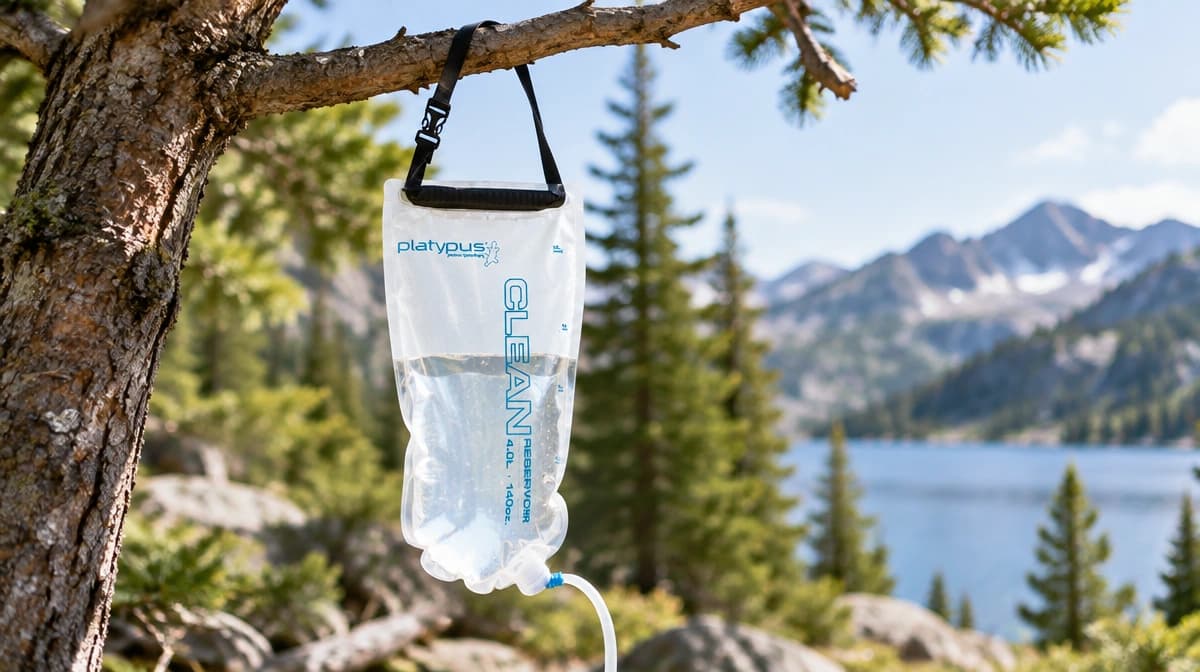
Gravity-fed water filter
$$$Platypus GravityWorks 4L
Filters four liters at a time with no pumping required, ideal for a household kit or group camp.
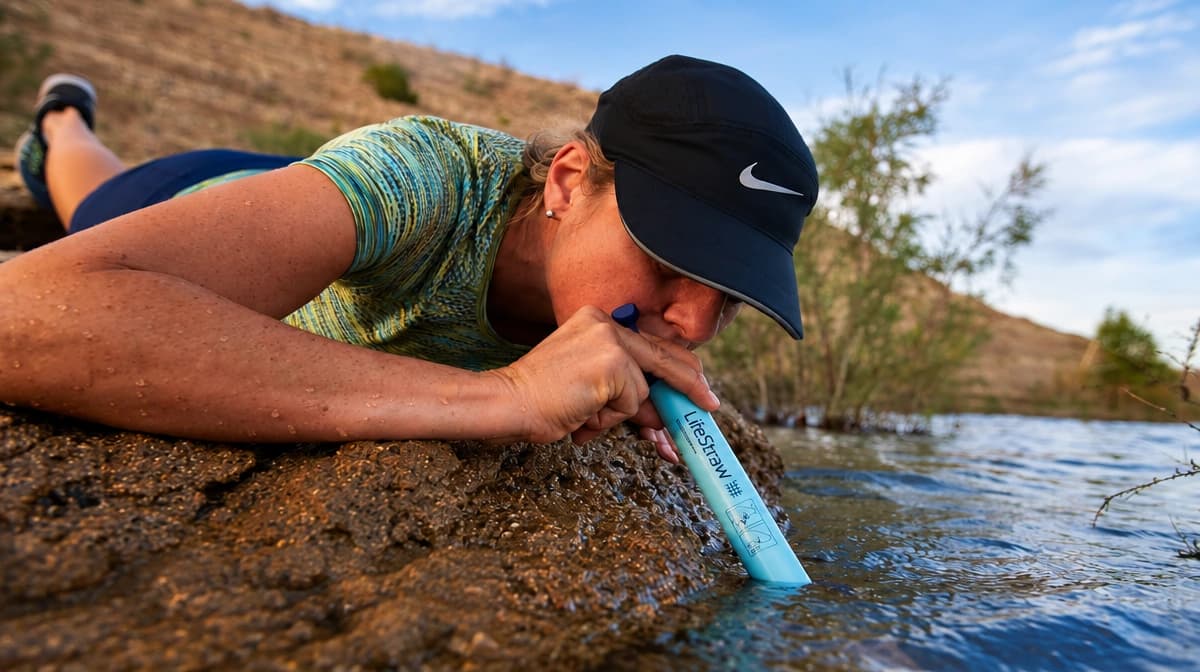
Personal straw filter
$LifeStraw Personal
Compact, single-user filtration for bug-out bags and day hikes. No moving parts, nothing to break.
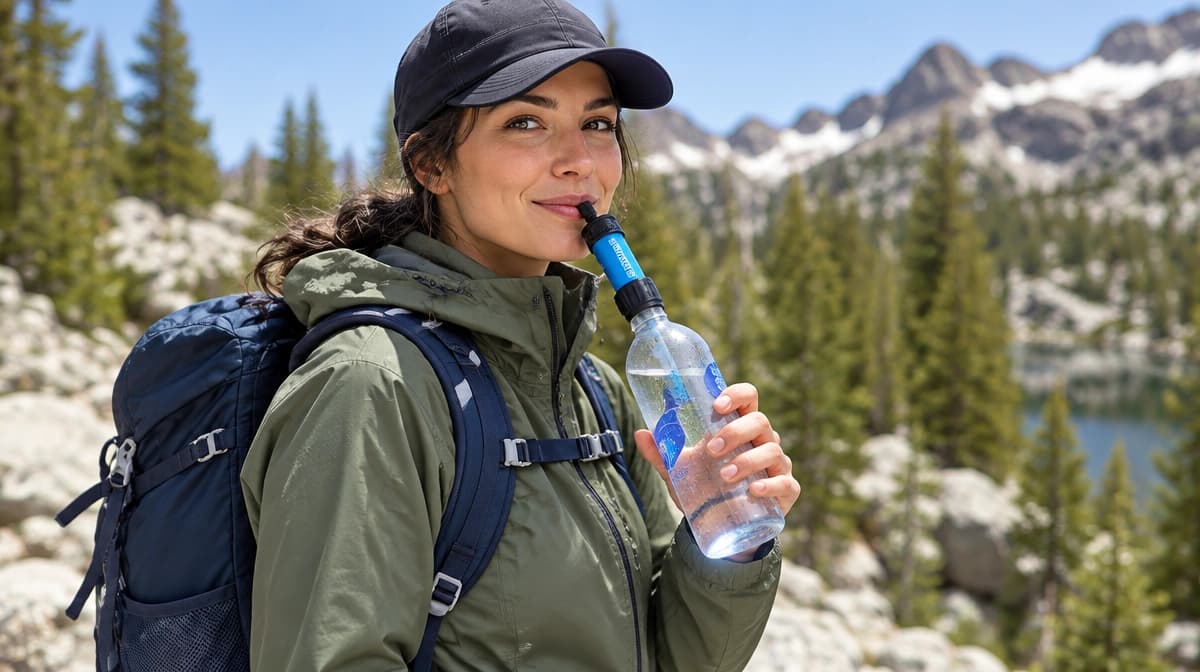
Inline squeeze filter
$Sawyer Mini SP128
Works as a straw, inline on a hydration bladder, or with the included squeeze pouch. Rated for 100,000 gallons.
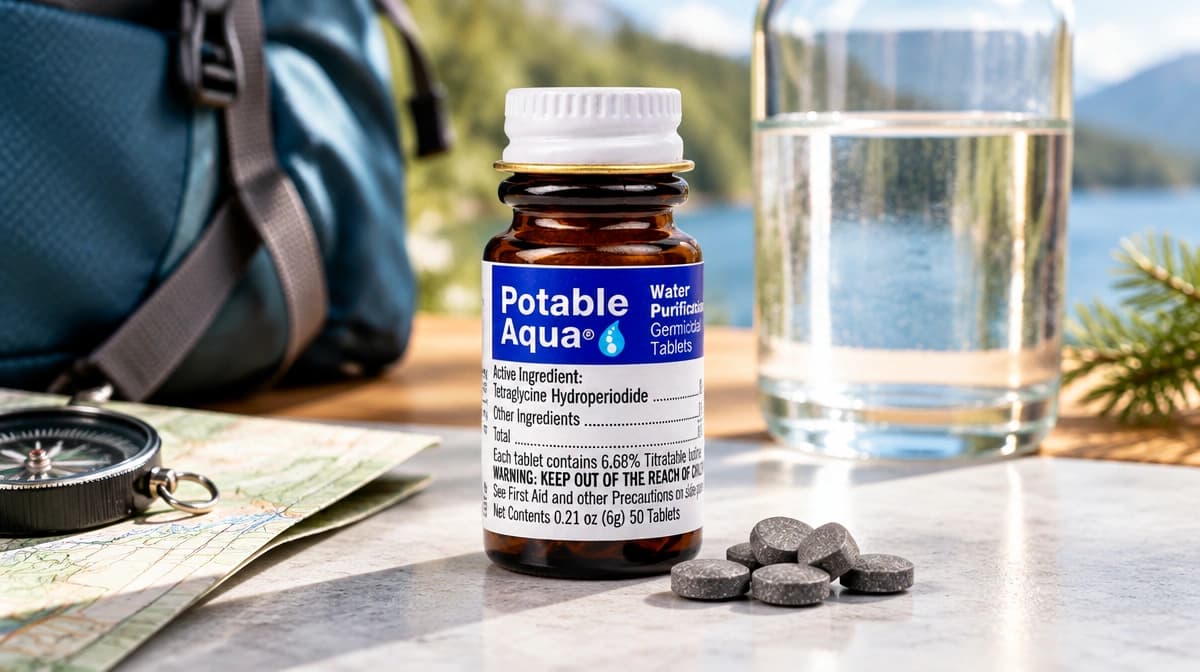
Water purification tablets
$Potable Aqua with PA Plus (2 x 50)
Lightweight backup for when filtration alone isn't enough against viruses. The PA Plus bottle removes the iodine taste.