 The Prep Nest
Power & Light
Redundant light and power sources reduce how much a grid outage actually disrupts your household.
An outage takes three things at once: the ability to see, the ability to find out what is happening, and the ability to keep anything charged. They are three different problems and they want three different pieces of equipment, in that order of priority.
Light first, and one per person
Plan one light source per person rather than one per household. People need to move independently, and the alternative is everyone trailing the person holding the torch. Headlamps win over handheld lights for the obvious reason that they leave both hands free for cooking, carrying and first aid.
| Headlamp | Output | Battery | Notable |
|---|---|---|---|
| Petzl Actik Core | 450 lumens | Rechargeable CORE, or 3 standard AAA | Hybrid: runs on either |
| Black Diamond Spot 400-R | 400 lumens | 1,500 mAh built in | IP67, submersible 30 min |
That hybrid row is the one that matters for emergency use rather than camping. A sealed rechargeable headlamp is lighter and tidier, but when it is flat on day three and there is no power, a lamp that also accepts ordinary AAA cells is the one still working. For a kit that may sit unused for a year, the ability to fall back to disposable batteries is worth more than fifty lumens.
A radio, because your phone is a depleting asset
During a widespread outage the cell network may be congested or running on its own generators, and your phone is on a countdown regardless. A NOAA weather radio depends on nothing you own staying charged.
| Radio | Power sources | Extras |
|---|---|---|
| Midland ER310 | Crank, solar, 6× AA, USB | NOAA weather band, flashlight, ultrasonic dog whistle |
| FosPower A1 | Crank, solar, AAA, USB | 7,400 mWh (2,000 mAh) power bank, LED reading light, SOS alarm |
Look for the tone alert feature, which wakes the radio when a warning is issued rather than requiring somebody to sit and listen to it. Treat the built-in power bank as a bonus rather than a plan: 2,000 mAh is a partial phone charge, and cranking for it is slow work. Our comparison of hand-crank emergency radios goes further on what separates them.
Power stations, and the arithmetic that sizes them
The useful question about a battery is not how big it is but how long it runs the thing you care about. Watt-hours divided by watts gives hours, and that single calculation prevents most bad purchases.
| Power station | Capacity | AC output | Chemistry and life |
|---|---|---|---|
| EcoFlow Delta 3 | 1,024 Wh | 1,800 W | LiFePO4, 4,000 cycles to 80%, full charge in 56 min |
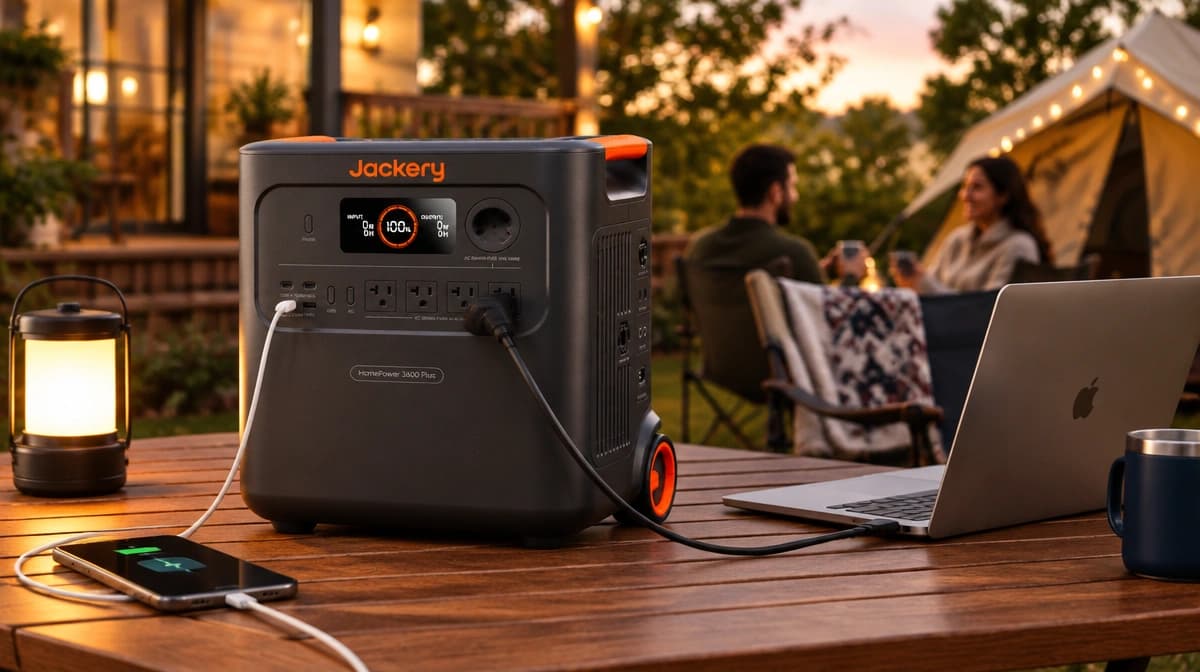
| Jackery HomePower 3600 Plus | 3,584 Wh | 3,600 W | LFP, 6,000 cycles, expandable to 21 kWh |
Two rules come out of that table. Chemistry decides lifespan: LiFePO4 cells rated for thousands of cycles matter if outages are frequent where you live, because a unit that sits at full charge for years and is cycled hard for three days a winter is being asked for calendar life, not cycle life. And surge rating decides whether it runs a fridge at all. A refrigerator's compressor draws far more at startup than it does running, so a unit can have the watt-hours to last a day and still trip on the first start.
The one thing a portable battery cannot sensibly do is resistive heat. A 1,500 W space heater empties a 1,024 Wh unit in roughly 40 minutes. Our guide to sizing a portable power station works through household loads properly, and the power outage kit covers where this fits among everything else.
What we could not verify
We do not physically test these products. Capacities, outputs, lumen figures, cycle ratings and charge times above are the manufacturers' published specifications, taken from retailer listings on 3 October 2026, not measurements we made. Real runtime depends on load, ambient temperature, battery age and inverter efficiency, and lumen ratings in particular are measured under conditions that rarely match use. Size from your own device's actual draw whenever something matters, and especially for medical equipment.
What we recommend
Chosen on published specifications and on what buyers consistently report. We do not physically test these products. Affiliate links; see our disclosure.
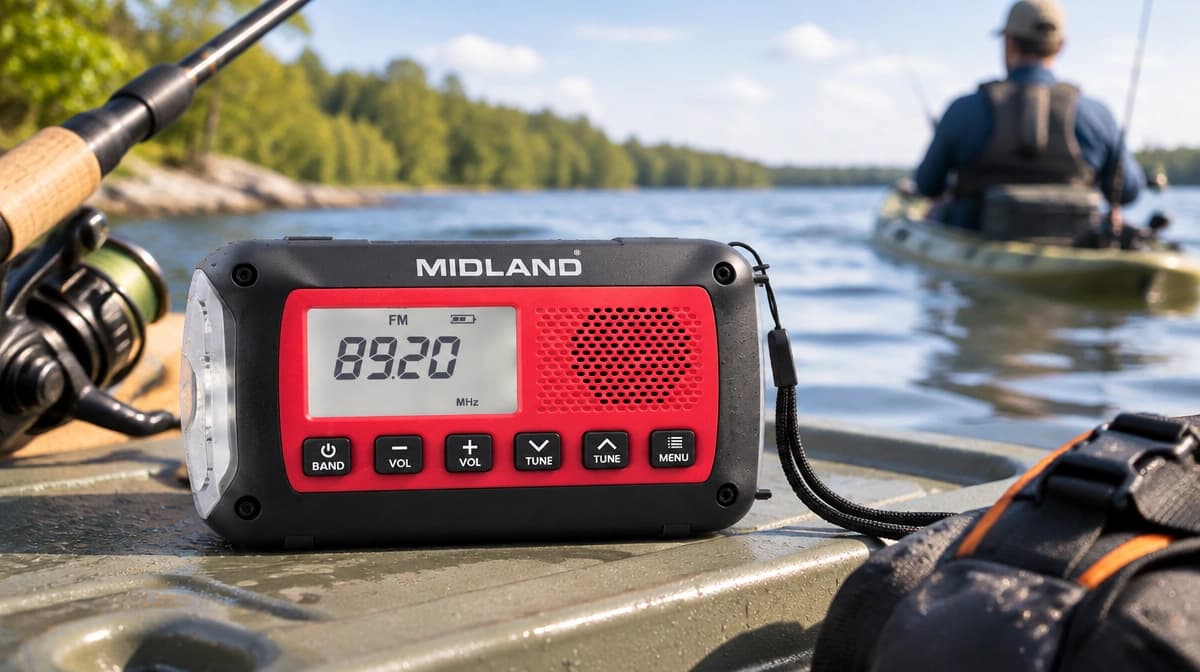
Hand-crank / solar radio
$$Midland ER310
NOAA weather alerts, phone charging, and a flashlight in one unit. Charges by crank, solar, or USB.

Budget emergency radio
$FosPower A1 (7400 mWh)
The affordable pick: NOAA band, solar and crank charging, and an SOS alarm at about half the price of the Midland.

Rechargeable headlamp
$$Petzl Actik Core
Frees up your hands, which matters more than people expect during an actual outage. Runs on the rechargeable Core or three AAAs.

Rechargeable headlamp (alternative)
$$Black Diamond Spot 400-R
Waterproof to IPX8, 400 lumens, and it charges over USB-C. A solid pick if you prefer a sealed battery.
Portable power station
$$$Jackery HomePower 3600 Plus
3584 Wh and 3600 W of AC output: enough to keep a fridge, a CPAP, and phones running through a multi-day outage, and expandable with extra batteries and Jackery's folding solar panels.
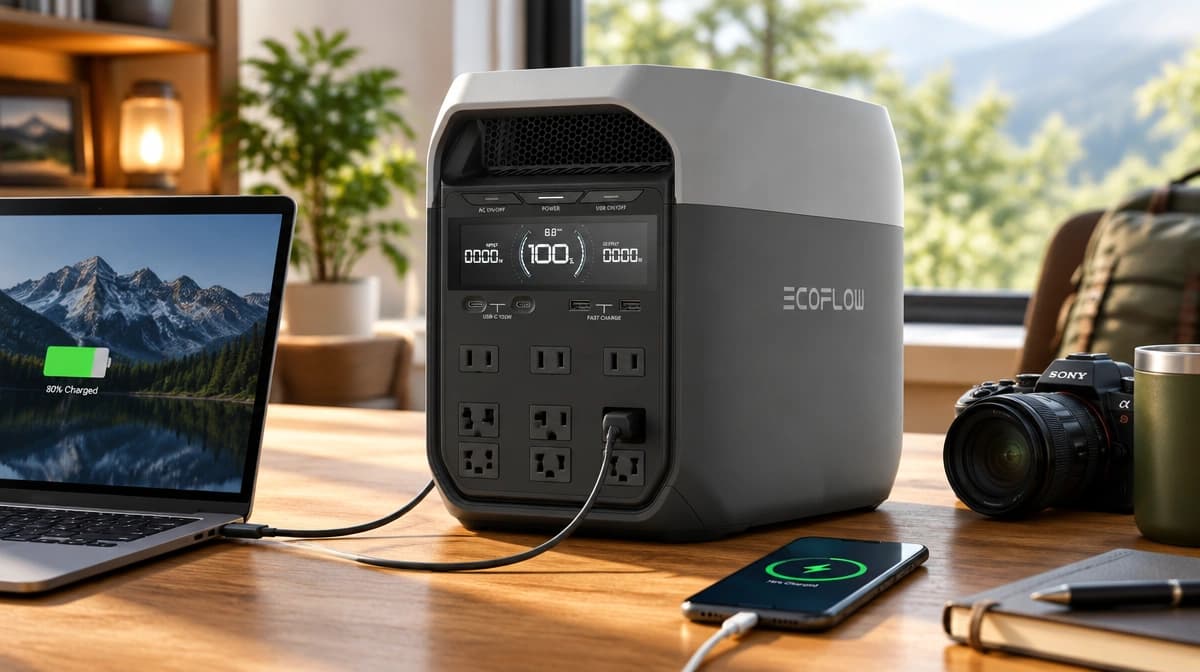
Portable power station (fast charging)
$$$EcoFlow Delta 3 (1024 Wh)
LiFePO4 cells rated for thousands of cycles and a wall recharge in about an hour. The better choice if outages are frequent where you live.